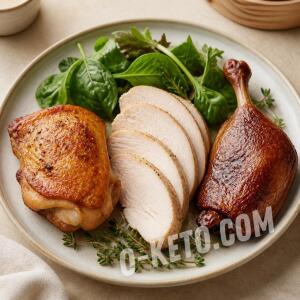
Root vegetables often occupy a grey area on keto. They are vegetables, so they are easily treated as automatically suitable; yet potatoes, sweet potatoes, carrots and beetroot differ greatly in carbohydrate density, starch and practical serving size. The answer cannot simply be “vegetables are allowed”. A keto plan requires knowing which root is on the plate and how it was prepared.
This group includes foods that are usually excluded from strict keto, foods that may fit in small portions, and alternatives that can replace a potato side dish. The difference is determined by available carbohydrate, processing and the complete recipe, not by colour or the word “natural”.
Why potatoes and sweet potatoes rarely fit strict keto
Potatoes and sweet potatoes are starchy tubers. Boiling or baking softens them, but the starch does not disappear. Water increases the weight of the cooked food and makes the portion look larger, while the original carbohydrate remains. Mashed potatoes, fries, chips and casseroles make counting harder because they add oil, flour, starch, sweet sauces or breading.
Sweet potato is not keto-friendly simply because some varieties contain more beta-carotene than white potatoes. Orange and yellow varieties do contain more provitamin A, while purple varieties contain anthocyanins, but these compounds do not remove the starch. A normal serving of either tuber is usually too carbohydrate-dense for strict keto.
The practical conclusion is clear: potatoes and sweet potatoes may have a place in a regular or moderately lower-carbohydrate diet, but they are not a basic strict-keto side dish. Replacing one tuber with the other changes flavour and phytochemicals, not the basic carbohydrate problem.
Potatoes: what matters beyond carbohydrates
Green areas, many sprouts and pronounced bitterness are important safety signals. They are associated with higher levels of glycoalkaloids such as solanine and chaconine, which are concentrated especially in the skin and sprouts. When greening or sprouting is extensive, superficial trimming is not a reliable way to rescue the potato.
Storage also affects later cooking. Temperatures below about 8°C can increase potato sugars. During intense heating, especially frying and deep-frying, these sugars can contribute to more acrylamide formation. Potatoes are better stored in a dark, cool place rather than an ordinary refrigerator, and heavily browned fried forms are not a neutral cooking method.
Boiling followed by cooling may increase resistant starch compared with freshly cooked potatoes. This is relevant to ordinary nutrition, but it does not turn potatoes into a low-carb food: the total carbohydrate load remains substantial.
Sweet potatoes: colourful compounds do not cancel starch
Sweet potato composition varies by variety. Orange roots are rich in beta-carotene, purple roots contain anthocyanins, and white or yellow varieties have different pigment and flavour profiles. Cooking softens the plant matrix and may improve carotenoid availability, especially when the meal contains some fat.
Improved beta-carotene availability is not a reason to ignore portion size. On keto, the decisive issue remains carbohydrate density. A sweet potato dish with a large portion of mash, coconut sugar or sweet sauce is not low-carb simply because the tuber contains useful pigments.
Sweet potato is therefore chosen for taste, texture and its specific composition, not as a “permitted version” of potato. Strict keto usually requires a less starchy vegetable instead.
Carrots and beetroot: portion-controlled foods
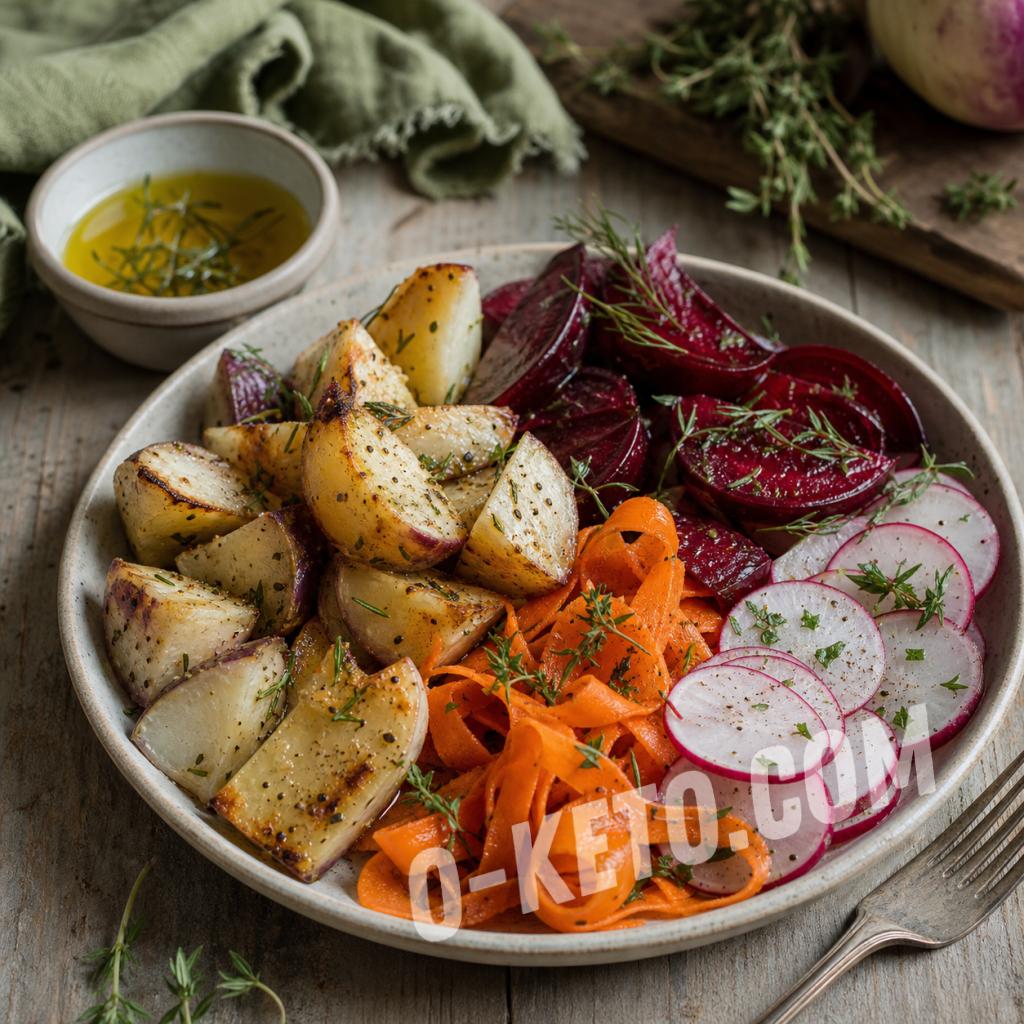
Carrots and beetroot are less starchy than potatoes, but they are not carbohydrate-free foods for strict keto. They contain natural sugars, and the load depends on the amount. A little carrot in soup or beetroot in a salad is not the same as a large plate of roasted roots.
Carrots have an important culinary nutrition detail: cutting and cooking can make carotenoids easier to release, while a little fat supports their absorption. Stewed carrots with fat and raw carrots therefore do not provide identical beta-carotene availability. This supports thoughtful preparation, not unlimited portions.
Beetroot’s red colour comes mainly from betalains, and the root also contains dietary nitrates. Beetroot juice is studied for possible effects on vascular function and blood pressure, but a normal serving is not a treatment for hypertension. Oxalate exposure also matters for people prone to oxalate stones, especially with concentrated juices and powders.
The practical result is that carrots and beetroot are not automatic prohibitions, but they are not “free” foods either. On strict keto they work best as small flavour or colour additions rather than the main side dish.
Turnip and radish as more convenient alternatives
Turnip works in dishes where potato is used for volume, softness and the ability to absorb broth and seasoning. It can be roasted, stewed, added to soup or mashed with butter. Its carbohydrate load is usually easier to fit than potato, provided the recipe is not overloaded with flour, starch or sweet sauce.
Radish offers a different role. It is crisp when raw, adds sharpness to salads, and becomes milder when cooked. As a cruciferous vegetable it contains glucosinolates, which can form isothiocyanates when plant tissue is damaged. This is a composition detail, not a reason to call radish a medicine or a natural antifungal.
The practical choice is therefore straightforward: when a low-carb replacement for potato is needed, start with turnip, radish, cauliflower, broccoli or zucchini. They do not copy potato perfectly, but they preserve volume with a lower carbohydrate load.
How to prepare root vegetables on keto
On strict keto, non-starchy vegetables usually provide the main volume, while roots are used in small amounts. Carrots and beetroot can flavour soup, salads and stews. Turnip works well roasted or mashed, while radish can be served raw, quickly sautéed or baked until tender.
The common mistake is to evaluate the root separately from the recipe. Honey, syrup, flour, starch, sweet glaze and a large potato portion can change the carbohydrate profile more than herbs or cooking fat. The whole recipe and serving size must be counted.
The conclusion for preparation is to preserve flavour and texture without adding sugar or starch. Roasting, stewing, boiling and quick sautéing are more useful than deep-frying, sweet glazing or breading.
What to choose for different keto approaches
On strict keto, potatoes and sweet potatoes are usually excluded, while carrots and beetroot are kept to small portions. Turnip, radish, cauliflower and broccoli more often serve as the main vegetable side. On a less restrictive LCHF plan, a measured potato or sweet potato portion may be considered if it fits the daily carbohydrate limit.
With diabetes, a therapeutic ketogenic protocol, a tendency to oxalate stones or disordered eating, a universal list cannot replace individual assessment. Medication, laboratory data, tolerance and the complete dietary pattern matter.
Overall, turnip, radish and non-starchy vegetables are the most practical strict-keto choices; carrots and beetroot require portion control, while potatoes and sweet potatoes are usually kept outside the everyday side dish. This is a carbohydrate-based distinction, not a judgment that one food is universally healthy or unhealthy.
Sources
- The effect of food preparation on the bioavailability of carotenoids from carrots using intrinsic labelling;
- Beta-carotene bioavailability from differently processed carrot meals in human ileostomy volunteers;
- Current Knowledge on Beetroot Bioactive Compounds: Role of Nitrate and Betalains in Health and Disease;
- Dietary Nitrate from Beetroot Juice for Hypertension: A Systematic Review;
- Acrylamide in Food: EFSA scientific information and risk assessment;
- Potato glycoalkaloids and their toxicological significance.