


Mushrooms are convenient in a low-carbohydrate diet: they add volume, umami and fiber without turning a dish into a starchy side. Different varieties still differ in flavor, density, water content and tolerance. On keto, the useful question is not simply “are mushrooms allowed?” but which variety, in what form and in what portion.
Champignons, oyster mushrooms, shiitake, porcini and chanterelles pair well with meat, eggs, fish, butter and non-starchy vegetables. Problems usually come not from the mushrooms themselves, but from flour, sweet sauces, large amounts of onion, milk-based additions or grains used in mushroom dishes.
Which mushrooms fit keto
Fresh edible mushrooms contain a great deal of water, so their calories and carbohydrate density per 100 g are usually moderate. Champignons provide a neutral base, oyster mushrooms brown quickly and absorb fat well, shiitake add pronounced umami, and porcini and chanterelles bring aroma. They can be used as a side or an addition, but the whole plate does not need to consist of mushrooms: protein and fat are usually better supplied by separate foods.
Dried mushrooms require separate accounting. Removing water concentrates nutrients, and a small handful of dried mushrooms can produce a large amount of flavor and weight after soaking. A small amount is often enough for soup, sauce or a meat dish, and values per 100 g of dried mushrooms cannot be transferred directly to a plate of fresh mushrooms.
| variety | practical role in a keto dish |
| champignons | neutral base for omelets, sauces and sides |
| oyster mushrooms | quick cooking and a fibrous texture |
| shiitake | umami for broths, minced meat and meat dishes |
| porcini and chanterelles | aromatic fresh or dried addition |
Mushrooms contain carbohydrates, including mannitol, trehalose and other polysaccharides. That does not make them forbidden, but it explains why a huge portion or sweet mushroom sauce is not equivalent to a small addition to meat. With strict keto, check the specific product and your own response, especially when using dried powder.
Mushrooms and Low FODMAP
With irritable bowel symptoms, both the variety and the form matter. Monash FODMAP lists fresh oyster mushrooms among lower-FODMAP options at a standard serving, while canned champignons may be better tolerated than fresh ones because some soluble carbohydrates move into the brine. This does not mean that every mushroom or every portion is suitable during the elimination phase.
If you are testing tolerance, do not introduce several new foods at once. Start with a small portion, count the onion, garlic, cream and sauces in the same dish, and then assess symptoms. Low FODMAP is a temporary protocol followed by structured reintroduction, not necessarily a lifelong diet.
Vitamin D in mushrooms: ultraviolet exposure matters
Mushrooms contain ergosterol, a precursor of vitamin D2. Sunlight or UV treatment can substantially increase its conversion. Ordinary cultivated mushrooms grown without sufficient ultraviolet exposure are not automatically a meaningful source of vitamin D. If the package says that the mushrooms were UV-treated or fortified with vitamin D, use the stated amount rather than assuming that every mushroom contains the same level.
Vitamin D2 from mushrooms can be useful, especially for people who rarely eat animal foods, but a serving of mushrooms does not replace testing for deficiency or a prescribed supplement. Storage and cooking can also affect the final amount.
Beta-glucans and therapeutic claims
Mushroom cell walls contain beta-glucans and other polysaccharides. Laboratory and preclinical research shows effects on immune signaling, while some standardized preparations have been studied as adjuncts to treatment. This does not mean that an ordinary serving of champignons or shiitake treats cancer, infection or diabetes, or universally “boosts immunity”.
For food writing, it is more accurate to focus on variety, fiber, flavor and the possible role of mushrooms in a nutrient-dense diet. Reishi, shiitake and other mushroom extracts are a separate subject because concentration, dose, product quality and drug interactions differ.
How to cook mushrooms without excess water
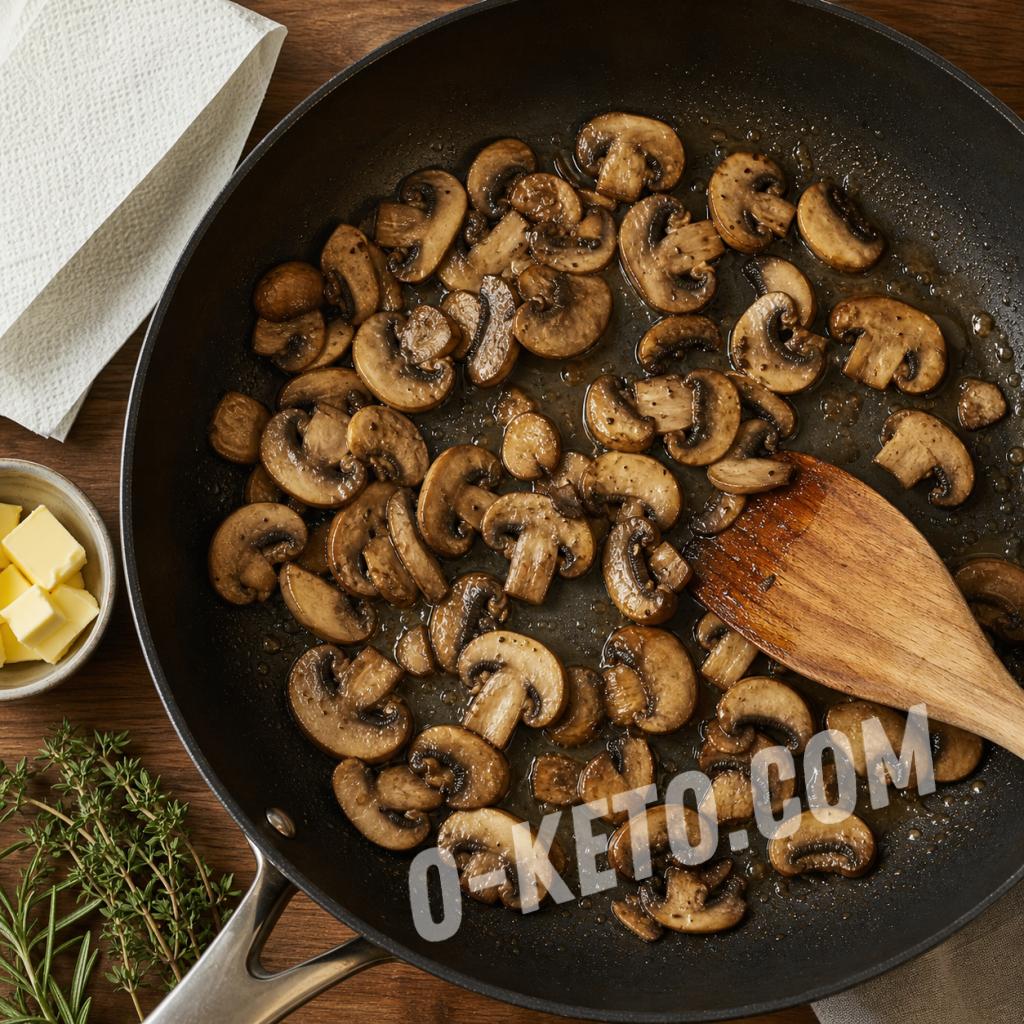
Mushrooms brown better when the pan has enough space. If a large cold portion is added at once, it will steam in its own water. For a deeper flavor, dry the mushrooms, cut them evenly, preheat the pan and cook in batches. Add butter, salt and cream with the remaining moisture in mind.
Oyster mushrooms can be torn into strips, shiitake stems are often too tough and can be removed, and dried mushrooms can be soaked and their strained soaking liquid used when clean and suitable for the recipe. Raw champignons are not appropriate for every dish or every person; when in doubt, use a cooked product. Wild mushrooms require strict identification: an unknown mushroom should never be tested by eating a small piece.
How to build a mushroom dish on keto
A practical formula is mushrooms plus complete protein and fat. Champignons work with omelets and beef, oyster mushrooms with chicken or pork, shiitake with broth, fish and minced meat, while dried porcini can deepen a flour-free sauce. For thickness, use butter, unsweetened cream, cheese or puree from low-carbohydrate vegetables instead of starch or flour.
If mushrooms cause bloating, cramps, diarrhea or itching, reduce the portion and check the whole dish. The reaction may come from onion, garlic, dairy, marinade or cross-contact rather than the mushrooms alone. Pronounced allergic reactions or recurring symptoms require medical assessment.
Sources
A Review of Mushrooms as a Potential Source of Dietary Vitamin D — Nutrients.
Photobiology of Vitamin D in Mushrooms and Its Bioavailability in Humans — Dermato-Endocrinology.
Effects of Fungal Beta-Glucans on Health: A Systematic Review of Randomized Controlled Trials — Nutrients.
Low FODMAP Shopping List — Monash University FODMAP.


