


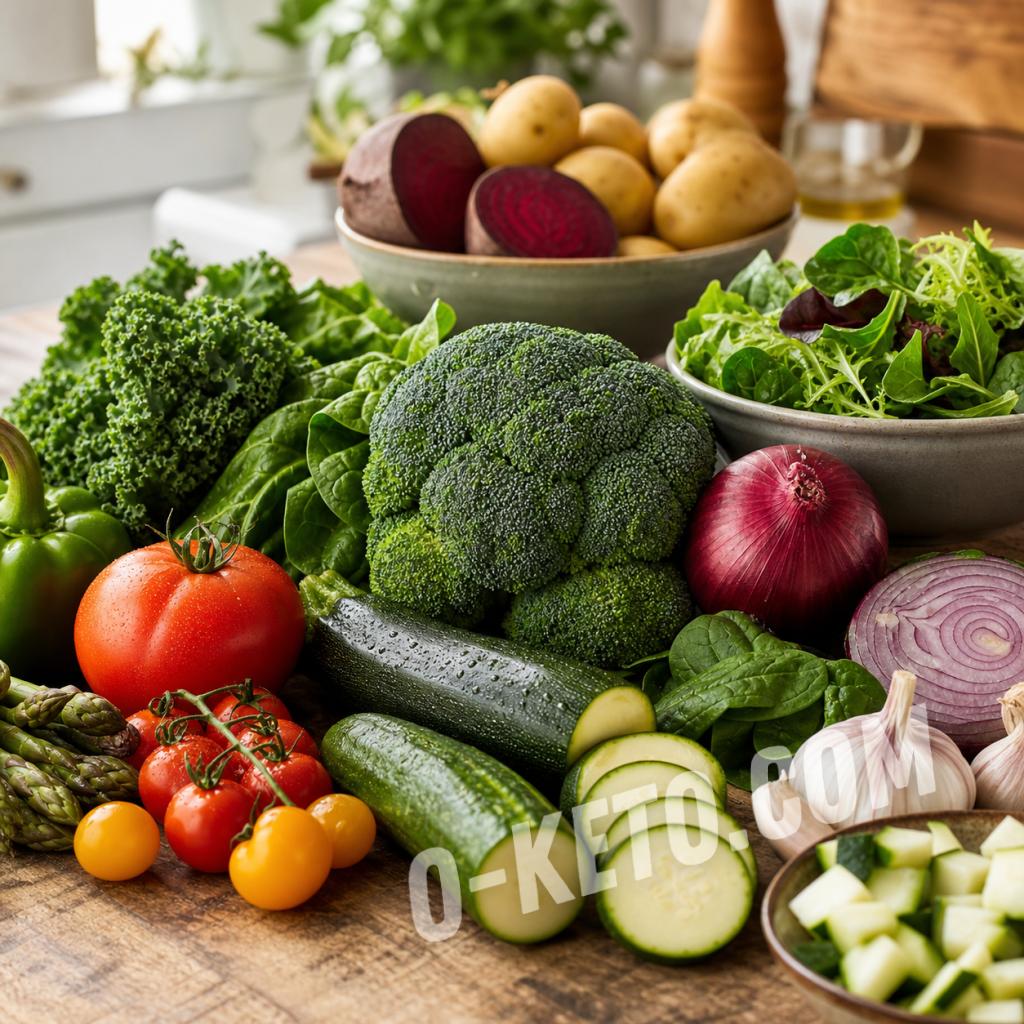

Vegetables are not only allowed on keto; without them, a diet can become monotonous and low in fibre. At the same time, vegetables differ greatly in available carbohydrate. The useful question is not whether vegetables are allowed, but which ones to choose, how much to eat, and how to cook them without turning the meal into a high-carbohydrate dish.
Why vegetables still matter on keto
Vegetables provide water, fibre, potassium, folate, vitamin C, and other compounds. They do not automatically treat deficiencies, and a salad is not automatically healthy, but they can add volume and variety to a meal based on meat, fish, eggs, and poultry.
Non-starchy vegetables are the usual foundation
Broccoli, cauliflower, cabbage, zucchini, cucumber, leafy greens, spinach, asparagus, celery, mushrooms, aubergine, and many peppers are generally convenient choices. Tomatoes can also fit, but large portions and concentrated products such as juice, ketchup, and sauces need more attention.
These vegetables work well as the base of a meal: broccoli with fish, cucumber and greens with meat, or cabbage cooked with mince. They add volume without making the plate depend on starch.
Why starchy vegetables need more care
Potatoes, sweet potatoes, corn, and large servings of root vegetables contain more starch. They are not bad foods for everyone, but on strict keto they can use a large part of the daily carbohydrate allowance. Turnip, radish, swede, carrot, and beetroot sit in a more intermediate group and should be assessed by serving size and the strictness of the diet.
How much to eat
There is no universal keto serving. It depends on the carbohydrate limit, activity, food diary, and individual response. A practical starting point is to include non-starchy vegetables in one or two main meals and use a measured serving rather than eating vegetables continuously without counting.
A large salad may contain little carbohydrate from cucumber, yet its dressing can add a great deal of energy through oil, nuts, and cheese. Count the whole dish, not only the vegetable.
Digestion and tolerance
A sudden increase in raw cabbage, broccoli, onion, or garlic can cause bloating even when carbohydrate is low. Try a smaller serving or cooked form before excluding the food forever. For sensitive digestion, FODMAP content and individual tolerance matter as well as carbohydrate. People with diagnosed bowel disease should individualise restrictions with a clinician or dietitian.
How to cook vegetables
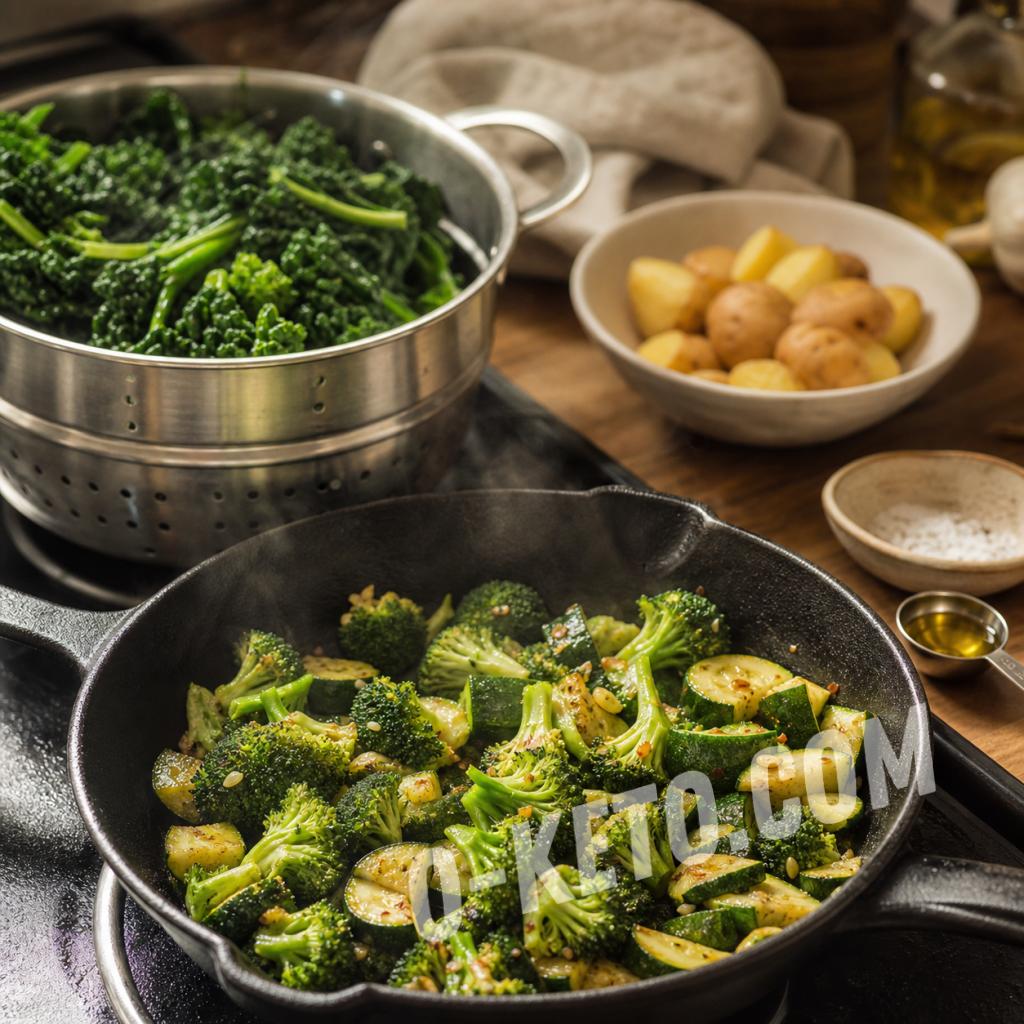
Steaming, baking, stewing, and quick sautéing preserve texture and make portions easy to control. Measure oil before adding it. Cheese sauces, cream, bacon, nuts, breading, flour, sugar glazes, and sweet ketchup can change the keto profile of an otherwise suitable vegetable.
Raw and cooked vegetables cannot be ranked by one rule about which is healthier. During prolonged boiling, some water-soluble compounds may move into the water, especially when the cooking liquid is discarded. Steaming, short stewing, or keeping vegetables in the liquid of the dish can reduce these losses, but the exact effect depends on the vegetable, temperature, and cooking time.
Heat also changes the plant matrix. For some carotenoids, including lycopene in tomatoes, softening the tissue and adding a small amount of fat may increase the compounds’ accessibility during digestion. This does not mean cooked vegetables are always better than raw ones: some vitamins are sensitive to heat, and the amount of a compound is not the same as its bioaccessibility.
The practical choice therefore depends on the goal. For broccoli and other vegetables where a tender texture and retention of water-soluble compounds matter, use short steaming or quick stewing. Tomatoes can be eaten fresh or used in a cooked sauce with a small amount of oil. There is no need to search for one perfect method: vary techniques, consider tolerance, and do not add sugar, flour, or an unnoticed large amount of fat to an otherwise low-carbohydrate vegetable dish.
Tomatoes, cucumber, broccoli, and zucchini
Cucumber is mostly water and usually contributes few carbohydrates. Tomatoes are sweeter, while sun-dried tomatoes, juice, ketchup, and sauces may contain concentrated sugar. Broccoli adds fibre and density, while zucchini works well in soups, purées, and side dishes.
Onion and garlic
Small amounts of onion and garlic are usually used for flavour. A large serving of onion or caramelised onion contributes more carbohydrate, and ready-made garlic pastes, marinades, and sauces may contain sugar or starch. Check the label.
Conclusion
Keto does not require eliminating all vegetables. Build the plate around non-starchy vegetables, use sweeter and starchy vegetables less often and in measured portions, and consider the entire recipe. Choose the protein, add vegetables, measure the fat, and only then decide whether extra cheese, cream, or nuts are needed.
Sources
- USDA FoodData Central: raw vegetables
- Dietary Guidelines for Americans: vegetable intake and preparation
- Low-carbohydrate dietary patterns and vegetable intake: review of clinical evidence
- Monash University FODMAP Diet: vegetables and serving size
- Cooking at home to retain nutritional quality and minimise nutrient losses: A focus on vegetables, potatoes and pulses — Nutrition Bulletin


