


Glucosinolates
Sulfur-containing compounds in cruciferous vegetables that form isothiocyanates and indoles when cut or chewed; important for flavor, detox enzymes, and gut tolerance.
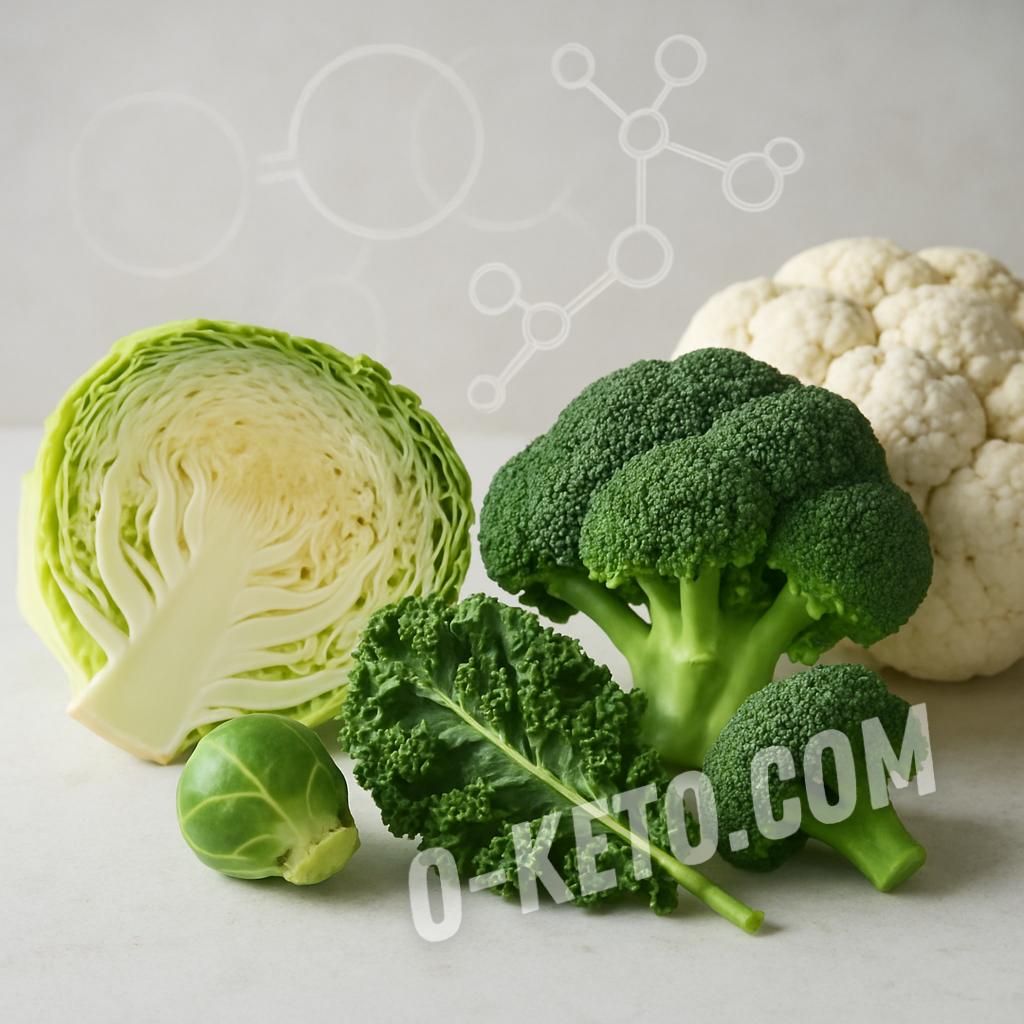
Glucosinolates are sulfur-containing plant compounds characteristic of cruciferous vegetables: broccoli, cauliflower, Brussels sprouts, cabbage, arugula, radish, daikon, horseradish, mustard, and watercress. They are precursors rather than the most active end products. When plant cells are damaged by cutting, chewing, or crushing, the enzyme myrosinase converts glucosinolates into isothiocyanates, indoles, and other breakdown products. These compounds help create the sharp, bitter, cabbage-like flavor and much of the biological interest of cruciferous vegetables.
Why they matter
A well-known example is glucoraphanin from broccoli, which can be converted into sulforaphane. Sulforaphane is studied for effects on Nrf2 signaling, antioxidant enzymes, inflammatory pathways, and detoxification enzymes. Indole-3-carbinol and related compounds are discussed in the context of estrogen metabolism. This does not mean broccoli is a medicine for cancer or hormone disease. These are food compounds that may support normal protective systems as part of an overall diet.
The amount of active products depends on vegetable variety, freshness, cutting, chewing, cooking, and microbiota. Strong heating destroys plant myrosinase, so fully overcooked cabbage may yield fewer isothiocyanates. Gut bacteria can still convert some glucosinolates. A practical compromise is to avoid overcooking, sometimes use raw or lightly cooked crucifers, and chew or chop them well.
Keto and cruciferous vegetables
For keto and LCHF, cruciferous vegetables are convenient. They are usually low in available carbohydrate and provide volume, fiber, potassium, vitamin C, folate, and strong flavor. Broccoli, cauliflower, cabbage, arugula, and radish help make the diet less monotonous, especially when a person eats a lot of meat, fish, eggs, and fats. They pair well with butter, lemon, sugar-free creamy sauces, spices, fish, and meat.
More is not always better. Large portions of raw cruciferous vegetables can cause bloating, gas, pain, and loose stool in people with sensitive gut, SIBO, or active gastrointestinal disease. In that case, it is better to reduce the portion, cook more gently, rotate vegetables, and watch tolerance. The usefulness of glucosinolates does not override the individual gut response.
The goitrogenic effect of food matters most when iodine intake is inadequate. For most people with sufficient iodine status, ordinary portions of cabbage, broccoli, and cauliflower are not a reason to exclude these vegetables. Do not respond by self-prescribing kelp or high-dose iodine: excessive iodine can also disturb thyroid function.
Thyroid and iodine
Cruciferous vegetables are sometimes called goitrogenic because some glucosinolate breakdown products can interfere with iodine use by the thyroid when intake is extremely high and iodine is deficient. For most people, moderate portions of cooked or raw crucifers with adequate iodine are not a problem. Risk is higher with significant iodine deficiency, a very monotonous diet, large amounts of raw cabbage or cruciferous juices, and existing thyroid disease.
If a person takes levothyroxine, medication timing and diet stability matter more than completely excluding broccoli. The tablet is usually taken away from food and supplements, and TSH is monitored after major dietary changes. In hypothyroidism, crucifers are not automatically forbidden, but extreme amounts of cabbage juice are a poor idea.
Sulforaphane or broccoli extract supplements are different from ordinary vegetables. A label may list glucoraphanin, active sulforaphane, or a mixture with myrosinase, and bioavailability will differ. Such supplements should not be treated as replacements for vegetables: they do not provide fiber, food volume, potassium, vitamin C, or the habit of eating plants. Thyroid disease, pregnancy, cancer treatment, and important medications are reasons to discuss concentrated extracts with a clinician.
How to preserve benefit in cooking
Gentle steaming, quick sautéing, roasting without burning, and adding raw sharp components can preserve flavor and part of the activity. One technique is to chop broccoli or cabbage and let it sit before heating so myrosinase has time to act. Cooked crucifers can also be paired with mustard, horseradish, radish, or arugula, where active myrosinase is supplied by a raw ingredient.
Glucosinolates are best viewed as one reason to diversify vegetables, not as a reason to eat only broccoli. The diet benefits from combining crucifers, leafy greens, mushrooms, fermented vegetables, protein, and quality fats. Then low-carbohydrate eating provides not only glucose control but also a wider range of phytonutrients.
If you have any questions about the term "Glucosinolates", you can ask them to AI. Please note, a low-cost OpenAI model is used. It may answer questions about disease treatment with errors!


 1 / 4
1 / 4 1 / 4
1 / 4
 1 / 4
1 / 4 1 / 4
1 / 4