


Lactose
Milk sugar made of glucose and galactose. For keto, the important questions are the lactose amount in a specific product and lactase tolerance: milk is usually more carbohydrate-rich than hard cheese, while fermented products may work better, but not for everyone.
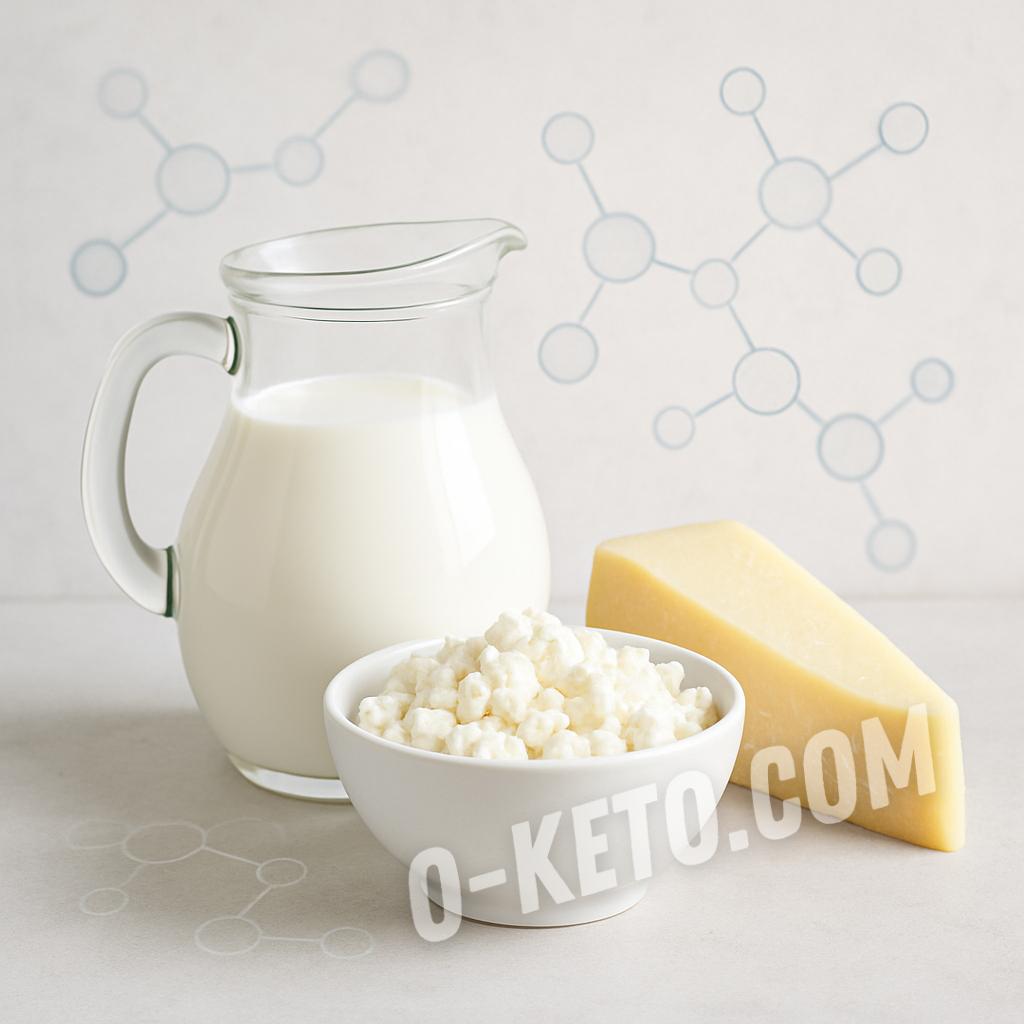
Lactose is milk sugar, a disaccharide made of glucose and galactose. It is found in human and animal milk and in products where milk sugar has not been removed or broken down. To digest lactose, the small intestine uses the enzyme lactase. Lactase splits lactose into two simple molecules that can then be absorbed. If lactase is low or the intestine is temporarily damaged, lactose reaches the colon and is fermented by bacteria, causing symptoms.
On keto and LCHF, lactose matters for two reasons. First, it is a carbohydrate, and milk can quickly use a significant part of the daily carb limit. Second, lactose tolerance varies widely. One person may handle kefir or yogurt well, while another develops bloating, pain and diarrhea from a small amount of milk. Dairy products should therefore be evaluated separately by lactose content, protein, fat, fermentation and personal response.
Where lactose is higher or lower
Lactose is usually highest in milk, whey, condensed milk, milkshakes, sweet yogurts and soft dairy products with added milk powder. Cream contains less lactose per serving, but it is not zero. Cottage cheese and fresh cheeses vary depending on processing and moisture. Hard aged cheeses usually contain very little lactose because it leaves with whey and is partly used by bacteria during ripening.
Fermented products such as kefir and yogurt may contain less lactose than milk because bacteria break down part of the sugar. This does not automatically make them low-carb or tolerable for everyone. Sweet yogurt may contain added sugar beyond lactose, and even an unsweetened product may cause symptoms in a sensitive gut, SIBO, milk-protein reactions or large portions.
Lactose intolerance
Lactose intolerance is related to insufficient lactase activity. Symptoms usually appear after dairy products and include bloating, rumbling, gas, pain, urgent stools and diarrhea. This is not milk allergy. Allergy involves an immune reaction to milk proteins and can look different: hives, swelling, respiratory symptoms, vomiting or severe reactions. The two conditions should not be confused.
Lactase deficiency may be a stable genetic trait or a temporary consequence of intestinal infection, inflammation, celiac disease, surgery or other mucosal injury. Some people tolerate hard cheese but not milk; some tolerate a small yogurt portion with food but not a glass of milk by itself. This variability is normal and reflects lactose dose, speed of intake and gut condition.
Lactose and blood glucose
Lactose provides glucose and galactose, so it is a carbohydrate and counts in low-carb eating. Milk may not taste very sweet, but it contains a meaningful carbohydrate amount. In a person with diabetes or a ketosis goal, a glass of milk may raise glucose more than expected. Milk fat can slow absorption, but it does not remove lactose.
Dairy products differ. A very low-lactose cheese may have little glucose effect, but calories and saturated fat still matter. Unsweetened yogurt may fit one person and disturb another because of lactose, whey proteins or appetite response. When in doubt, the label, serving size and personal glucose or symptom response are more useful than assumptions.
Lactose-free products
Lactose-free milk usually does not remove sugar; it breaks lactose into glucose and galactose with lactase. That is why it may taste sweeter and does not automatically become low-carb. For someone with lactose intolerance, it can solve the gut problem, but for ketosis the carbohydrate amount still matters. Lactose-free yogurt or milk should be judged by the carbohydrate line, not only by the words lactose-free.
Lactase tablets or drops may help with occasional dairy intake, but they do not make milk a keto food. They only help split lactose. If symptoms persist even with lactase, the cause may be milk proteins, fat load, FODMAPs, intestinal inflammation or another gastrointestinal issue rather than lactose alone.
Practical takeaway
Lactose is not a hidden poison; it is ordinary milk sugar. For keto, it should be counted as carbohydrate, especially in milk, whey, sweet yogurts and soft dairy products. Hard aged cheeses, butter, ghee and some fermented products usually contain less lactose, but tolerance remains individual.
The best approach is to choose dairy according to the goal. Strict keto more often fits hard cheese, butter, ghee, moderate cream and unsweetened fermented products when tolerated. With bloating, diarrhea or pain, lactose should be checked, but milk proteins, total dairy amount and gut status should also be considered.
If you have any questions about the term "Lactose", you can ask them to AI. Please note, a low-cost OpenAI model is used. It may answer questions about disease treatment with errors!


 1 / 4
1 / 4


 1 / 4
1 / 4


 1 / 4
1 / 4