


Fructose
A simple monosaccharide naturally found in fruits, berries, honey, some vegetables, and as part of sucrose. In whole foods it comes together with water, fiber, organic acids, polyphenols, and minerals, so its effect differs from isolated fructose in syrups, juices, and sweet drinks.
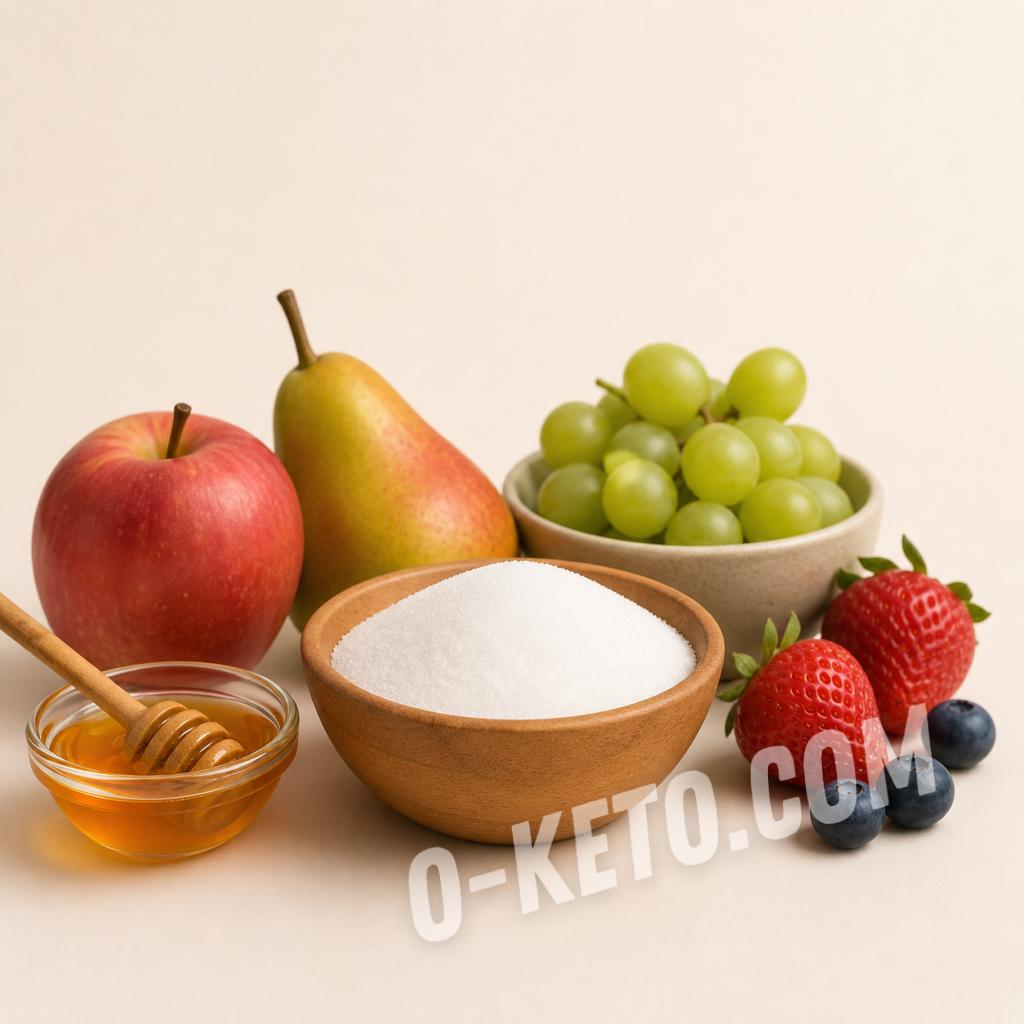
Fructose is a simple monosaccharide naturally found in fruits, berries, honey, some vegetables, and as part of sucrose. In whole foods it comes together with water, fiber, organic acids, polyphenols, and minerals, so its effect differs from isolated fructose in syrups, juices, and sweet drinks.
For nutrition tracking, fructose is useful as a separate nutrient: foods with similar total carbohydrate content can contain very different amounts of fructose. This matters for keto, LCHF, insulin resistance, fatty liver, fructose intolerance, and digestive sensitivity.
What fructose is
Fructose is a simple sugar with the same chemical formula as glucose but a different structure and metabolic pathway. It tastes sweeter than glucose, which is why it has long been used as a convenient sweetener.
In natural foods, fructose occurs both as free fructose and as part of sucrose. Nutrient tables usually track free fructose per 100 g of food, not the fructose part potentially released from sucrose.
How fructose is absorbed
Fructose is absorbed in the intestine differently from glucose, and tolerance varies from person to person. When a serving contains a lot of fructose and relatively little glucose, part of it may be absorbed poorly and cause bloating, fermentation, discomfort, or loose stools.
After absorption, much of the fructose goes to the liver. There it may help replenish liver glycogen, be converted to glucose or lactate, or, in excess, contribute to fat synthesis.
Food sources of fructose
The main natural sources are fruits, berries, honey, dried fruit, and some sweet vegetables. Apples, pears, grapes, mango, watermelon, dates, raisins, and honey are typically higher in fructose.
Processed sources are a separate issue: fructose syrups, sweet drinks, juices, desserts, sauces, and foods with added sugar. They deliver fructose quickly, often without fiber and together with excess calories.
Fructose and metabolism
Small amounts of fructose from whole foods are usually not a problem for a healthy person. The risks are more often linked to regular excess, especially from liquid and refined sources.
Chronically high fructose intake may increase liver load, raise triglycerides, stimulate lipogenesis, and worsen the metabolic context in people with insulin resistance. The key issue is not the mere presence of fructose, but its dose, source, and the overall diet.
Fructose on keto and LCHF
On a keto diet, fructose is usually limited together with total carbohydrates. Even though it may raise blood glucose less directly, it can replenish liver glycogen and interfere with stable ketosis when consumed in large servings.
In practice, sweet fruits, dried fruits, juices, honey, and syrups are best avoided or strongly limited. Small servings of berries are usually easier to fit into a low-carb diet because they contain less sugar and more fiber.
When fructose tracking matters
Separate fructose tracking is especially useful for fatty liver, high triglycerides, insulin resistance, diabetes, fructose malabsorption, IBS, and low-FODMAP diet planning.
If fruits, honey, or juices cause bloating, rumbling, pain, diarrhea, or strong sweet cravings, it is worth looking not only at total carbohydrates but also at the actual fructose amount in the serving.
Practical takeaways
Fructose is neither poisonous nor automatically healthy. In whole foods and moderate amounts, it behaves differently from sweet drinks and syrups.
For liver health, stable energy, and carbohydrate control, the most important steps are limiting liquid and added fructose sources, watching portion size, and comparing foods by fructose content per 100 g.
RDI and Practical Limit
Fructose has no essential recommended daily intake: the body does not need you to deliberately add it to the diet. The RDI values on this page should be read as a practical upper reference for free fructose, not as a target to reach.
For adults and pregnancy, the reference value is 25 g per day; for children aged 4-8 years, it is 15 g per day. With insulin resistance, fatty liver, high triglycerides, or poor fructose tolerance, the individually suitable amount may be lower.
If you have any questions about the term "Fructose", you can ask them to AI. Please note, a low-cost OpenAI model is used. It may answer questions about disease treatment with errors!

 1 / 4
1 / 4
 1 / 4
1 / 4 1 / 4
1 / 4
 1 / 4
1 / 4 1 / 4
1 / 4 1 / 4
1 / 4
