


Glycogen
The stored form of glucose in the liver and muscles, supporting blood sugar stability, muscle work, and training adaptation. In low-carb nutrition, glycogen explains early water loss, electrolyte needs, and changes in exercise tolerance.
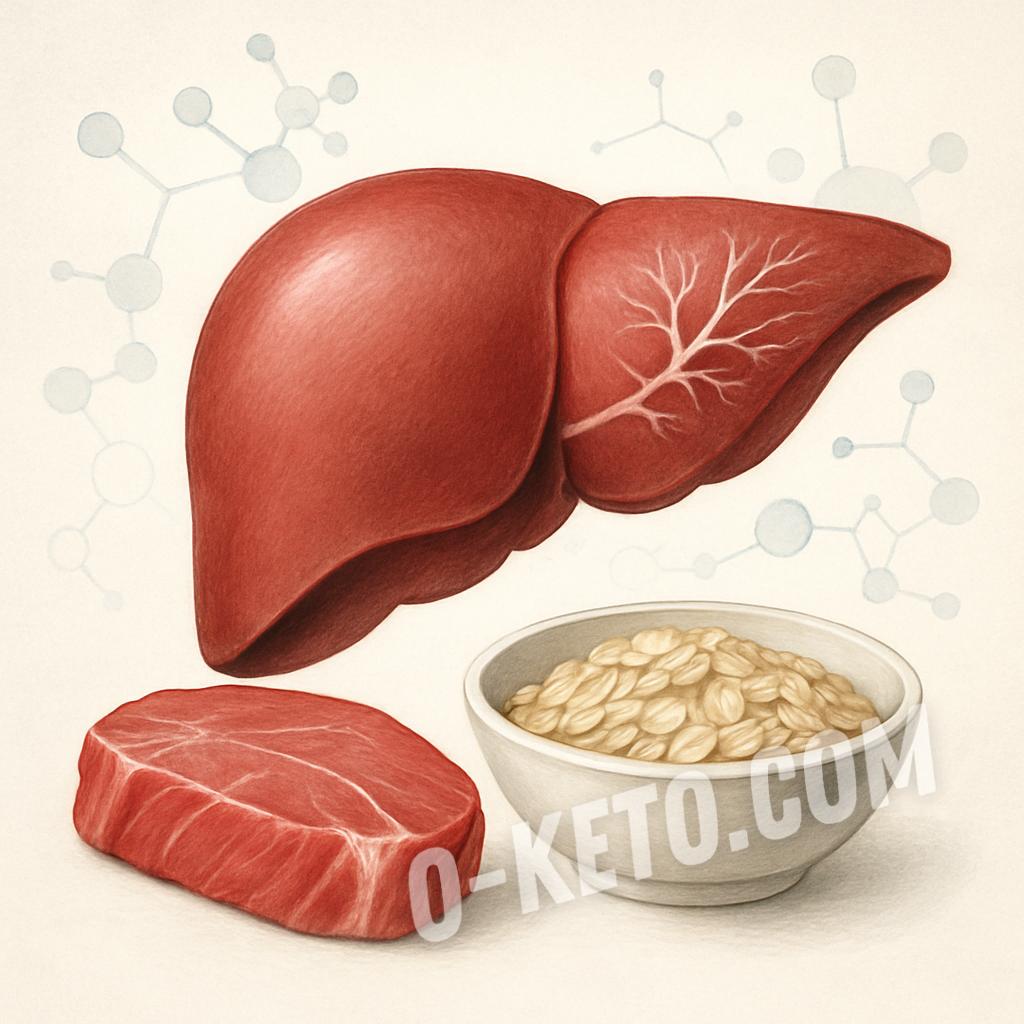
Glycogen is the stored form of glucose in humans and animals. The body does not keep large amounts of free glucose in the bloodstream because that would disturb osmotic balance and damage tissues. Instead, excess glucose after a meal is linked into large, branched glycogen molecules. The main stores are in the liver and skeletal muscles, with smaller amounts in other tissues. Liver and muscle glycogen serve different purposes. The liver helps maintain blood glucose for the whole body, while muscles mainly use their own glycogen for their own work.
How the body stores glycogen
After a meal containing carbohydrates, glucose enters the blood, insulin rises, and cells receive a signal to store energy. In the liver, part of that glucose becomes glycogen when immediate energy needs are already covered. In muscles, glycogen is restored especially actively after exercise, when cells are more insulin sensitive and ready to replace what was used. The branched structure of glycogen allows glucose units to be added and removed quickly. This makes it a convenient reserve: compact enough to store, yet accessible during exercise, fasting between meals, the overnight period, or an acute stress response.
Liver and muscles use it differently
Liver glycogen supports the whole body. Between meals and during the night, the liver breaks it down into glucose and releases glucose into the bloodstream so the brain, red blood cells, and other tissues have fuel. Muscle glycogen is different in function. A muscle mostly keeps it for itself because it cannot efficiently release glucose back into the blood. During training, climbing stairs, sprinting, or heavy strength work, the muscle uses its local reserve quickly. This is why a person may have normal blood glucose but still feel a drop in performance if muscle glycogen is not restored enough for the specific activity.
What changes on a low-carb diet
When carbohydrate intake falls sharply, glycogen stores decrease, especially during the first several days. Each gram of glycogen is stored with water, so the rapid weight loss often seen at the beginning of keto or LCHF is not only fat loss. It also reflects water and changes in intestinal contents. This is a normal part of adaptation, but it explains common complaints: weakness, headache, lower blood pressure, salt craving, cramps, and a temporary drop in exercise power. The issue is often not a dangerous lack of sugar, but a shift in water, sodium, potassium, magnesium, and the speed at which the body switches toward fat and ketones.
Glycogen, training, and recovery
For low-intensity activity, walking, and calm endurance work, the body can rely well on fatty acids. For explosive efforts, heavy sets, interval running, and prolonged intense exercise, glycogen remains an important fuel. Athletes using low-carb nutrition often notice that adaptation takes weeks and sometimes requires an individual strategy: more electrolytes, enough protein, adequate calories, targeted carbohydrates around training, or a softer LCHF approach rather than strict ketosis. Glycogen is not the enemy of keto. It is a physiological reserve, and the practical question is how many carbohydrates a person can tolerate without losing the metabolic goal.
Connection with insulin and fasting
Insulin promotes glycogen synthesis, while glucagon and adrenaline help break glycogen down when the body needs glucose. During fasting, liver glycogen is gradually used, and the liver then produces more glucose from lactate, glycerol, and amino acids. In diabetes, this regulation can be disturbed: the liver may release too much glucose in the morning, muscles may take up glucose less effectively after meals, and medications or insulin can change the risk of hypoglycemia. For that reason, prolonged fasting, sudden carbohydrate restriction, or intense training while using glucose-lowering therapy should be discussed with a clinician rather than guided only by general advice.
Common misunderstandings
A common mistake is to assume that empty glycogen always means better fat-burning adaptation. In real life, very low stores during high training load can worsen sleep, increase stress responses, reduce training quality, and trigger overeating. Another mistake is to confuse glycogen loss with stable fat loss. Water can leave quickly and return quickly when a person eats more carbohydrate or salty food again. That is not necessarily a failure of the diet; it is normal glucose storage physiology. It is more accurate to view glycogen as a dynamic reserve that changes with food, movement, sleep, hormones, stress, and liver status, not as a separate marker of health by itself.
If you have any questions about the term "Glycogen", you can ask them to AI. Please note, a low-cost OpenAI model is used. It may answer questions about disease treatment with errors!


 1 / 4
1 / 4 1 / 4
1 / 4
 1 / 4
1 / 4 1 / 4
1 / 4

 1 / 4
1 / 4
 1 / 4
1 / 4