


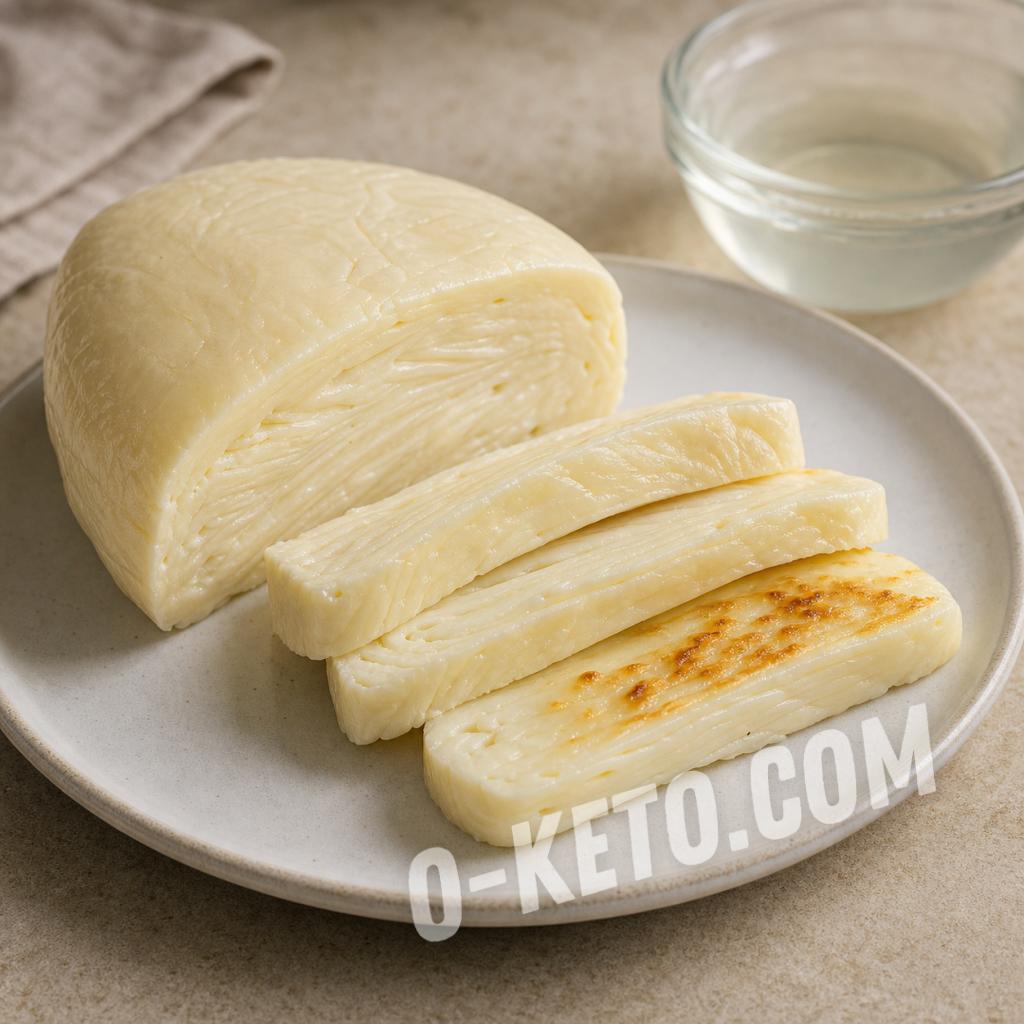

Suluguni is a brined cheese with a firm, springy, slightly layered texture. It is traditionally made from cow, sheep, goat, or mixed milk. The curd is heated, stretched, and matured in brine. This method gives the cheese a resilient bite when cold and a soft, stretchy texture when heated. Young suluguni is usually milder, while longer maturation creates a denser texture and a more pronounced salty flavor.
Composition and nutrition
One hundred grams of suluguni contains approximately 286 kcal, 20.5 g protein, 22 g fat, and less than 1 g carbohydrate. The exact profile varies by producer because milk fat, maturation, and brine concentration differ. The cheese supplies calcium, phosphorus, sodium, zinc, selenium, vitamins A, B2, and B12, plus a small amount of vitamin E. Its protein is a complete dairy protein, while the fat includes saturated and monounsaturated fatty acids. When planning a serving, consider the salt content as well as the very low carbohydrate content.
Choosing a good product
Good suluguni has a clean dairy or mildly sour aroma without ammonia, rancid fat, or a harsh chemical smell. The surface should be moist but not slimy. The cut surface is elastic and fairly uniform, sometimes showing natural stretched fibers rather than dry crumbs. Check the label for the type of milk, fat content, salt, preservatives, and vegetable fats. A cheese made with milk-fat substitutes should not automatically be treated as the same product, because its composition and melting behavior are different. A denser cheese is convenient for grilling, while a younger, less salty one works better in salads.
Cooking and pairings
Suluguni can be pan-fried, baked, grilled, or used in hot fillings. At high heat it develops a golden crust quickly, so thicker pieces are easier to control. Dry the cheese before frying; it can be cooked plain or coated very lightly with almond flour when a low-carbohydrate crust is desired. Suluguni pairs with eggs, meat, poultry, fish, tomatoes, cucumbers, herbs, zucchini, eggplant, and mushrooms. In a salad, fresh vegetables and an unsweetened acidic dressing balance its saltiness. If the cheese is too salty, soak it briefly in cold water or unsalted milk and pat it dry before use.
Storage
Keep suluguni refrigerated in a covered container or in its original brine pack. Without brine the surface dries faster, while an uncovered piece absorbs odors from other foods. After opening, follow the producer’s date and inspect the cheese before use. Freezing is possible, but thawing may make the texture more crumbly, so frozen cheese is best used in cooked dishes. Do not leave it at room temperature for a long time, especially in warm weather. Small white crystals on a matured cheese may be a normal maturation effect, but slime, unusual mold, or an unpleasant odor means the product should be discarded.
Using it in a diet
Suluguni works well in low-carbohydrate meals when the product is natural and not combined with sweet sauces or starchy breading. Its high salt level makes moderate portions sensible, particularly for people who need to monitor sodium or tend to retain fluid. It can add protein and fat to breakfast, a warm salad, or roasted vegetables, but it should not be the only protein source in the diet. Tolerance in lactose intolerance varies with maturation and individual sensitivity, while milk-protein allergy requires complete avoidance. Combine a moderate portion with vegetables, herbs, and another protein source when the cheese is used mainly for flavor.
When baking, add the cheese near the end if you want it to keep its shape, or earlier when a melted crust is the goal. Taste the dish only after adding suluguni because pickles, olives, and soy sauce can make the final result excessively salty. Cutting a portion before serving is useful for portion control, especially when the cheese is eaten alongside other rich ingredients.
For cold dishes, slice the cheese thinly; grating can be easier after a short period of chilling because a moist piece may stick together. If the cheese comes in brine, pat it dry after removing it from the package. This prevents excess liquid from thinning a dressing and helps the surface brown more evenly.


