


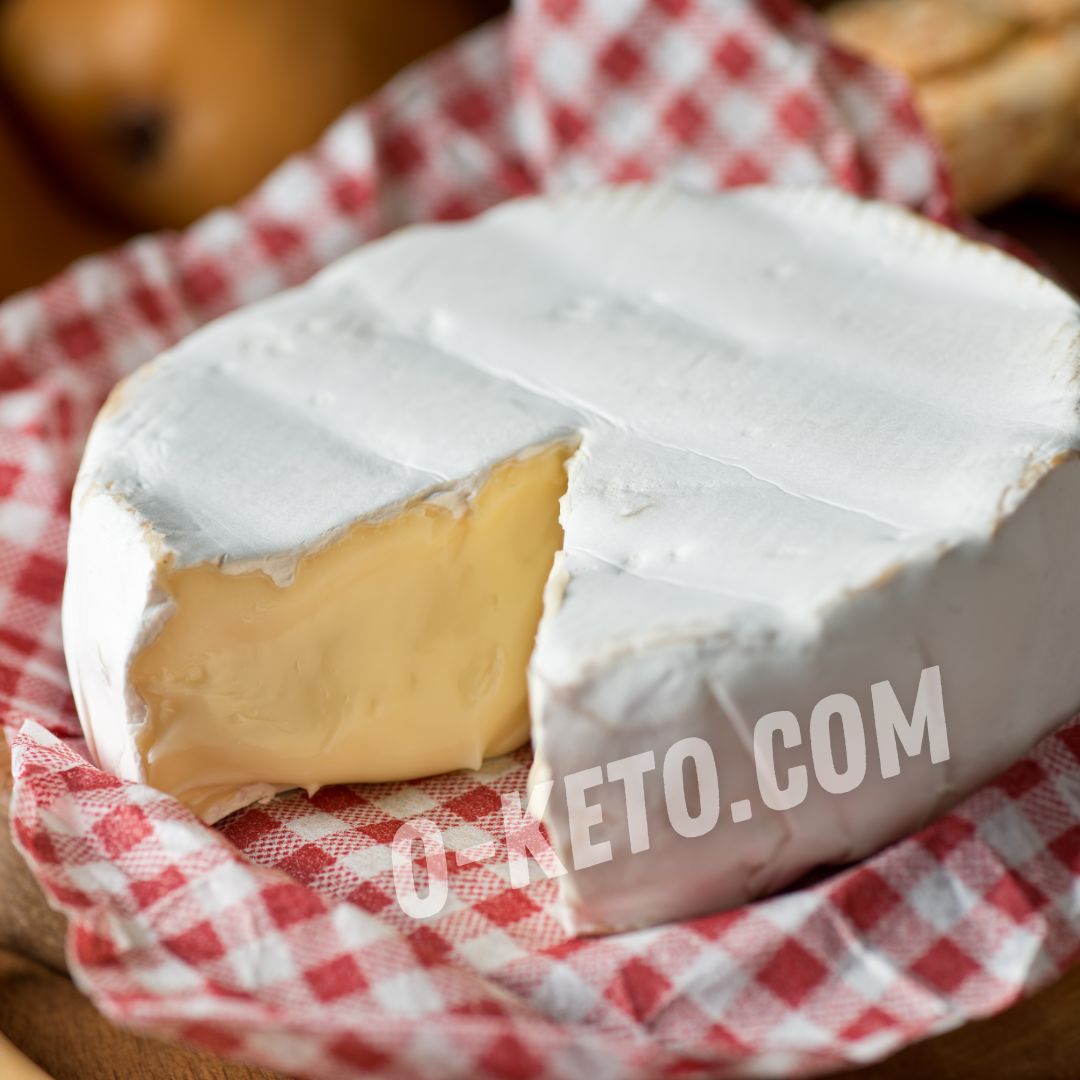

Brie is a soft French cow’s milk cheese with an edible white bloomy rind. It comes from the historic Brie region in northern France and has become one of the most recognizable soft cheeses. Young Brie is mild, creamy, and gently mushroom-like; a more mature wheel becomes runnier, more aromatic, and deeper in flavor.
This cheese is valued for its texture contrast: a thin velvety rind, a soft layer under it, and a creamy center. Brie can be served on its own or added to omelets, salads, sauces, casseroles, meat, mushrooms, and low-carb snacks. It quickly makes a simple dish richer, so a small portion is usually enough.
Nutrition
In 100 g of Brie there are usually about 330-350 kcal, roughly 18-21 g of protein, 27-30 g of fat, and about 0.5-1 g of carbohydrates. Exact values depend on producer, ripeness, and moisture. It contains milk protein, fat, salt, calcium, phosphorus, and B vitamins, but Brie is still a concentrated food rather than the base of the whole plate.
A practical serving is 25-50 g. This gives creaminess, aroma, and fat without making the dish too heavy in calories and salt. The glycemic load of Brie is minimal because it contains very few carbohydrates and part of the lactose is used during ripening. For people sensitive to dairy, tolerance still remains individual.
Fit for keto and LCHF
Brie fits keto and LCHF well by composition: few carbohydrates, enough fat, and moderate protein. It pairs with eggs, meat, poultry, leafy salads, cucumber, avocado, mushrooms, cauliflower, broccoli, nuts, and a small portion of berries. The cheese can create a dessert-like or restaurant-style plate without sugar or flour.
The limit is usually not carbohydrates, but calories, salt, and pairings. Brie is often served with bread, honey, jam, grapes, and dried fruit; those additions make the plate unsuitable for strict keto. For a low-carb serving, choose nuts, a small berry portion, greens, cucumber, olives, or sugar-free cured meats.
How to use it
Before serving, Brie is best taken out of the refrigerator for 20-30 minutes. Cold cheese feels firm and less aromatic, while at room temperature the creamy texture opens. The rind is usually eaten with the cheese if it is clean, smells normal, and is not damaged. Removing it is mostly a matter of personal taste.
Brie can be warmed gently in the oven until soft and served with nuts, thyme, or rosemary. In sauces, heat it carefully without strong boiling, otherwise the fat can separate. In omelets and casseroles it gives a creamy layer, and in salads it works well with bitter leaves, walnuts, and a tart dressing without sugar.
How to choose
Good Brie smells of cream, mushrooms, and fresh rind, without sharp ammonia, rancid butter, or damp notes. The rind should be white or cream-colored, velvety, and free of dark wet spots. The center is firmer in young cheese and softer or runnier in mature cheese. If the package is swollen or contains a lot of liquid, it is better to avoid it.
The ingredient list is usually simple: milk, salt, starter, enzyme, and mold cultures. For keto, avoid versions with sweet layers, fruit additions, breading, or ready sauces. If Brie is sold already baked, marinated, or as part of a snack, the label should be checked again.
Limits
Brie is a soft cheese with a bloomy rind. Pregnant people, anyone told by a clinician to follow stricter food safety rules, and those avoiding unpasteurized milk should choose pasteurized-milk versions and follow professional guidance. If there is a reaction to mold-ripened cheeses or milk protein, the product is better avoided.
The cheese is salty and calorie-dense, so it is easy to overeat, especially on a cheese board. It is more practical to cut a portion in advance and build low-carb additions around it than to put a whole wheel on the table without a plan.
Storage and substitutes
Brie should be kept in the refrigerator, wrapped in parchment or cheese paper and placed in a container. Fully tight plastic can make the smell sharper, while open storage dries the rind and transfers aroma to nearby foods. After opening, the cheese is best used within a few days.
Brie can be replaced with Camembert, Coulommiers, soft goat cheese, another bloomy-rind soft cheese, or cream cheese in recipes where texture matters. For a more neutral taste, mozzarella or young cheese can work, but the mushroom rind and aroma will be gone.


