White bloomy-rind cheeses look deceptively simple: a small wheel, a thin white rind, a soft interior, and a short list of basic ingredients. But this is exactly the category where technological mistakes show up very quickly. Camembert, brie, and similar cheeses are sensitive to milk quality, surface flora activity, drainage, surface moisture, and ripening speed. That is why the same formula gives one cheesemaker a silky flowing paste and gives another bitterness, a firm center, and a harsh smell.
When a white-rind cheese turns bitter, refuses to soften, or starts smelling strongly of ammonia, that is rarely random. These defects usually point either to protein breakdown moving in the wrong direction or to poor balance between surface mold, yeasts, acidity, moisture, and wheel thickness. Once the logic of these processes becomes clear, the problem is easier not only to diagnose, but also to prevent in the next batch.
Why bloomy-rind cheeses are so sensitive to details
White mold works from the surface inward. Penicillium and geotrichum develop on the rind, gradually change surface pH, release enzymes, and trigger the breakdown of proteins and fats. That is how the cheese develops its thin rind, creamy layer under the rind, and a firmer center that should soften more and more during ripening.
The difficulty is that this process depends on small details. If the surface stays too wet, mold development moves in an undesirable direction. If the surface is too dry, ripening slows down. If the milk produced a weak or overly wet curd, enzymes travel differently. If the wheel is too tall, protein breakdown simply does not reach the center in time. Blooomy-rind cheeses therefore tolerate less process noise than many beginners expect.
Why bitterness appears
Bitterness usually comes from the accumulation of long bitter peptides or from incomplete conversion of those peptides into shorter, less bitter fragments. Protein breakdown itself is necessary in these cheeses. Without it, the cheese would stay dense and would never develop the characteristic softening. The goal is not to stop proteolysis, but to keep it moving at the right pace and prevent it from becoming unbalanced.
One common cause is an unsuitable or overly aggressive coagulant. Another is excessive activity of geotrichum or other surface cultures, where proteins are being broken down actively but the rest of ripening is not keeping the process harmonious. Bitterness can also increase when mesophilic starter activity is too strong, especially if drainage was poor and the cheese mass remained too wet from the start. In that case, the rind begins working quickly while the center still holds a different internal chemistry.
The most frustrating cause is poor milk quality and contamination with proteolytic microflora before the make even begins. If milk is collected badly or carries a heavy bacterial background, that kind of bitterness is often impossible to fully correct later by changing ripening conditions alone. The outside may still look acceptable while the flavor remains coarse and unpleasant.
Why the cheese does not soften and melt inside
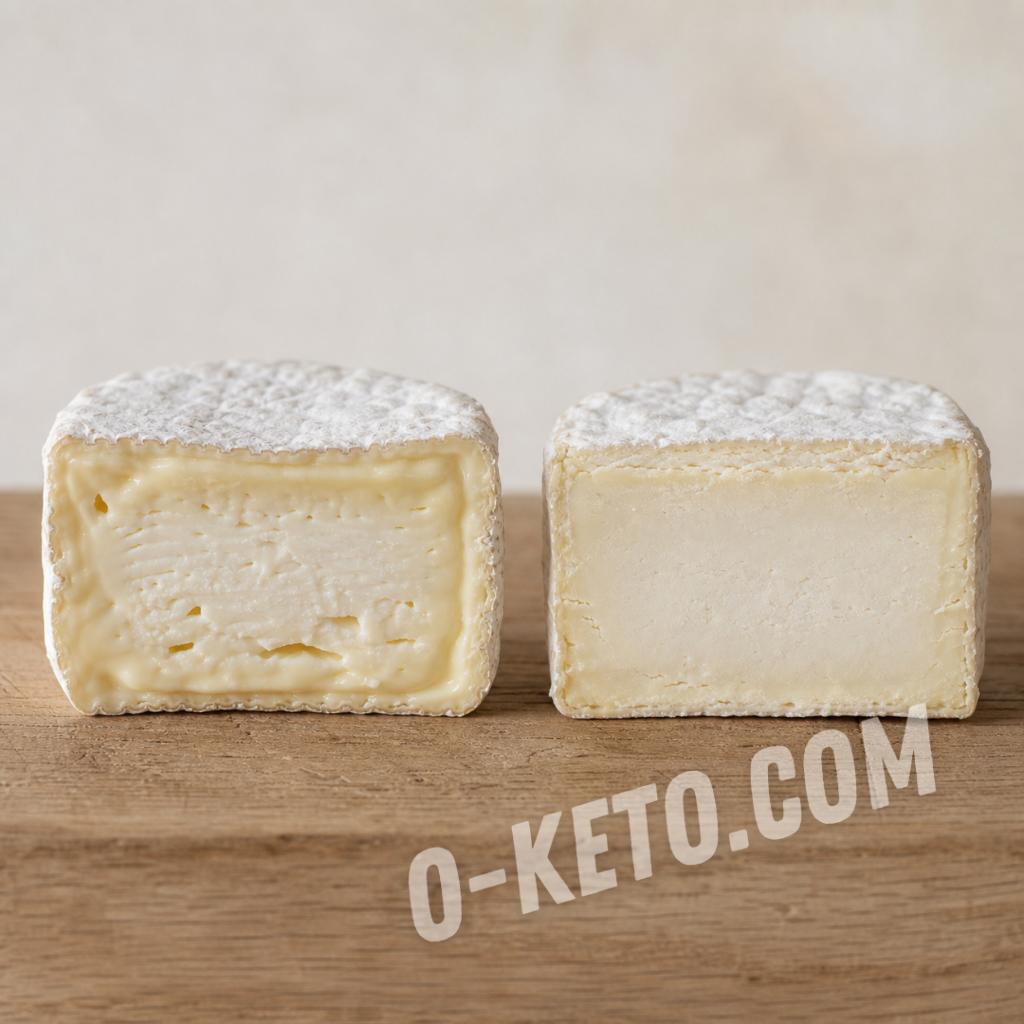
When a white-rind cheese does not soften, the problem is usually not that there is too little visible mold, but that enzyme activity on the surface is moving too slowly or in the wrong direction. The mold must do more than simply cover the rind. It must support the gradual movement of enzymes into the body. If that movement is delayed, the center stays dense and chalky.
One of the most important factors is insufficient surface deacidification. For normal ripening, yeasts and companion microflora should help remove excess acidity from the rind so that mold can work in a comfortable pH range. If that does not happen, surface proteolysis lags and the cheese never develops the beautiful softening under the rind.
A second common cause is incorrect moisture balance. A surface that is too wet interferes with harmonious mold development and creates conditions for defective ripening. A surface that is too dry is also problematic: the rind works sluggishly and enzymes penetrate more poorly into the body. Cheesemakers often summarize this with a practical phrase: mold does not like having its feet in water, but it does not like a parched rind either.
The third factor is wheel geometry. White mold acts from the outside toward the center, so an overly tall wheel almost automatically creates the risk that the middle will not reach the desired softness in time. On the cut, this appears as a properly softened zone under the rind and a stubborn dense column in the center. In that case, the issue is not only aging time, but also the design of the cheese itself.
Why ammonia smell develops
A light ammoniac note in bloomy-rind cheeses is not always a disaster. During ripening, a small amount of ammonia can form naturally. But a strong harsh smell means protein breakdown has gone too far and the mold is now working too aggressively. At that stage, amino acids begin turning into metabolic by-products, and the aroma becomes heavy, pungent, and unpleasant.
Most often ammonia appears when proteolysis is excessive: the surface is too active, the cheese is held too long, storage humidity is wrong, the cave is too warm, or the cheese simply aged beyond its best window. It is important to remember one more practical truth here: a white-rind cheese does not stop developing just because it was moved to the refrigerator. If the best serving stage is missed, ammonia generally keeps increasing.
That is why bloomy-rind cheeses should be eaten in the right phase instead of being treated like products that can sit indefinitely without changing. For many classic soft white cheeses, prolonged holding is itself a direct route toward ammoniac harshness.
How ammonia differs from an acetone-like smell
Ammonia and acetone are not the same, even though both are perceived as defects. Ammonia is primarily linked to disturbed protein breakdown, meaning excessive or overly rough proteolysis. An acetone-like, solvent-like, sharply chemical note is more often connected to disturbed lipolysis, in other words to problematic fat breakdown.
Acetone notes often appear when mold selection is wrong and the chosen flora has pronounced lipolytic activity, or when the milk itself already has unstable fat quality. If lipid oxidation has already started in the milk, ripening can intensify the unpleasant result later. In that case, the cheesemaker needs to examine not only the ripening environment, but also the starting raw material.
Which mistakes most often sit behind these defects
- Excessively wet curd mass. Poor drainage and excess moisture create uneven ripening and increase the risk of bitterness.
- A surface that is too dry or too wet. In both cases, harmonious mold development suffers.
- An unsuitable coagulant or overly aggressive surface cultures. This shifts the balance of proteolysis.
- A wheel that is too tall. Enzymes simply do not reach the center in the needed rhythm.
- Overripening. White cheese moves quickly from pleasant creaminess into ammoniac sharpness.
- Poor milk quality. Future bitterness or unpleasant odor may be built in from the start.
What to do in practice
If the defect has already appeared, fully rescuing that wheel is not always possible, but it almost always gives useful diagnostic information. With bitterness, review the coagulant, milk quality, drainage, and surface-culture activity. With a firm center, review surface moisture, wheel height, and rind deacidification. With ammonia, review aging time, storage temperature and humidity, and the point at which the cheese should have been eaten earlier.
The most useful path is to change one factor at a time rather than many at once. For example, first reduce wheel height, then improve drainage, then adjust ripening humidity. That makes it easier to see where the process is truly breaking instead of drowning in too many variables at once.
Practical conclusion
Bitterness, lack of softening, and a sharp ammonia smell in white bloomy-rind cheeses are almost always linked to how proteolysis is progressing and how well milk, drainage, surface moisture, wheel geometry, and ripening speed are balanced. White mold cheeses require less “magic” than precision and observation. Once that logic is understood, it becomes much easier not only to correct mistakes, but also to build the next make in a way that brings the cheese to its best creamy stage without bitterness and without aggressive ammoniac notes.