In cheesemaking, coagulation is the crucial transition where milk stops behaving like a liquid and starts becoming curd. That one change determines whether the final product will be soft and creamy, sliceable and firm, strong enough for pressing, or suitable only for gentle draining. Two of the main routes are acid coagulation and enzymatic coagulation. They can overlap in practice, but they are not the same process and they do not give the same structure.
Once you understand the difference, it becomes much easier to choose not only a recipe, but also the milk, the starter strategy, the need for calcium chloride, and the kind of whey behavior you should expect. This is one of the points where home cheesemaking becomes less mysterious and much more controlled.
What acid coagulation means
Acid coagulation happens when the pH of milk drops far enough that the protein system loses stability and begins collecting into curd. In practice this usually comes from starter activity, spontaneous souring, or direct acid addition. This route is common in cottage-cheese styles, fresh cheeses, some soft spreadable dairy products, and a range of simple home sour-milk processes.
The major practical feature of acid coagulation is that the curd is often softer, more fragile, and less elastic than a classic rennet curd. That can be perfect for cheeses where tenderness matters more than structural strength, but it is less suitable for styles that require clean cutting into curd cubes, controlled cooking, and strong pressing.
What enzymatic coagulation means
Enzymatic coagulation is built around milk-clotting enzymes, most often chymosin or related rennet systems. The enzyme acts on casein and helps create a more organized protein network. Under good conditions this produces a clearer break, a more cohesive curd, and a better base for cutting, stirring, heating, and whey drainage.
That is why enzymatic coagulation underlies most semi-hard and hard cheeses, along with many classic soft rennet cheeses. It is the route you usually want when curd behavior during later handling matters as much as the initial set.
How the curd feels different
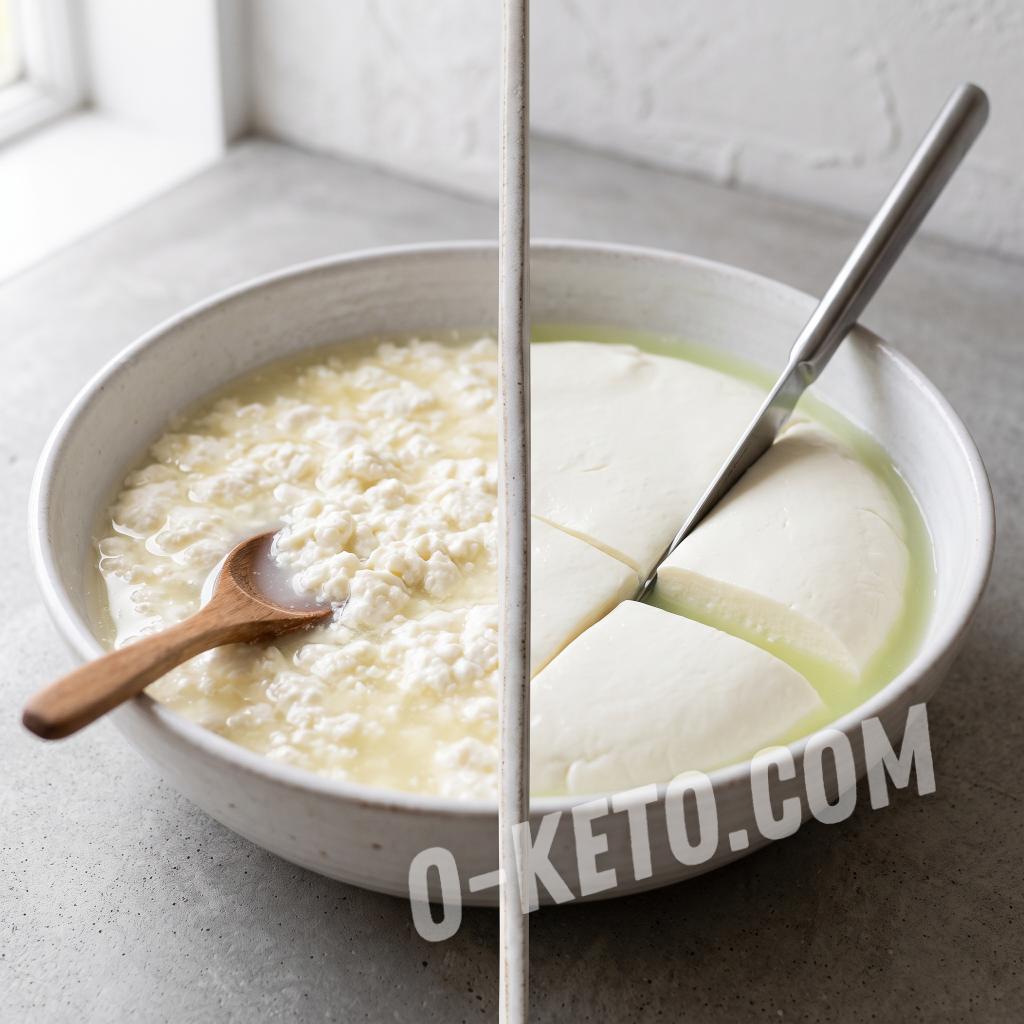
The difference is not only theoretical. Acid curd often feels more delicate, wetter, and easier to break under rough handling. It may not hold sharp cubes as well and can move quickly toward a draining mass rather than a strong curd grain. That is not a flaw. It simply belongs to a different type of dairy product.
Enzymatic curd is usually more elastic and easier to manage in classic cheese processes. It more often gives a clean break and tolerates cutting, stirring, and gradual whey release better. This difference becomes especially important when moving beyond simple fresh curd products toward more structured cheeses.
When acid coagulation works better
Acid coagulation shines when the goal is a fresh, soft, not overly dense product. It is well suited to home curd cheeses, certain spreadable cheeses, and situations where a tender texture matters more than a strong curd that can be cut and cooked. It may also be useful when good rennet is unavailable or when the milk responds poorly to rennet coagulation.
Another benefit is relative simplicity. Acid-driven processes often require less precise control over flocculation and curd-cut timing. But that simplicity comes with limits: the structure is usually less versatile for aging and for more demanding curd handling.
When enzymatic coagulation works better
Enzymatic coagulation is the stronger choice when curd strength and control matter. If the curd will later be cut into cubes, stirred, heated, pressed, and sometimes aged, rennet-based coagulation usually provides the necessary framework. It is better suited to cheeses such as gouda, cheddar, many alpine styles, mozzarella, and a wide range of semi-hard and hard cheeses.
It also tends to help with whey clarity and yield control. A well-formed rennet curd usually loses fewer fine protein particles during cutting than an unsuitable acid curd in the same type of recipe would.
Why this is not only about acid or only about rennet
In real cheesemaking, the two routes are not completely isolated. Even in enzymatic coagulation, starter cultures matter because they shape the pH, flavor, and later ripening behavior. In acid coagulation, milk quality, temperature, and time still strongly affect the final texture. So the most useful question is not which factor is “more important” in the abstract. The useful question is which mechanism is leading the process in the cheese you are making.
If rennet is building the main structure, the process logic is one thing. If protein destabilization from low pH is doing most of the work, the logic is different. That changes everything from cutting style to whey behavior.
How pasteurization and calcium change the picture
Pasteurization interferes especially with enzymatic coagulation because it can reduce the availability of calcium needed for a strong rennet set. That is why calcium chloride is often useful after pasteurization. In acid coagulation this is usually less critical because the main driver is pH decline rather than ideal rennet performance.
That does not mean acid coagulation ignores milk quality. It means rennet-based systems are usually more sensitive to mineral balance, milk freshness, and precise temperature control.
What whey can tell you
The whey and curd after acid coagulation often look different from what you see after a good enzymatic set. A weak acid curd may lose more fine particles and demand gentler handling. A good enzymatic curd more often releases cleaner whey and holds its shape better. This is not an absolute rule in every vat, but it is useful for diagnosis.
If you expected a structured cheese curd and instead see cloudy whey, a weak break, and curd that spreads apart, the process may have moved away from effective enzymatic coagulation or the milk may simply have been a poor fit for that route.
What to choose at home
If the goal is a fresh soft product with a simple household process, acid coagulation is often the easier fit. If the goal is a more classical cheese with controlled moisture, curd cutting, and the possibility of pressing or aging, enzymatic coagulation is usually the main choice. The practical question is not which route is more “correct.” The practical question is which route matches the texture and handling needs of the cheese you want.
One of the most useful steps for home cheesemakers is to stop trying to make every style with the same logic. Once you know which mechanism should dominate in a recipe, troubleshooting becomes easier and the result becomes far more repeatable.