


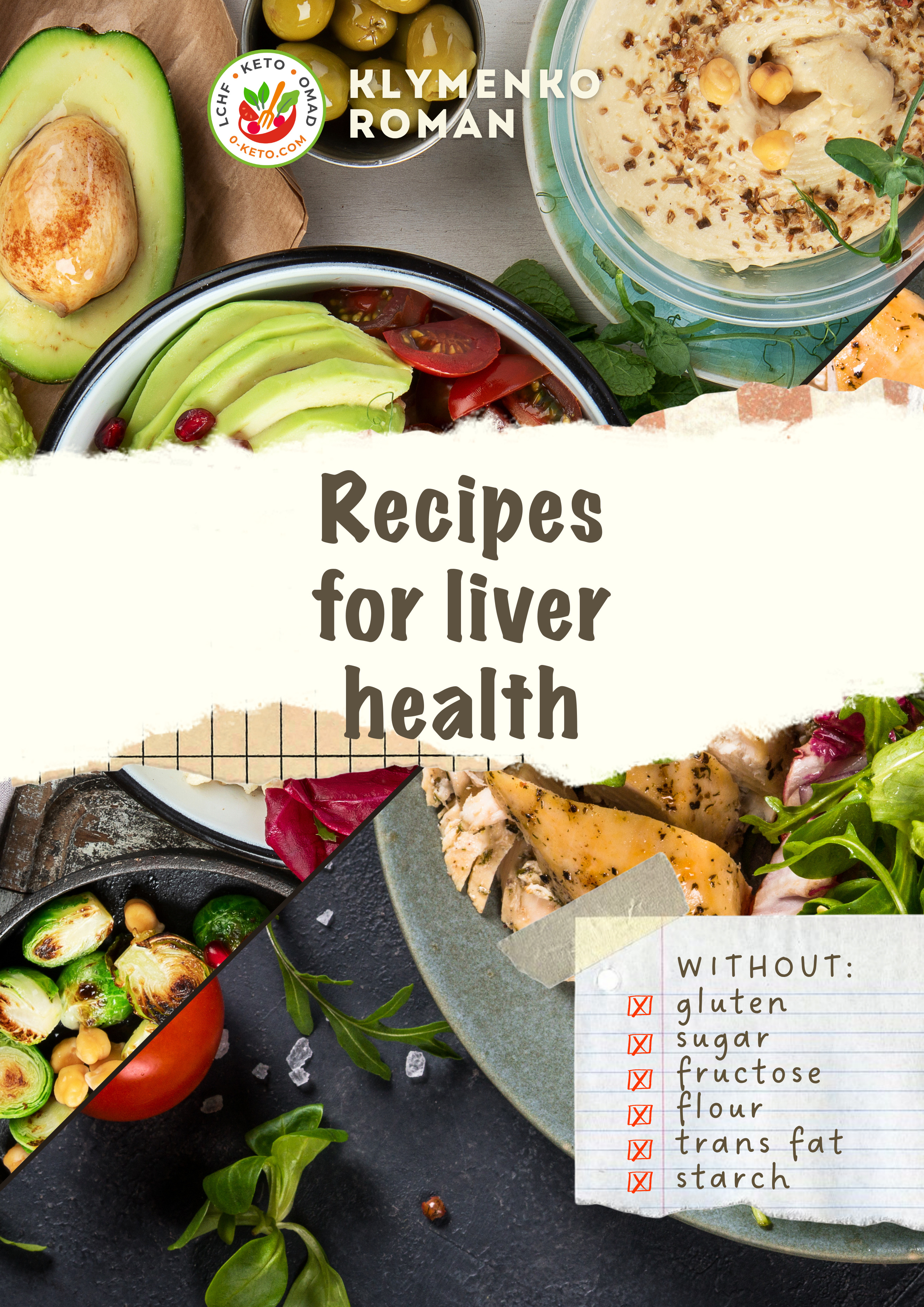
Liver Support Recipe Book
Free
About this book
“Recipe Collection for Liver Health” is the free version of the book focused on food choices and recipes for Liver Health. It is meant for readers who need more than a random set of healthy dishes: a clear food logic and recipes that can be used in everyday life.
The liver is one of the body’s main metabolic organs. It processes fats, carbohydrates, and proteins, handles excess compounds, produces bile, and helps maintain stable energy.
Liver health is not about “detox” promises. It is about regular food that provides the nutrients the liver needs for normal work, especially bile flow, fat metabolism, antioxidant protection, and methylation.
The book includes a practical recipe base. They are organized into sections such as From Eggs, Baked goods, Sauces and Dressings, Desserts and sweets and From Meat and Chicken, so the book works as an everyday cooking tool rather than a one-evening read.
The product section is a practical guide to the foods that help build a consistent nutrition plan for Liver health. Recipes show ready meals, while products explain the ingredients behind them: where protein comes from, which fats support satiety, and which vegetables, herbs, seeds, sauces, and additions make the diet more varied.
The nutritional side of Liver health depends on a balanced intake of key nutrients. In the following section we include a short selection of nutrients connected with this topic.
Congratulations! You have taken a practical step toward building meals that are not only enjoyable, but also better aligned with Liver Health.
The free version works as a practical starting point: it gives enough material to understand the direction, test the core dishes and see which food choices fit everyday life best. It also includes compact product and nutrient sections, while the full version expands both the recipe base and the reference material.


