
Yeast is used in baking not to replace flour and not to make every recipe low-carb. Its main job is to ferment dough by producing carbon dioxide from available sugars. The gas expands small pockets inside the dough, while proteins and other structural ingredients hold those pockets in place. This creates volume, a lighter crumb, and a recognizable bread aroma. Yeast is therefore most useful when a formula needs a porous, elastic, and less compact texture.
What yeast actually does in dough
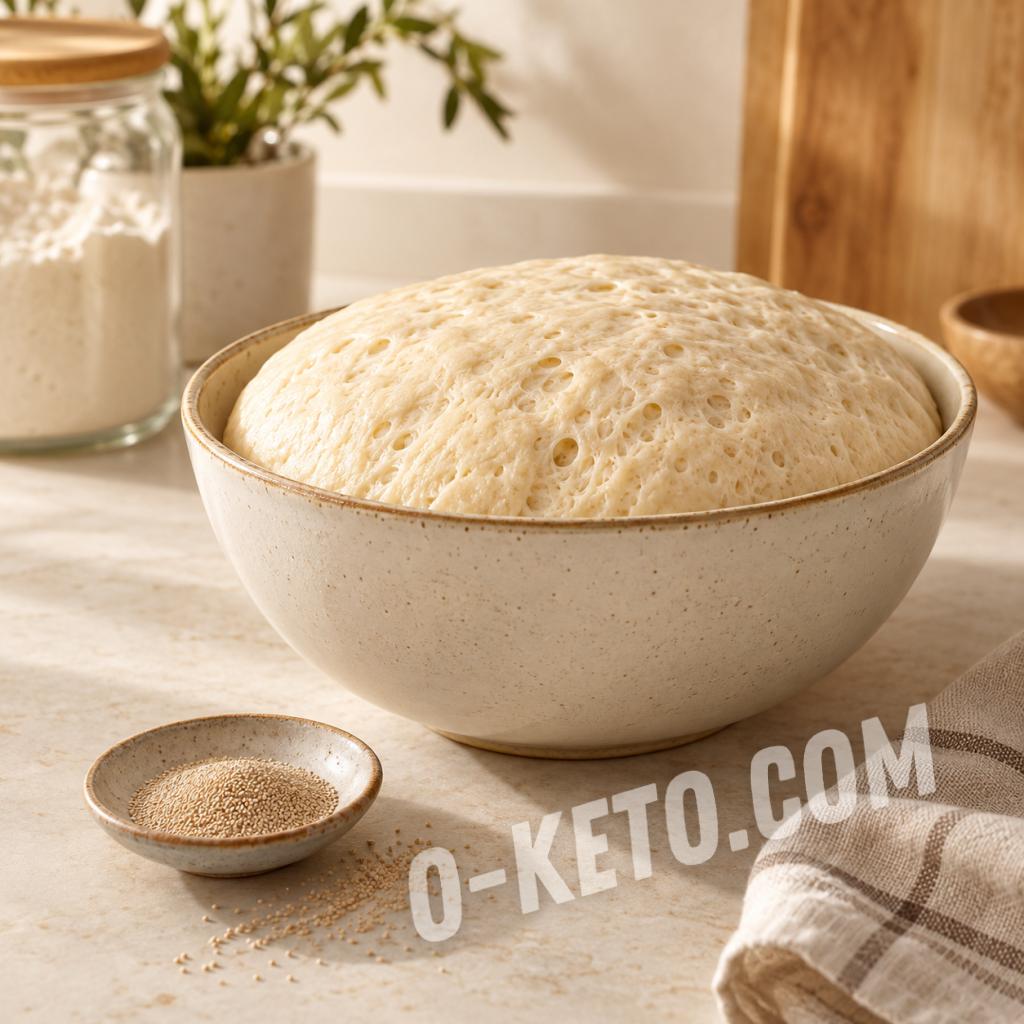
Yeast needs moisture and food in order to work. During fermentation it releases carbon dioxide and small amounts of aroma compounds. The gas first dissolves in the dough, then gathers into tiny bubbles and gradually enlarges them. When the dough has enough strength, it rises and keeps its shape. When the structure is weak or the mixture contains too much water, bubbles merge and the baked item can collapse.
Rising depends on more than the amount of yeast. Temperature, time, hydration, salt, available food, and the ability of the base to retain gas all matter. A larger dose does not always improve the result: it can create a harsh aroma, make the dough overproof quickly, and reduce stability. A smaller dose with a longer fermentation often produces a deeper aroma and more even pores.
How fermentation changes texture and aroma
Fermentation gradually changes the feel of dough as well as its volume. The dough becomes more extensible, the aroma becomes deeper, and the flavor less flat. In classic dough, yeast works with a gluten network. Low-carb formulas may not have that network, so they rely on eggs, dairy proteins, psyllium, cheese, or other ingredients specified by the recipe. Yeast does not build the framework by itself: it produces gas, and the formula still has to hold that gas.
This is why yeast cannot simply be added to every mixture with the expectation of a bread-like result. If the base cannot hold bubbles, the dough will barely expand. It may develop aroma while remaining dense. That is a limitation of the formula, not a reason to keep increasing the yeast dose.
Why yeast does not keep living in baked food
Yeast is active in suitable moist dough, not in a dry finished product. As the dough heats, fermentation stops, moisture changes, and the crumb structure sets. In baked goods yeast no longer keeps lifting the dough or behaves as a living fermenting system. Claims that yeast in baked bread continues to take over the intestines do not describe what happens during baking.
Discomfort after eating baked food can depend on portion size, the complete recipe, fat, fiber, individual tolerance, and how long the dough fermented before baking. It is not accurate to attribute every reaction to yeast alone. If a food repeatedly causes symptoms, assess the entire recipe and discuss persistent problems with a qualified professional.
When yeast makes sense in low-carb baking
Yeast makes sense when you want a bread-like note, fermentation aroma, or gentle porosity and the base is already designed to be low in digestible carbohydrates. A small amount of yeast does not cancel out flour, starch, sugar, syrup, or a large portion elsewhere in the recipe. Keto suitability is judged from the complete formula and serving size, not from one ingredient.
Classic wheat dough with sugar does not become keto merely because it contains yeast. Conversely, yeast can be useful as a flavor and texture ingredient in a suitable protein-and-fiber base. If a recipe needs sweetness, sugar and syrup should be replaced only with an approved sweetener according to the recipe rules; yeast is not a sweetener.
How to choose yeast and prepare the dough
Instant dry yeast can usually be mixed with dry ingredients, while active dry or fresh yeast may be checked in liquid when the manufacturer recommends it. The liquid should be warm rather than hot. Excessive heat can reduce yeast activity, while cold liquid slows fermentation considerably. Salt should be distributed evenly instead of being placed in a concentrated pile directly on the yeast.
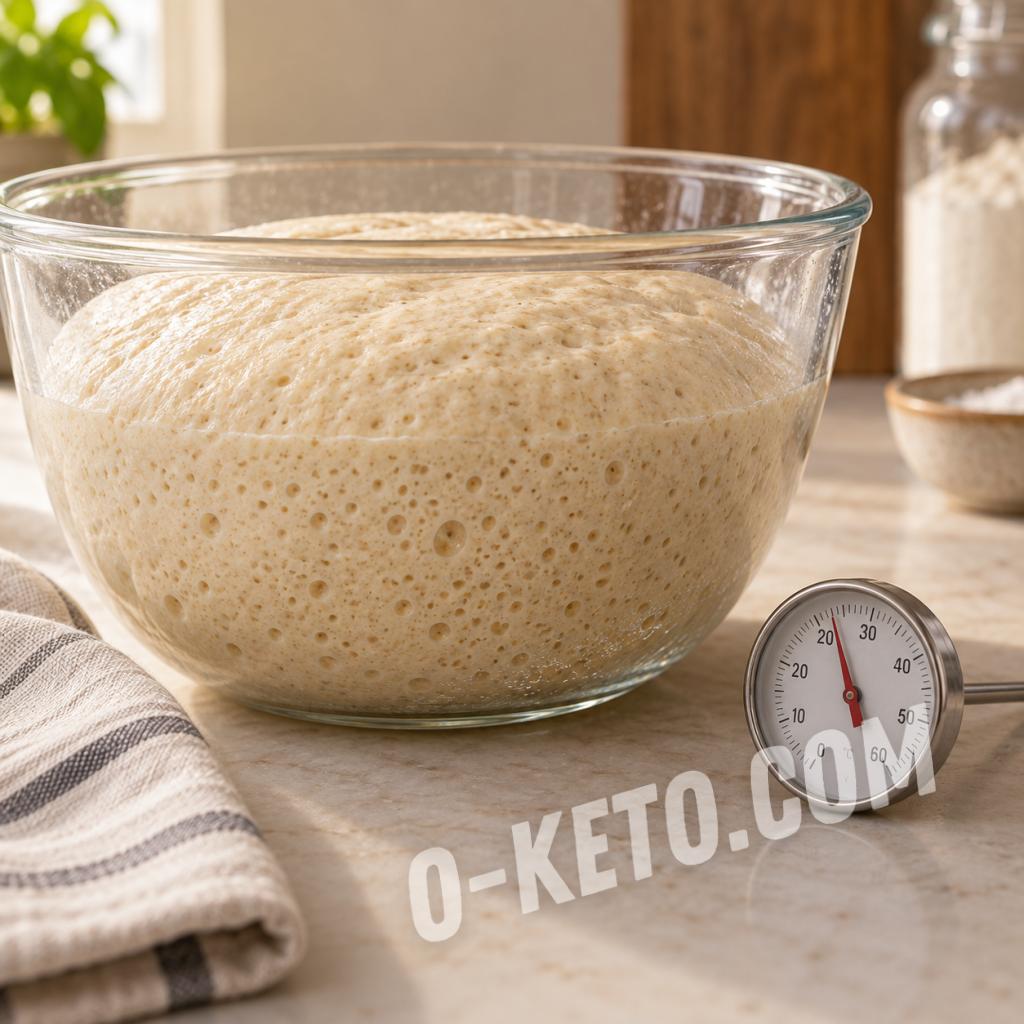
Watch the dough, not only the clock. It should become visibly larger, more resilient, or dotted with small bubbles, depending on the base. Low-carb dough may rise less dramatically than wheat dough, so define the expected result in advance. Overproofing creates large weak pockets and increases the risk of collapse; underproofing leaves a tight crumb and a less developed aroma.
Why dough fails to rise or collapses
If there is no rise, check the yeast date and storage, liquid temperature, hydration, and whether the base has a suitable framework. The room may be cold, the mixture may contain too much salt, the dough may need more time, or the formula may simply have nothing capable of holding gas. If it rises and then falls, possible causes include overproofing, excess moisture, weak structure, or moving the pan too abruptly.
The oven also affects the result. Actual temperature may differ from the display, and strong top heat or an air fryer can set the crust before the center stabilizes. Preheat the oven and avoid opening the door unnecessarily at the beginning. After baking, allow the item to cool before slicing so the crumb can finish setting.
What to check before baking
Before mixing, check the quantities, yeast date, and storage conditions. After mixing, assess the consistency and expected volume, then allow enough time for fermentation. Before the pan goes into the oven, make sure it is not overfilled and that the dough has room to expand. Do not cut the baked item immediately: a hot crumb is still unstable and can seem wetter than it will be when cool.
Conclusion
Yeast is used mainly for fermentation, carbon dioxide, aroma, and a lighter structure. It works only with a formula that can retain gas and cannot repair an unsuitable flour or excessive carbohydrates. In low-carb baking, treat it as a precise flavor and texture tool: check the base and portion first, then choose the dose, temperature, and fermentation time.