


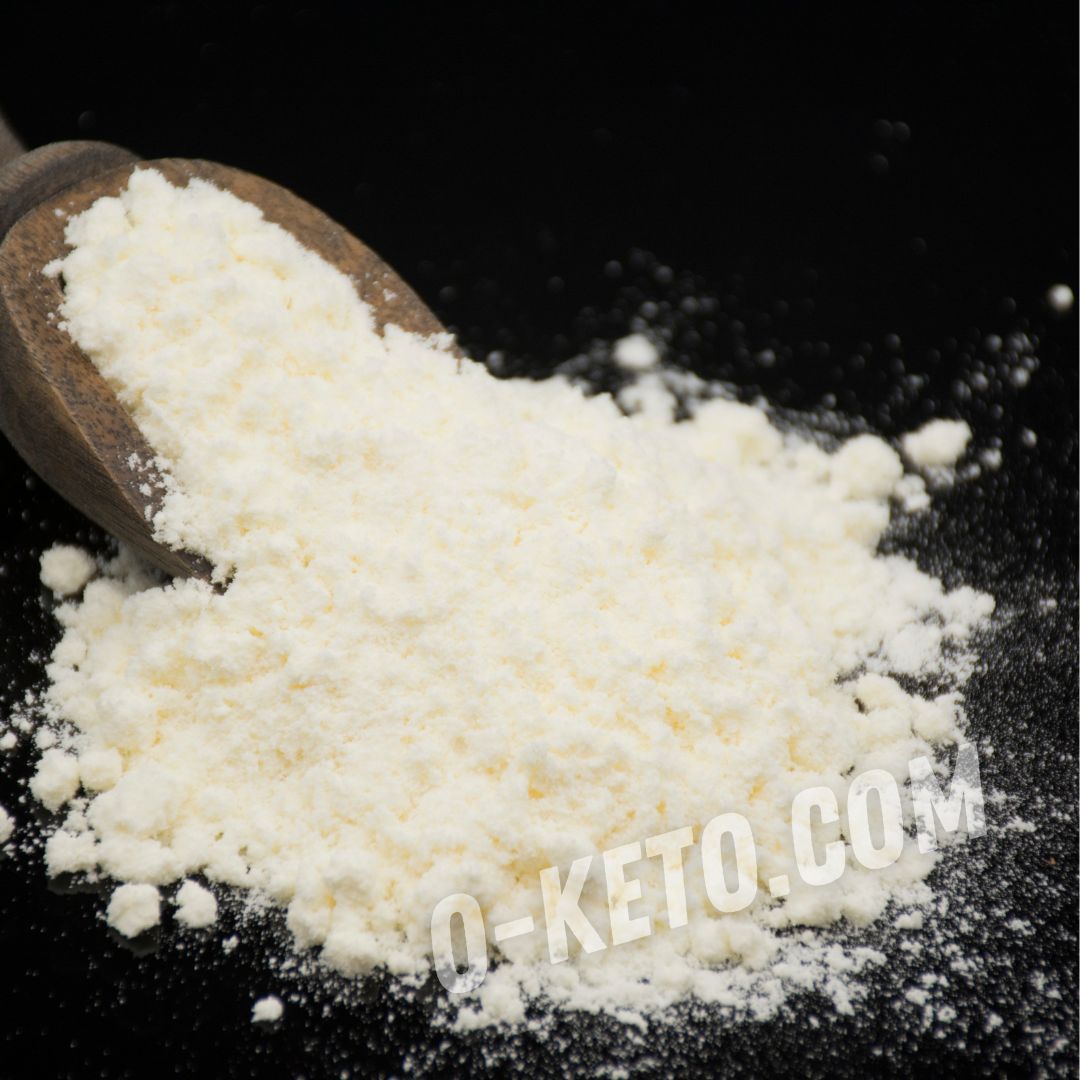

Powdered milk is milk with most of the water removed. After drying, the powder keeps concentrated dairy flavor, protein, milk fat, lactose, and minerals. It is used when a recipe needs milky body without extra liquid: creams, drinks, sauces, homemade yogurt, cheesemaking, desserts, coating mixes, and long-storage pantry supplies.
There is whole, skimmed, and partly skimmed powdered milk. Whole powder contains more fat and gives a creamier taste, but it stores worse. Skimmed powder is easier to store and measure, yet it has a higher share of lactose and protein per 100 g. Instant versions are convenient for drinks, but may contain extra ingredients to improve dissolving.
Powdered milk is not the same as cream and not the same as protein powder. It is a concentrate of ordinary milk, so along with protein and minerals it contains a noticeable amount of milk sugar. Lactose is the reason this product is difficult for strict keto, especially when the powder is used generously and the serving is not counted.
Nutritional value
In 100 g of whole powdered milk there are usually about 480–520 kcal, 24–27 g of protein, 25–28 g of fat, and 36–40 g of carbohydrates. Skimmed powder has much less fat, while carbohydrates are often around 50 g per 100 g. Values vary by producer and process, so the label matters for exact counting.
Powdered milk contains calcium, phosphorus, potassium, magnesium, B vitamins, and, in the whole version, fat-soluble components of milk. But it is concentrated: one tablespoon looks small, yet already contains carbohydrates. In recipes the powder adds up quickly if it is used as a base rather than as a minor ingredient.
Is it suitable for keto?
For strict keto, powdered milk fits only in small amounts. It can be useful as a technical addition: a teaspoon in sauce, a little in homemade yogurt, sugar-free ice cream mixture, or cheese filling. A glass of milk reconstituted from powder, however, usually brings too much lactose for a low-carb pattern.
Whole powdered milk is often a better choice than skimmed powder when flavor and a lower carbohydrate share by weight matter. Still, fat does not remove lactose. In LCHF, small portions may be used if counted in advance. In strict keto, cream, butter, mascarpone, cheese, unsweetened coconut milk, or sugar-free protein powder are often easier choices unless the recipe specifically needs milk powder.
How to use it
The powder is convenient as a dairy flavor enhancer. It can be added to sauces, creams, omelet mixtures, homemade cheese, yogurt, low-carb ice cream, drinks, and nut-flour dough. It helps make texture thicker, but too much can give a cooked-milk note, stickiness, or a dry powdery feel.
To avoid lumps, first mix powdered milk with a small amount of warm liquid into a paste, then dilute to the needed consistency. It dissolves worse in cold water. If it is added to a hot sauce, add it gradually and avoid long boiling: the taste may become rougher and the proteins may curdle.
How to choose
A good ingredient list should contain milk or skimmed milk, without sugar, syrups, vegetable oils, or starch. For keto, it is especially important to distinguish powdered milk from powdered dairy drinks: those often contain sugar, flavorings, maltodextrin, and thickeners.
The powder should be dry, light-colored, and free of rancid smell, damp clumps, or gray tone. Whole powdered milk spoils faster in aroma because of the fat. If it smells like old oil, cardboard, or damp storage, it is better not to use it. For cheesemaking and yogurt, choose powder with clear fat content and no unnecessary additives.
Limitations
The main limitation is lactose. With lactose intolerance, powdered milk may cause discomfort even in small amounts. It is also unsuitable for people with allergy to milk proteins. For anyone counting carbohydrates strictly, weighing the powder is safer than measuring by eye.
How to store it
Keep powdered milk in a tightly closed jar or bag, in a dry dark place, away from heat and wet spoons. After opening, whole powder is best used faster than skimmed powder. A large stock is easier to keep if divided into smaller containers. Reconstituted milk should be stored like any perishable dairy product: in the refrigerator and for a short time.
What can replace it?
If creaminess is needed with less lactose, use cream, butter, cream cheese, mascarpone, or thick unsweetened Greek yogurt. For a dry mix, sugar-free whey or casein protein can work, but taste and recipe behavior will differ. In dairy-free dishes, coconut cream or unsweetened coconut milk can be used, keeping their own aroma in mind.
Substitution options in recipes
Coconut cream. Lactose- and casein-free, but with almost twice the fat. In baking, reduce butter/cream by 10% and add a pinch of salt to achieve a "dairy" flavor.


