


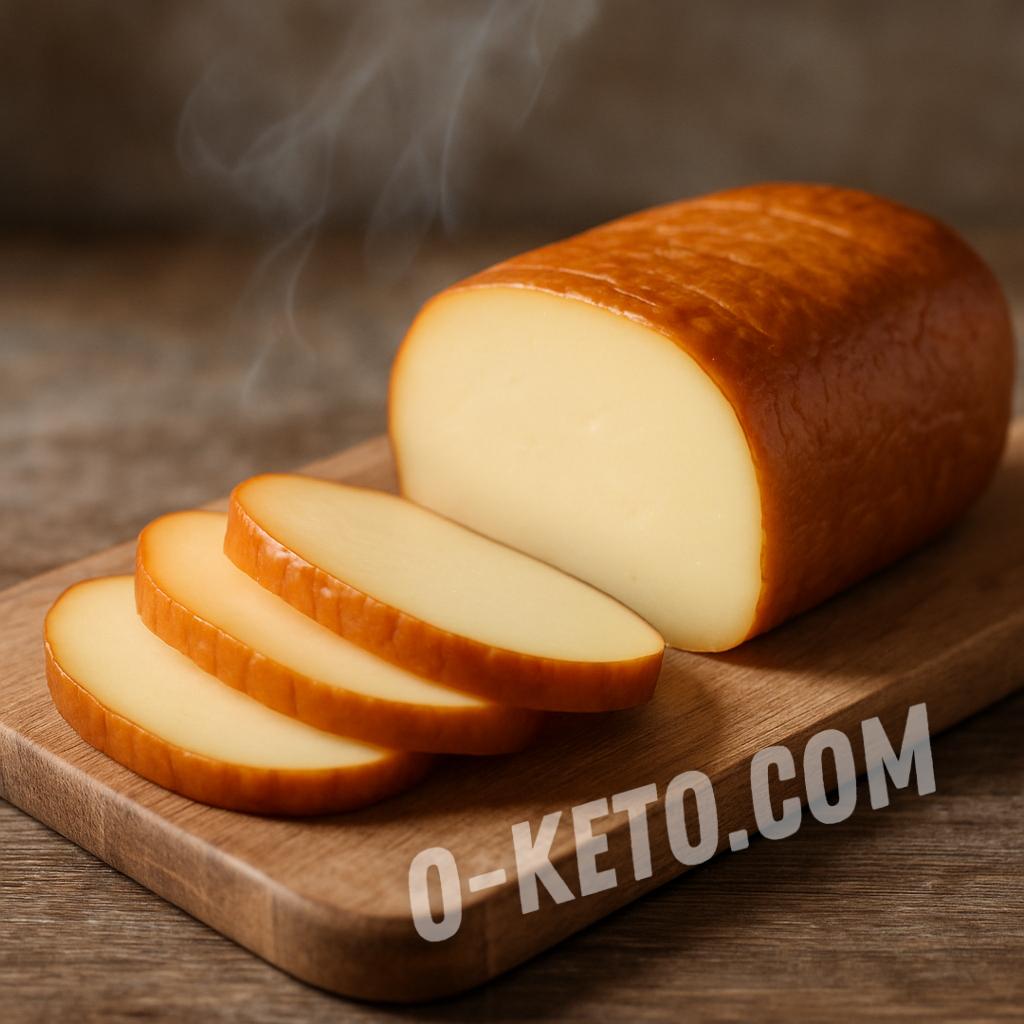

Smoked cheese is cheese flavored by cold or hot smoking or by smoke flavoring. It may be semi-hard cheese, sulguni, string cheese, processed sausage-style cheese, or small smoked pieces, so nutrition depends strongly on the exact product.
For keto, the base matters more than the smoke. Natural cheese is usually low in carbohydrate and rich in fat and complete dairy protein, while processed versions can include starch, milk powder, sugar, stabilizers, and more salt.
Nutrition
Smoked cheese usually provides calcium, phosphorus, sodium, fat, and protein. Natural cheese contains little carbohydrate, but labels should be checked, especially for processed products.
Glycemic load is low in small servings, while dairy protein can still produce an insulin response. In LCHF it works as a flavor accent in salads, casseroles, omelets, and meat fillings.
How to Use
Its smoky taste pairs with eggs, bacon, chicken, beef, mushrooms, cauliflower, zucchini, hot pepper, and herbs. A small amount can add depth without many extra ingredients.
Different cheeses melt differently: natural cheese stretches, string cheese can firm up, and processed cheese blends easily into sauce. Adjust salt after adding it.
Choosing and Storage
Choose smoked cheese with a clear dairy ingredient list and no starch, sugar, or unnecessary fillers. Harsh chemical smoke, stickiness, or bitterness can signal poor quality.
Store refrigerated and wrapped tightly so it does not dry out or perfume other foods. Mold, slime, or sour odor are reasons to discard it.


