


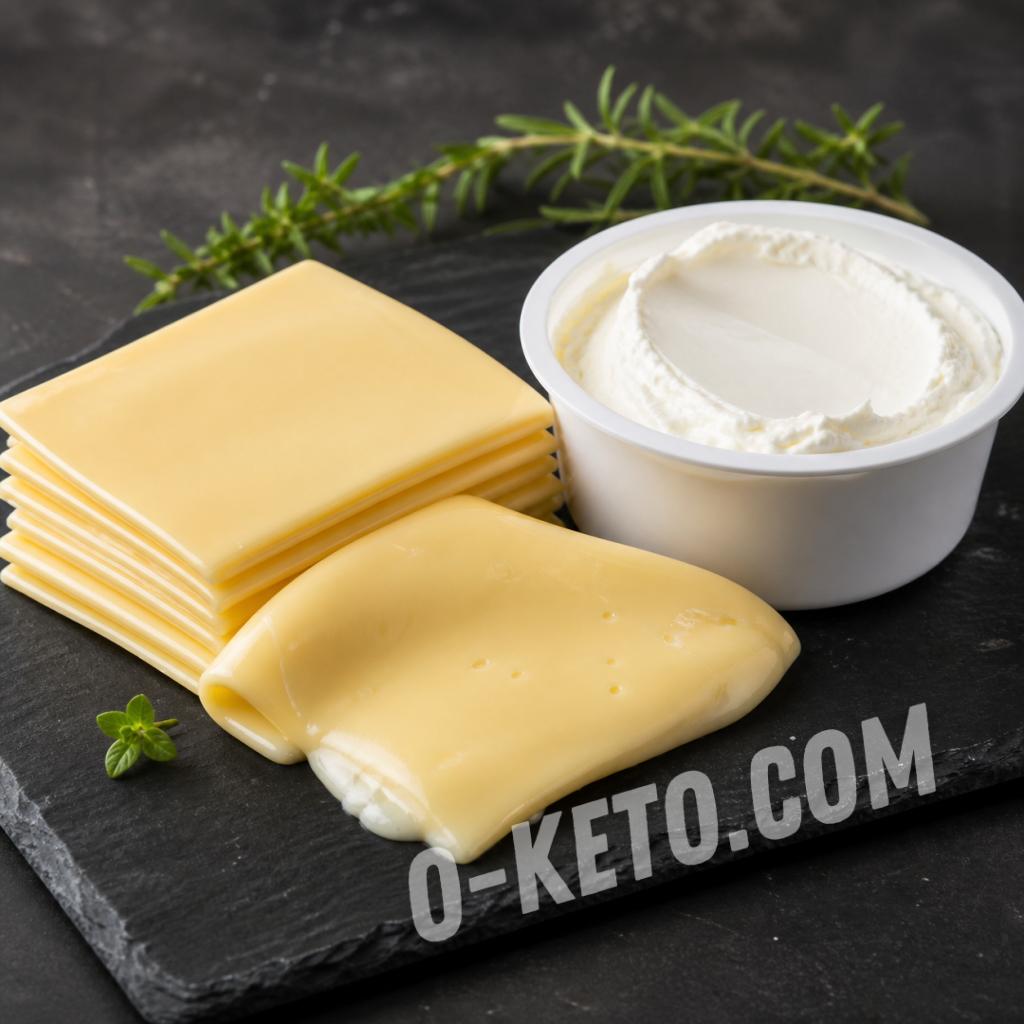

Processed cheese is a cheese-based product heated and blended with emulsifying salts to create a smooth, stable texture. It is sold as slices, portions, tubs and loaves for slicing. Depending on the recipe, the flavor may be mild and creamy, smoky, spicy, or combined with herbs, mushrooms or other additions.
Composition and flavor
The base can include one or more cheeses, curd, milk fat or dried dairy ingredients. Emulsifying salts bind water and fat, allowing the cheese to stay spreadable after chilling and melt with less separation. The recipe determines the protein, moisture, salt and carbohydrate content.
A plain product usually tastes creamy and distinctly salty. Add-ins such as ham, mushrooms, herbs, nuts or sweet flavorings must be assessed separately because they change both the taste and the nutrition label. A product labelled as a “cheese product” may also use vegetable fat instead of part of the milk fat, so the ingredient list matters.
How to use it
Processed cheese works well in hot sauces, puréed soups, omelets and casseroles. Cut it into small pieces and add it near the end over moderate heat so it dissolves evenly. Slices and portions are also useful in cold snacks, egg rolls, fish spreads and herb-based dips.
Account for the salt already present before seasoning the rest of the dish. The cheese can provide fat, protein and a strong sodium taste at the same time. Prolonged boiling is unhelpful: the emulsion may tighten or release fat, especially when the product is combined with acidic ingredients.
How to choose it
Compare the percentage of cheese or dairy ingredients, protein, carbohydrates and sodium. A short, clear ingredient list makes the product easier to evaluate. For a low-carbohydrate menu, choose versions without sugar, syrups, starches or sweet fillings, while still checking the label of the exact package. Burger slices and tub spreads may have very different nutrition despite similar names.
The nutrition panel below describes an average pasteurized processed American-style cheese without added vitamin D. It should not replace the label on a particular package: moisture, sodium and carbohydrate values depend on the formulation. Use the purchased package for precise recipe calculations.
Keto and carbohydrates
The reference product provides about 3.7 g of carbohydrate and 31.8 g of fat per 100 g, so a measured portion can fit a low-carbohydrate menu. The practical issue is not carbohydrate alone. Processed cheese can quietly add substantial sodium when it is used in a sauce, omelet and snack on the same day.
Limitations
Processed cheese contains milk proteins and usually a small amount of lactose. It is unsuitable for a milk-protein allergy; tolerance in lactose intolerance depends on the specific formulation and portion. Anyone limiting sodium should compare labels and avoid treating processed cheese as a nutritionally neutral substitute for every other cheese.
Storage
Keep an unopened package refrigerated at the temperature stated by the manufacturer. The foil, tub or casing should remain intact; swelling, leakage or a damaged seal is a reason to reject the package. After opening, keep the cheese covered so it does not absorb odors or dry at the edges, and use a clean knife or spoon to reduce contamination.
The safe time after opening depends on the format and package instructions. Discard the product if it develops mold, a rancid or yeasty odor, slime, unusual separation or bitterness. Do not scrape off a suspicious surface and continue using the remainder. For cooking, portion the cheese away from the stove instead of leaving the whole package exposed to heat.
Substitutes
In hot dishes, replace processed cheese with cream plus a firm cheese, soft cream cheese or a smaller amount of a mature cheese. For a cold spread, cottage-style cream cheese, ricotta or thick Greek yogurt can work. The substitute changes water, fat, protein and sodium, so taste the finished mixture before adding more seasoning.


