


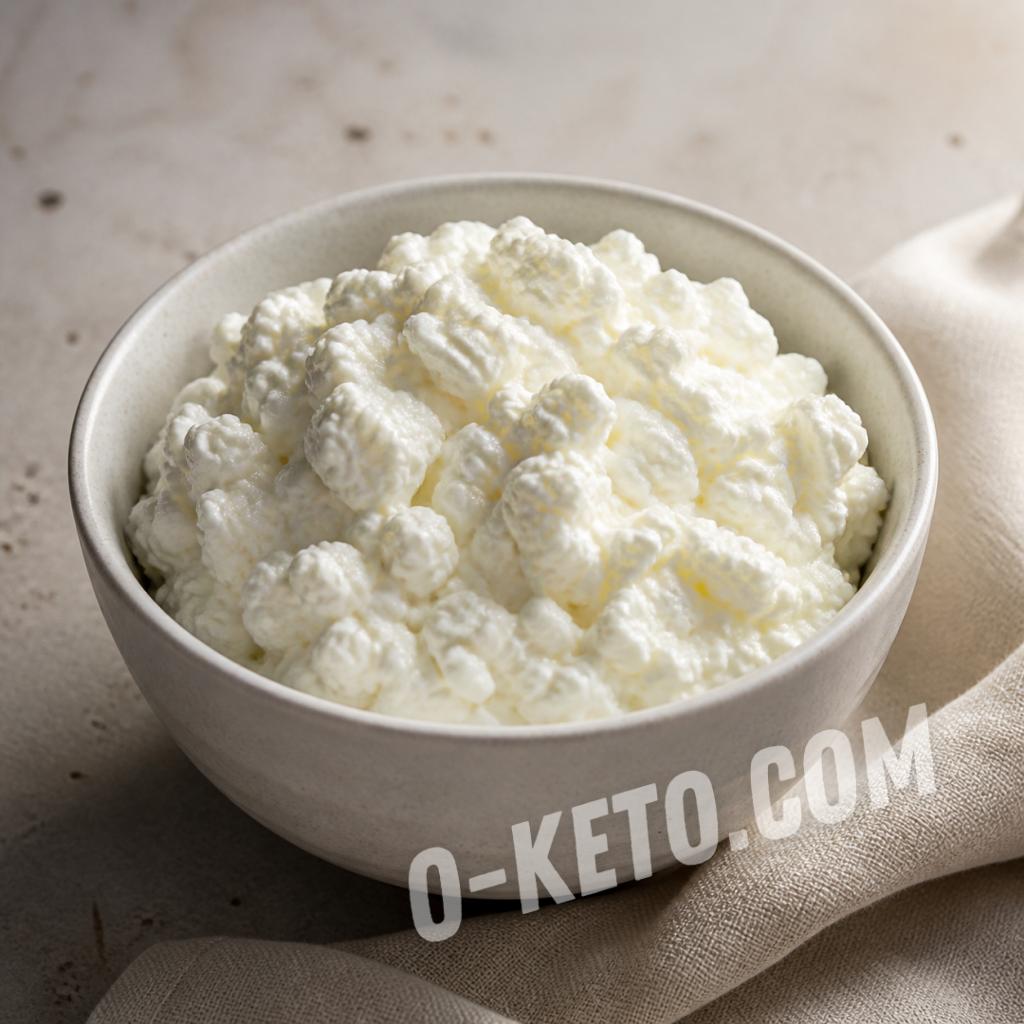

Cottage cheese 5% fat is a medium-fat cultured dairy product that sits between very lean curd and richer 9-18% versions. It still has enough body for cheesecakes, casseroles, fillings, spreads, and savory bowls, yet it usually feels lighter and less oily than higher-fat cottage cheese. The exact texture depends on the producer: some brands keep a drier grain, while others add cream and make it softer and smoother.
For low-carb eating, cottage cheese 5% matters mainly because it gives a lot of protein with a moderate amount of fat and a relatively small amount of carbohydrate. That does not make it a “free food” on keto, since it still contains lactose, but it can work well in LCHF and moderate keto plans when portions are sensible and the ingredient list stays clean.
Nutrition profile
A typical 100 g portion provides about 120-125 kcal, around 16-17 g protein, 5 g fat, and roughly 1.8-3 g carbohydrates. The exact numbers vary with moisture, brand, and whether the product is sold as a classic grainy curd or a creamier version. A drier cottage cheese often concentrates protein and calories, while a softer one may carry more whey and feel less dense nutritionally.
Most of the protein comes from casein, which helps with satiety and gives the product its structure. The carbohydrates are mostly lactose, so even though the total carb count is not high, it still makes sense to treat cottage cheese as a dairy ingredient that should be portioned, not as an unlimited snack. One moderate serving in a meal is very different from a large bowl combined with sweet toppings.
Is it suitable for keto and LCHF?
Cottage cheese 5% can fit keto and LCHF better than sweet low-fat dairy desserts, but it is not as easy to use as high-fat, very low-lactose dairy foods. The practical way to think about it is simple: it is a protein-forward dairy product with some lactose, so it works best when balanced with fat and when the portion size is deliberate.
It becomes more keto-friendly when paired with sour cream, heavy cream, butter, olive oil, avocado, herbs, eggs, or sugar-free nut butter. It becomes much less keto-friendly when it is turned into a sweet bowl with honey, jam, dried fruit, sweet yogurt, or banana. The cottage cheese itself is often acceptable; the usual problem is what people mix into it.
How to choose a good product
A solid ingredient list is usually short: milk, starter culture, and sometimes cream. Ferment or bacterial cultures may also appear. A much longer list with starch, vegetable oils, flavorings, sugar, or unnecessary thickeners is a sign that the product is drifting away from classic cottage cheese and toward a processed imitation. For low-carb use, cleaner is usually better.
Texture matters as much as the fat percentage. If you need cottage cheese for cheesecakes or baked dishes, a wetter product may require draining first. If you want a smooth spread or dessert cream, a softer version may actually be more convenient. Reading the label and thinking about the intended use will save more trouble than choosing by the fat number alone.
How to use it in cooking
Cottage cheese 5% is versatile. It can be eaten plain, mixed into savory spreads with herbs and garlic, folded into omelet rolls, added to vegetable fillings, or used in casseroles and low-carb pastries. In sweet keto-style recipes, it is usually combined with a non-sugar sweetener, vanilla, lemon zest, cocoa, coconut, nuts, or a small portion of berries.
For baked recipes, the moisture level is important. If there is too much whey, the mixture can become loose and require more binder. Instead of wheat flour, low-carb cooks usually rely on almond flour, coconut flour, psyllium, eggs, or a mix of these ingredients. Each absorbs moisture differently, so the same cottage cheese can behave very differently from one recipe to another.
Best pairings
Savory pairings are usually easier on keto: sour cream, cream, butter, olive oil, dill, parsley, scallions, cucumber, radish, celery, avocado, eggs, mushrooms, smoked salmon, or lightly salted fish. For dessert-style use, the safer route is a restrained combination of cinnamon, vanilla, cocoa, nuts, and a few berries rather than a large amount of sugary fruit or syrup.
Another practical trick is to use cottage cheese as a component rather than a huge standalone serving. It works very well as filling, topping, or part of a structured dish. That makes it easier to control both lactose and protein while keeping the pleasant dairy taste and the dense creamy texture people usually want from cottage cheese.
Tolerance and limitations
Cottage cheese still contains lactose and milk proteins, so it is not suitable for everyone. People with lactose intolerance, casein sensitivity, or a generally poor response to dairy may need smaller portions or a different product altogether. Even for people who tolerate dairy well, very large servings can push protein intake quite high, which is not always desirable on a ketogenic diet.
The right amount also depends on the dietary goal. If someone is aiming for strict ketosis, 5% cottage cheese usually requires more attention than richer fermented dairy. If the goal is a sustainable lower-carb pattern without sugar and flour, a clean cottage cheese 5% product can be a convenient and practical ingredient.
Storage
Once opened, cottage cheese spoils fairly quickly. It should stay refrigerated in a closed container and be handled with a clean spoon. Strong sour odor, slime, bitterness, gas formation, or visible mold are signs that it should be discarded. Freezing is possible, but the texture often becomes rougher and drier after thawing, so frozen cottage cheese is usually better for cooked dishes than for fresh serving.
Overall, cottage cheese 5% fat is best treated as a real food ingredient, not as a generic symbol of “healthy eating.” When the ingredient list is clean and the portion is thoughtful, it can work well in both LCHF and moderate keto cooking.


