


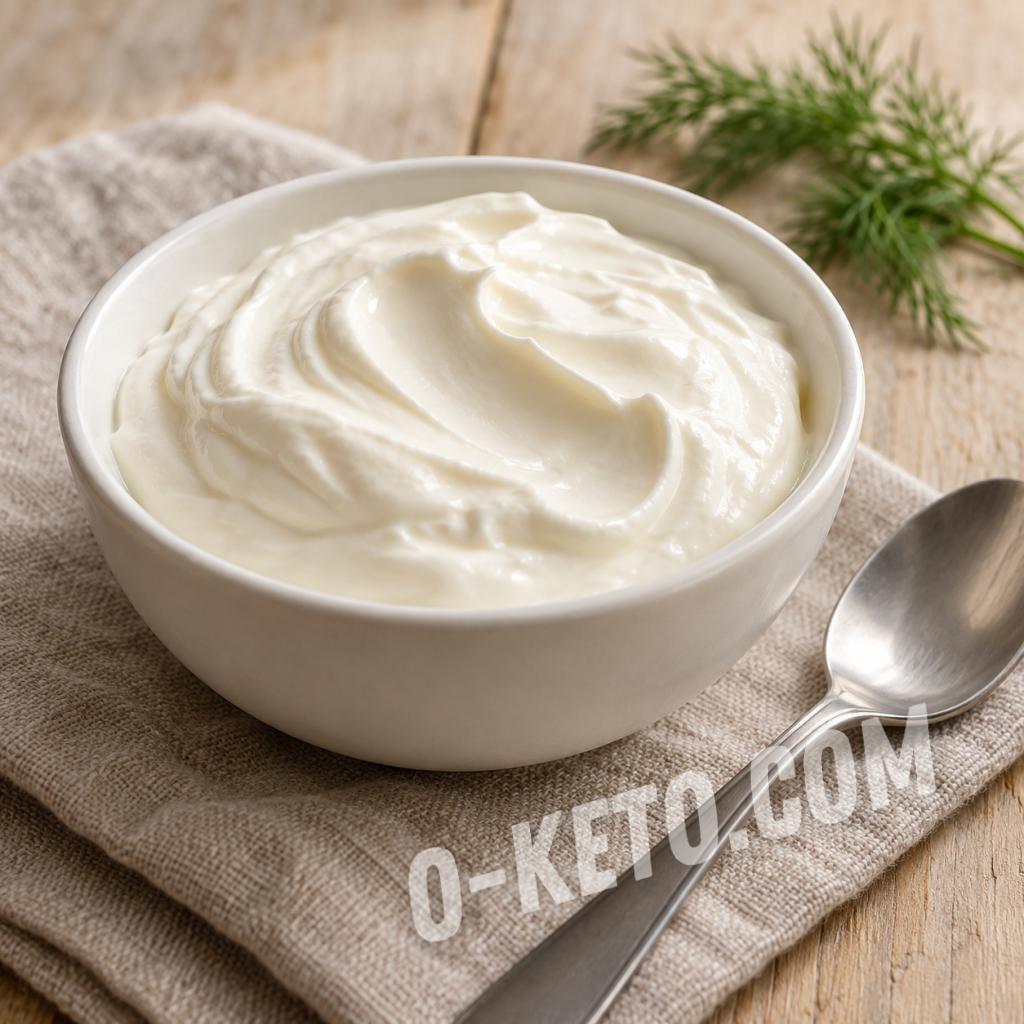

20% sour cream is a thick cultured dairy food made by fermenting cream with lactic starter cultures. The percentage on the pack describes the share of fat in the finished product; it does not describe its protein content or calorie level. Compared with 30% sour cream, it is generally lighter in energy and less dense, while still tasting rich and tangy. The exact carbohydrate figure, acidity and texture depend on the milk, starter and processing method used by the manufacturer.
What 20% fat means
Sour cream is common in Eastern and Central European, Caucasian and neighboring cuisines. It is served cold as a topping, mixed with herbs and spices, and used in soups, sauces, dough and baked dishes. Products sold under similar names in different countries can vary in acidity, thickness and ingredients, so the ingredient list is a better guide to what is in a particular tub than the word “sour cream” alone.
The 20% marking means that roughly 20 g of each 100 g of product is fat. The remaining 80 g is not simply water: it also includes protein, milk sugar, minerals and fermentation products. A producer may homogenize the mixture for a smoother body, and some formulations include a thickener or stabilizer. Two tubs with the same fat percentage can therefore differ in calories, carbohydrate and spoonability.
Fermentation and ingredients
To make traditional sour cream, cream is pasteurized, cooled to the temperature needed for inoculation, and held while lactic-acid bacteria develop its characteristic acidity and texture. Starter cultures, fermentation time and mixing all affect the flavor: some sour cream is mild and buttery, while other batches are more sharply acidic. Fermentation uses some lactose, but it does not necessarily remove all of it.
A simple ingredient list usually names cream and a starter culture. Other products may include milk powder, starch, gelatin, gums or additional stabilizers to keep the texture uniform through transport and storage. These ingredients do not automatically make a product inferior, but they change its composition and may raise its carbohydrate content. If a short list matters to you, read the full ingredients and nutrition panel rather than relying on the front label.
A cultured flavor does not prove that a tub contains a specific amount of live bacteria. Manufacturers may heat the product after fermentation or use different processing steps; the product name alone does not identify the strains, their viability or their dose. A universal probiotic effect should not be inferred from the word “cultured.”
Nutrition
For a reference point, USDA FoodData Central lists cultured sour cream with about 19.35% fat. The values below are per 100 g and are close to a 20% product, but they are not a substitute for the label on a specific brand:
| Energy | 198 kcal |
| Protein | 2.44 g |
| Fat | 19.35 g |
| Carbohydrate | 4.63 g |
| Dietary fiber | 0 g |
| Lactose | 3.41 g |
| Saturated fatty acids | 10.14 g |
The same record includes calcium, phosphorus, potassium, riboflavin and vitamin A, but sour cream is not a concentrated source of these nutrients in an ordinary serving: a spoonful weighs far less than 100 g. Milk protein contains indispensable amino acids, yet the total protein in sour cream is modest. In cooking it is used mainly for flavor and texture, rather than as a primary protein or vitamin source.
Food-composition databases show variation because raw milk and recipes vary. A specific 20% sour cream can differ from this reference because of moisture, cream standardization or added ingredients. When tracking a meal, use the nutrition panel on your own tub and weigh the portion if carbohydrate counting needs to be precise.
How to choose it
Check that the package says sour cream, rather than 20% sweet cream, a sour-cream product or a plant-fat sauce. The names sound similar but refer to different foods. Then read the ingredients: cream and starter culture describe a straightforward version, while starches and gums may matter for texture, personal tolerance or carbohydrate tracking.
Compare nutrition values on the same basis, usually per 100 g. Pay particular attention to carbohydrate, which reflects remaining lactose and any added ingredients. The color should be white to pale cream, and the smell should be clean and cultured rather than yeasty, musty or rancid. A thick, even texture is typical; a small amount of whey on the surface is not automatically a sign of spoilage.
Cooking and serving
Cold 20% sour cream works in dressings and herb or garlic sauces and as a topping for vegetables, eggs, fish and meat. Its flavor is lighter and the finished sauce somewhat less rich than one made with 30% sour cream. If thinning it with water or lemon juice, add the liquid gradually so the dressing does not become watery.
When heated, cultured dairy proteins can curdle, especially if the cream is brought quickly to a boil or combined with a hot acidic liquid. For soup or gravy, first stir a little warm broth into the sour cream, then add that mixture near the end of cooking over low heat. Avoid a long boil. In baking, sour cream contributes moisture and acidity, but replacing cream or yogurt changes both fat and structure; a recipe may need its proportions adjusted.
Storage and tolerance
Buy sour cream from a refrigerated case and avoid packs with a swollen lid, leaks or a damaged seal. Keep an unopened tub chilled at the temperature on its label; after opening, close it tightly and return it to the refrigerator as soon as serving is finished. A clean, dry spoon helps keep crumbs and microorganisms out. The usable period after opening depends on the package and production method, so follow the maker’s instructions rather than relying on one universal number of days.
A little clear whey may separate naturally. If the date is valid and the color and smell are normal, stirring it back in is usually enough. Mold, pink or green patches, gas, a slimy surface, or a disagreeable yeasty or rotten odor are reasons to discard the entire tub instead of scraping off the top. Do not leave sour cream at room temperature for long periods. Freezing can break its smooth texture, so thawed sour cream may separate and work poorly as a cold topping.
Sour cream contains cow’s-milk proteins and residual lactose. Milk-protein allergy and lactose intolerance are different conditions; fermentation does not make the product safe for someone with a milk allergy. The USDA reference for cultured sour cream lists about 3.41 g of lactose per 100 g, though a particular product may differ. Tolerance depends on the person and serving size; choose a product specifically labeled lactose-free when needed.
20% sour cream in a low-carbohydrate diet
In plain sour cream, most of the energy comes from fat and the carbohydrate is mainly milk sugar. At about 4.63 g of carbohydrate per 100 g in the reference record, a 30 g serving contains roughly 1.4 g, but the label on the actual product matters more than an average database entry. This can fit a low-carbohydrate or ketogenic meal when the portion is included in the day’s total. High fat content does not make sour cream carbohydrate-free; sugar or starch in the recipe changes the calculation too.
Compared with 30% sour cream, an equal spoonful of the 20% version usually supplies less fat and more moisture, so the products are not perfectly interchangeable in every recipe. In a cold dressing the result is simply lighter; in a baked dish or thick sauce the difference can affect body and liquid separation. Choose according to the texture the dish needs, as well as the fat percentage.
Sources
USDA FoodData Central, “Cream, sour, cultured,” FDC 171257, SR Legacy record. USDA Agricultural Marketing Service, “Specifications for Sour Cream and Acidified Sour Cream.” FAO, “Milk and dairy products in human nutrition.”


