


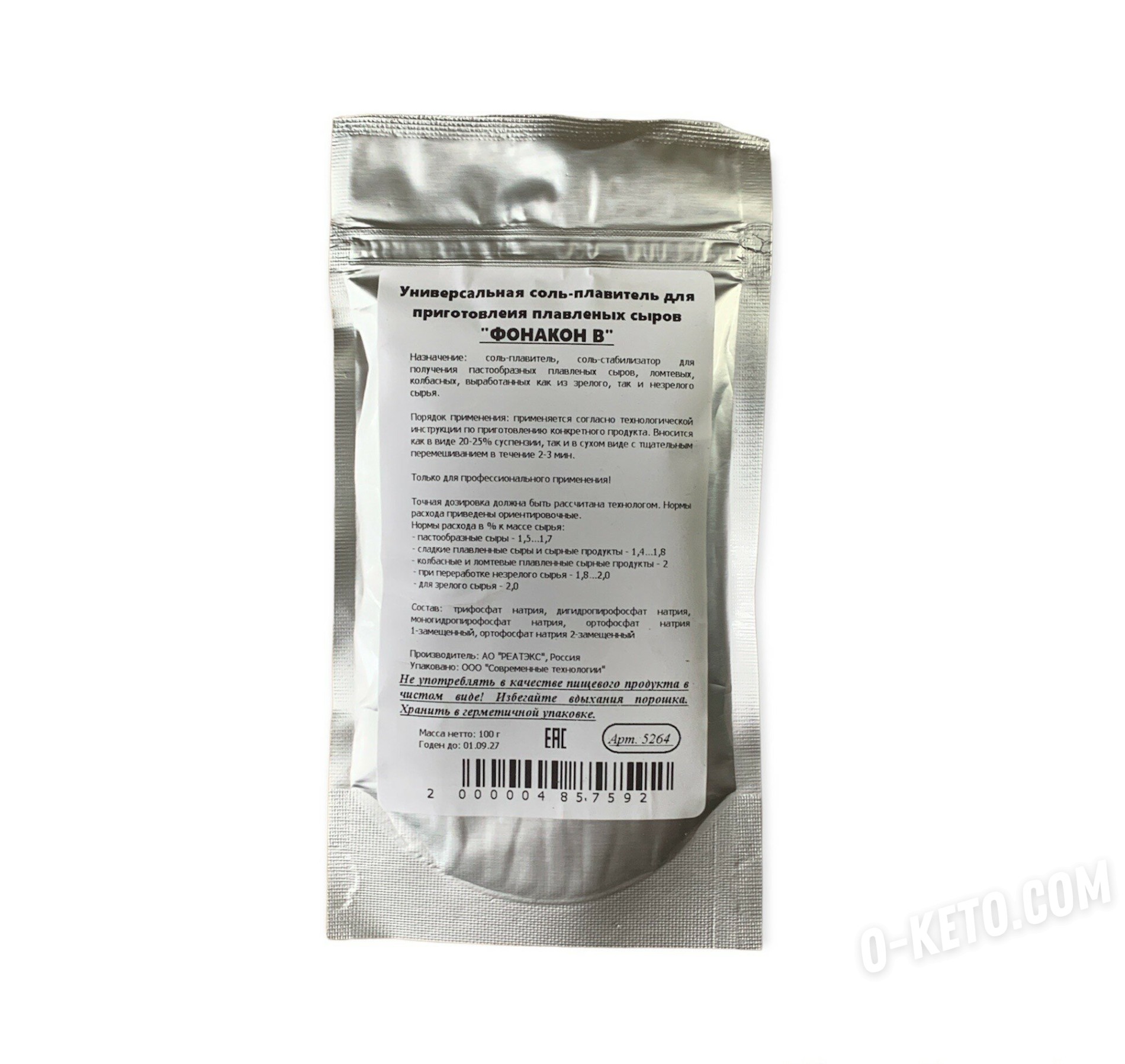

Cheese melting salt is a technological ingredient used for processed cheese, cheese sauces and smooth cheese masses. It helps cheese proteins bind water and fat, lowers the risk of separation and makes the texture smoother, stretchy or creamy.
It is not ordinary table salt and not a standalone food. Usually it means citrates, phosphates or other salts that work as emulsifying salts. In home cooking they are used in small doses when hard cheese needs to melt without lumps and an oily puddle.
Composition and Properties
The older description mentioned sodium, potassium, citric and lactic acids. In practice, composition depends on the product: sodium citrate, phosphates, potassium salts, acidity regulators, stabilizers and emulsifiers may be used. The label matters more than the general name.
Melting salt changes not the flavor by itself, but how cheese behaves when heated. It helps moisture distribute more evenly, makes the mass more elastic and allows processed cheese from natural cheese, butter, cream or milk. Too much can give a soapy taste and overly firm texture.
Is It Keto-Friendly?
The melting salt itself is usually not a carbohydrate source, so by macronutrients it does not interfere with keto. But the final product depends on the recipe. Cheese, cream and butter can make a low-carb processed cheese; starch, flour, sugar or a lot of milk powder changes the profile.
For strict keto, check not only the melting salt but the entire cheese product. Ready processed cheeses often contain starch, vegetable oils, sugar, flavors and a lot of salt. A homemade version is easier to control.
How to Use It
Use it in small amounts, following the producer’s instructions or a tested recipe. It is usually dissolved in liquid or mixed into the cheese mass while heating. Very high heat and long boiling can damage flavor and texture.
Practical options include:
- homemade processed cheese from hard cheese and cream;
- cheese sauce without flour or starch;
- creamy filling for a keto casserole;
- sauce for cauliflower or broccoli;
- smooth cheese mass for appetizers.
How to Choose
Choose a product with a clear substance name and dosage. It is useful when the label says which cheeses and temperatures it suits. Vague mixes without composition are worse because starch, sugar, fillers or unsuitable additives may be hidden.
For home cooking, a small package is more convenient because usage is minimal. Store it dry and tightly closed. Moisture makes powder clumpy and dosing less accurate.
Limits and Substitutes
Because of sodium and phosphates, this ingredient should not be used without measure. It is a recipe tool, not a daily seasoning. If salt is limited or highly processed products are poorly tolerated, simpler cheese sauces may be better: cream, cheese, butter and gentle heat.
It is hard to replace fully when a stable processed texture is needed. In simple sauces, cream, butter, soft cheese, mascarpone, cream cheese or a little lemon juice for balance may be enough. The result will be different.
Dosage and Common Mistakes
The main mistake is using melting salt like ordinary salt. It has another task and another strength. Too much can make the cheese mass rubbery, overly salty or unpleasant in taste. Start with the minimum dose in the recipe and adjust only after testing.
The second mistake is trying to fix poor cheese with an additive. If cheese already contains a lot of starch, vegetable oils or melts poorly because of its composition, melting salt will not make it high quality. The best result comes from decent cheese, clear fat content and gentle heat.
For a keto sauce, a simple scheme works: cheese, cream or butter, a little melting salt, low heat and constant stirring. If a thinner sauce is needed, add cream rather than increasing the melting salt dose.
How to Get a Smooth Texture
Melting salt is better dispersed in a small amount of liquid first rather than sprinkled directly onto dry grated cheese. This helps it spread through the mass faster and lowers the risk of separate salty spots. Cheese is also easier to melt when finely grated: large pieces need more time and overheat at the edges.
If the sauce becomes too thick, fix it with cream, milk or sugar-free broth, not with another dose of melting salt. If the mass separates, gentle reheating with constant stirring can help, but boiling usually makes the result worse.
Substitution options in recipes
Baking soda. Plus citric acid in a one-to-one ratio - add to hot milk. Commercial melting salts (sodium citrate) emulsify fat and protein. Baking soda will raise the pH, the acid will restore calcium - it won't melt as smoothly, but a slice of processed cheese will be without "sand."


