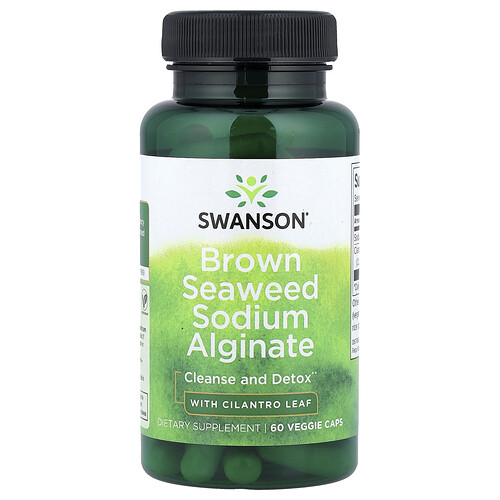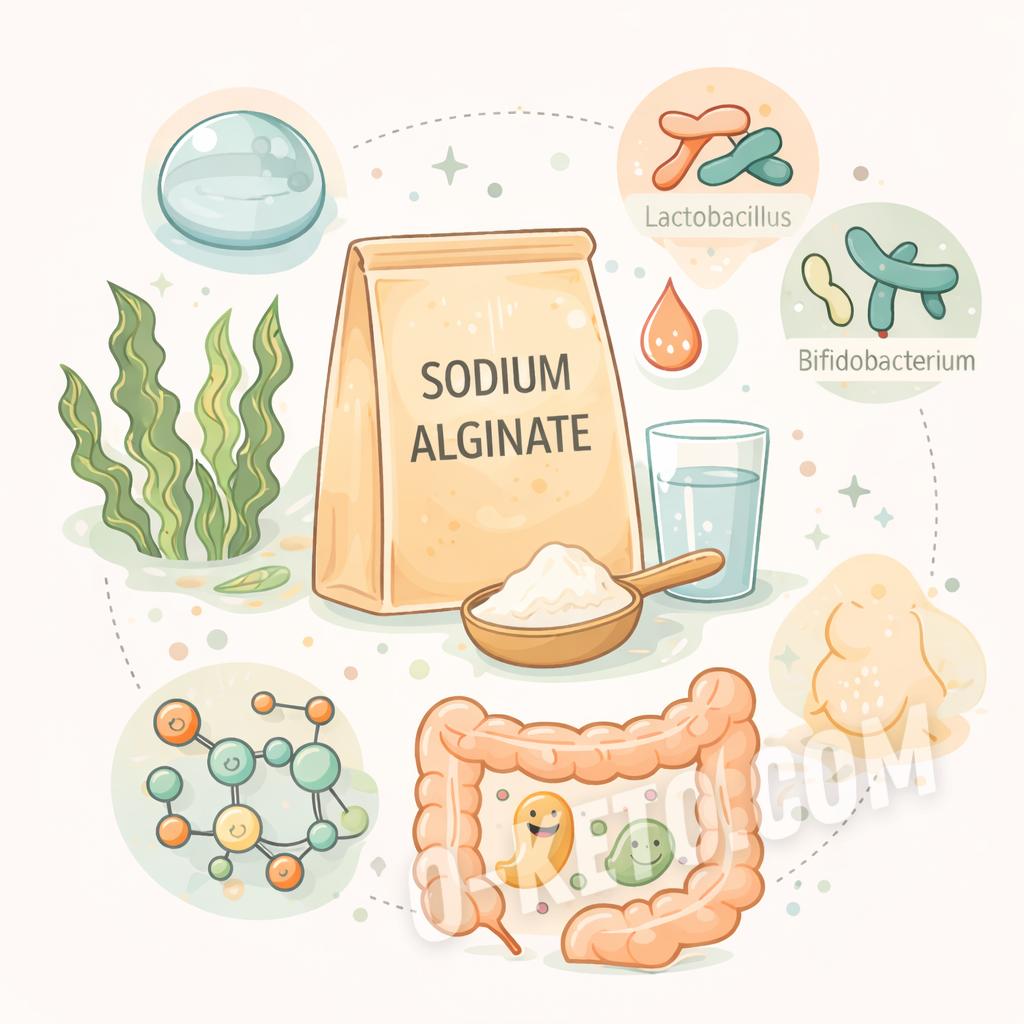

Sodium alginate is food additive E401 and one of the best-known alginates. It is made from brown seaweed: the raw material is cleaned, alginic acid is converted into its sodium salt, and the result is dried into powder or granules. In food it is used not for taste, but for texture: it binds water, makes mixtures more viscous, helps hold emulsions, and forms a firm gel when it meets calcium salts.
It is usually a white or cream-colored powder with almost no smell. In small amounts it does not make food taste like seaweed and does not change aroma, so it is used in sauces, creams, fillings, drinks, dairy-style desserts, diet mixes, and molecular cooking. The most recognizable technique is spherification, where a liquid becomes small balls with a thin gel shell.
Sodium alginate is easy to confuse with agar, gelatin, pectin, or xanthan gum, but these ingredients are not interchangeable. Agar sets after heating and cooling, gelatin gives a protein gel, pectin often needs acidity and sugar, and xanthan mostly thickens. Alginate is notable because it reacts with calcium and can form gels without boiling.
Nutritional value
In culinary amounts, sodium alginate adds almost no calories. It belongs to soluble dietary fibers: enzymes in the small intestine do not break it down like starch or sugar. In low-carb meal planning it is therefore usually counted as a texture ingredient, not as a source of digestible carbohydrates.
It is important not to confuse pure sodium alginate with ready-made mixes. Desserts, drinks, sauces, and powders may also contain sugar, maltodextrin, starch, milk powder, fruit concentrates, and flavorings. The alginate itself may be neutral for carbohydrate counting, while the finished product around it may not be.
Is it suitable for keto?
Sodium alginate fits keto and LCHF as a texture additive. It can make a low-carb sauce thicker without flour, hold moisture in a filling, stabilize a drink, or bring together a cream without a starch thickener. Still, it is not a staple food; it is a small technical tool.
It is usually used in fractions of a percent or in grams for a whole batch. Too much can make the texture slimy, rubbery, or unpleasantly stringy. In strict keto, the main check is not E401 itself, but the whole recipe: sweeteners, dairy base, berries, thickeners, ready syrups, and sauces.
How to use it
Sodium alginate does not dissolve well if it is dumped into liquid as a lump. It is better to mix the powder with dry ingredients first, sift it in, or blend it with an immersion blender. After mixing, the solution is often left to rest so bubbles disappear and the powder fully hydrates. In cold water this takes longer; in warm water it is faster, but boiling is usually unnecessary.
For spherification, a liquid containing alginate is dropped into a calcium bath, or calcium is placed inside the filling and alginate outside. Acidic liquids, a lot of salt, alcohol, high fat content, and thick purees can change the result, so exact dosage is best tested on a small amount. At home, it is easier to start with simple sauces and creams before moving on to spheres and gels.
How to choose
For food, choose food-grade sodium alginate, not technical powder for cosmetics, textiles, or lab work. The package should show a clear ingredient name, E401 or sodium alginate marking, date, storage conditions, and food-use purpose. The powder should be dry, loose, and free of clumps, musty smell, or moisture traces.
Different batches may vary in viscosity. For drinks, gentler thickening is convenient; for gels and spherification, a stable calcium reaction matters more. If you need repeatable results, write down the brand, dose, temperature, hydration time, and liquid composition.
Limitations
Large amounts of soluble fibers may cause heaviness, gas, or an overly dense food texture. Sodium alginate should be introduced gradually and eaten with enough fluid. It does not replace vegetables, greens, protein, fats, or a balanced eating pattern; its role is to change the structure of a specific dish.
How to store it
Keep the powder in a dry, dark place, tightly closed, away from steam, stove heat, and wet spoons. Moisture quickly turns it into clumps and makes dosing harder. Finished gels and sauces should be stored like other perishable dishes: in the refrigerator, for a short time, and with attention to the other ingredients in the recipe.
What can replace it?
The replacement depends on the job. For simple thickening, xanthan gum, guar gum, or a little psyllium may work. For a firm gel, use agar, gelatin, or pectin, but the texture will be different. For spherification there is almost no direct replacement: the alginate-calcium pair is the point. If you only need a thicker keto sauce, xanthan or reduction of the base is usually easier.