


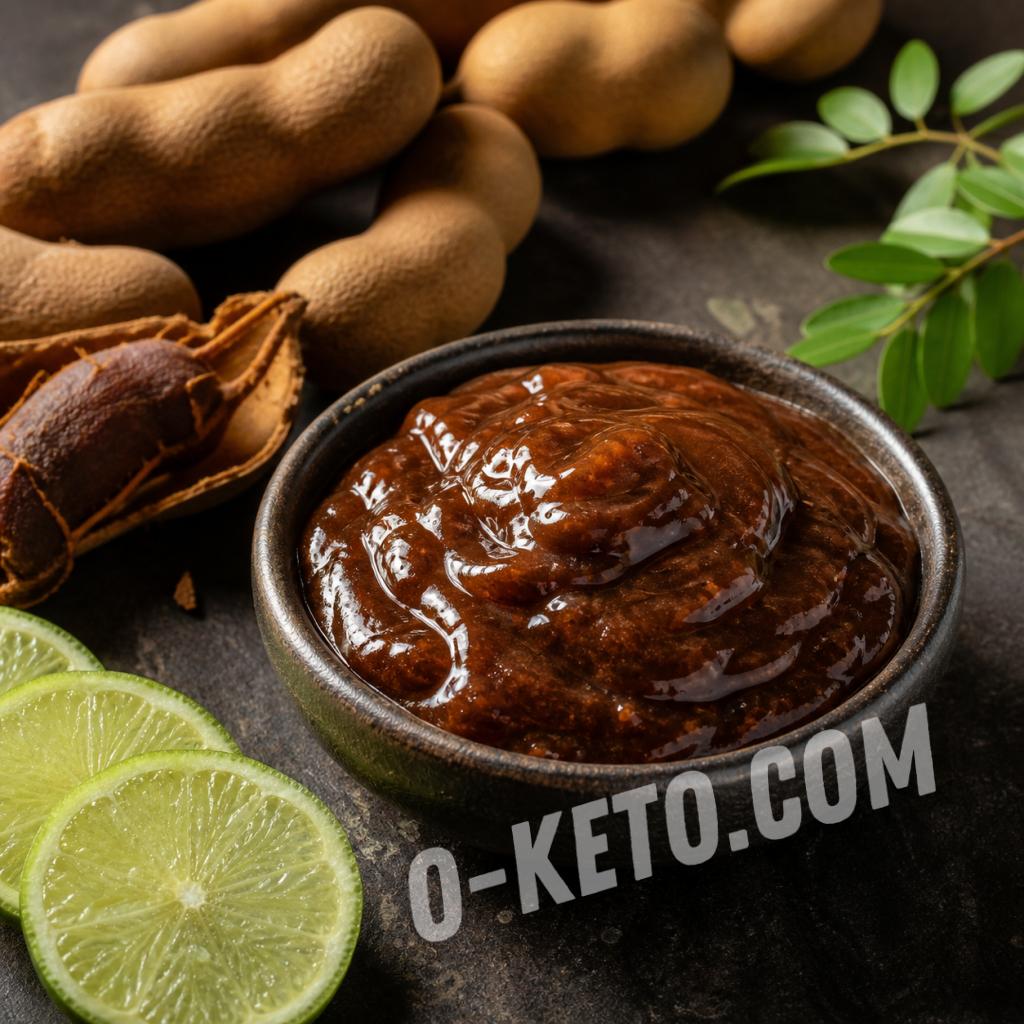

Tamarind paste is concentrated tamarind fruit pulp with a sour, fruity, slightly caramel-like flavor. It may be made from pulp and water, but jars can also contain salt, sugar, preservatives, and spices, so formulations vary widely.
Composition and flavor
Its acidity balances fat, salt, and heat in sauces. Use it in pad thai, curries, chutneys, marinades, soups, and drinks. A small spoonful is usually diluted with water or mixed into another base.
Tamarind pulp provides organic acids, potassium, and some fiber, but finished paste may be sweetened. Syrup, sugar, dates, and starch matter more than marketing language and change the carbohydrate calculation.
How to use it
For keto cooking, choose a short ingredient list without sugar syrup. Compare carbohydrate per 100 g and per teaspoon rather than relying on claims such as gluten-free or natural.
Tamarind paste Count the portion by the actual weight and the label of the particular package: salted, smoked, dried, and fermented versions can differ substantially in sodium, moisture, and carbohydrates.
For a practical menu, use Tamarind paste in a measured serving and pair it with foods that do not duplicate its dominant flavor. This makes it easier to control the salt, acidity, fat, or carbohydrate load of the whole plate rather than judging one ingredient in isolation.
When calculating a dish, account for the form of the product: drying concentrates nutrients, cooking changes weight and density, and a sauce may add sugar, flour, oil, or alcohol. Those additions are not part of the plain raw ingredient.
How to choose
Tamarind paste is not a carbohydrate-free seasoning. A small serving of unsweetened paste may fit a keto plan only when it fits the daily carbohydrate limit.
Introduce Tamarind paste gradually and taste the dish before adding the final salt. Strong ingredients often need less seasoning than a recipe suggests; excess additions hide the original flavor and increase the overall food load.
Keto and carbohydrates
The acidic concentrate may irritate a sensitive stomach and tooth enamel. Reduce the portion with reflux, gastritis flares, or intolerance. Tamarind allergy is uncommon but possible.
If you are buying it for the first time, start with a small package. This lets you assess real saltiness, texture, and tolerance without creating a large stock of a perishable or strongly flavored ingredient.
Limits and safety
Tamarind is common in South and Southeast Asian, African, and Latin American cuisines. Paste is easier than whole fruit because it supplies acidity, color, and depth at once, but added sugar is harder to control.
When comparing packages, do not look only at calories. For Tamarind paste, moisture, edible yield, serving size, processing method, and secondary ingredients listed after the main raw material also matter.
A useful home test is to prepare a small portion without a complex sauce. This reveals the ingredient’s own aroma, saltiness, density, and aftertaste. If it works only because of sugar, large amounts of oil, or flavor enhancers, assess it as a finished mixture rather than as the plain food.
Nutritional value cannot be separated from serving context. The same ingredient may be a minor part of a balanced dish or a source of excess salt, sugar, and calories once combined with a ready-made sauce. Judge the complete recipe and serving size.
For a new purchase, save a photo of the ingredient list and compare it with your portion calculation. This is especially useful for salted, dried, alcoholic, and paste-like forms, where a small formulation difference can change the final values.
History and culinary role
Store an unopened jar in a cool dark place and refrigerate it after opening if the label requires it. Use a dry spoon and discard the paste if it develops mold, gas, or an unusual odor.
Storage
Store an unopened jar of tamarind paste in a cool, dark cupboard. After opening, use a dry spoon and refrigerate it when required by the label; added sugar and preservatives can change its shelf life. Discard the paste if it develops mold, gas, or a strong off-odor.
Substitutes
Lime or lemon with a little erythritol, vinegar, and spices can replace tamarind. The result is not identical: citrus is brighter, vinegar sharper, and the fruit depth lower.


