


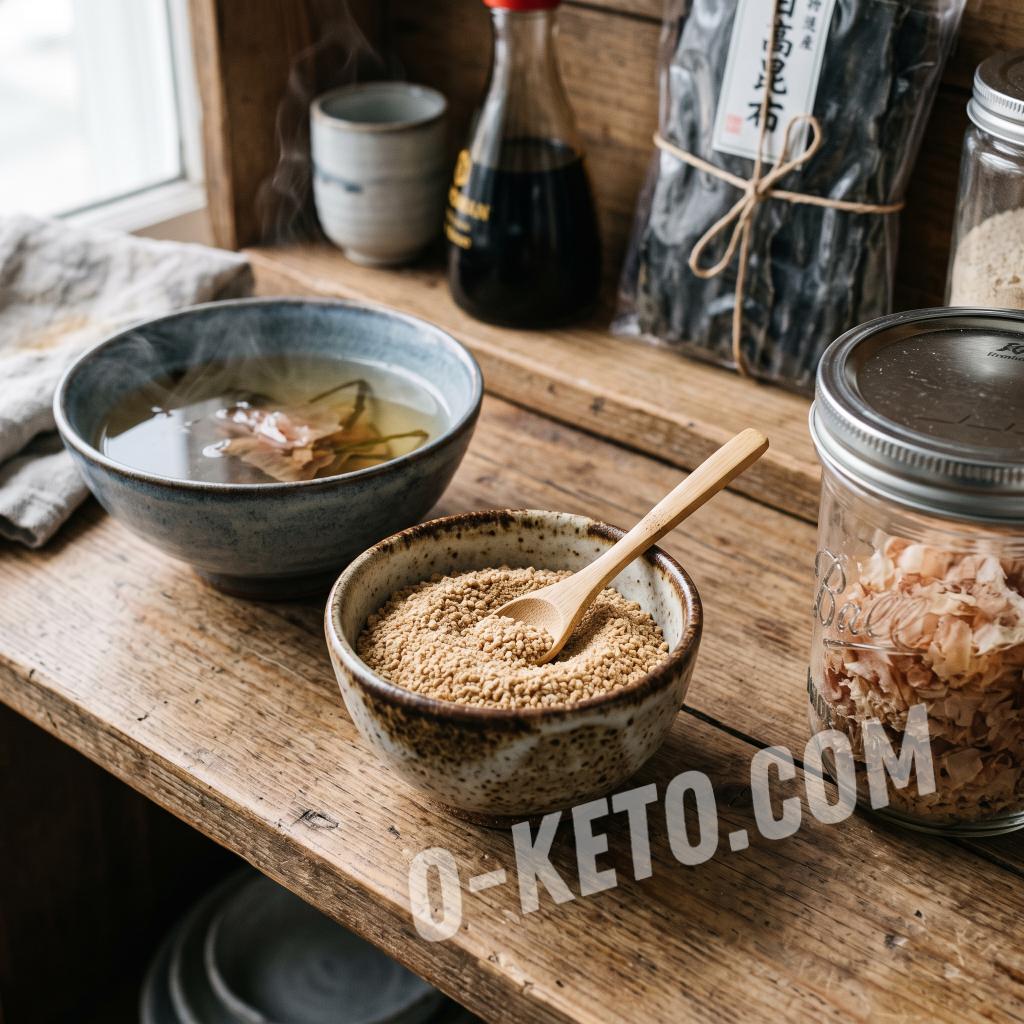

Hondashi stock powder is a Japanese-style instant soup base, usually sold as granules or powder for quickly building a dashi-like flavor profile. In practice, it is not a ready-made liquid broth but a concentrated seasoning blend used in very small amounts. It is most often associated with bonito-style umami and is widely used for soups, savory custards, sauces, vegetables, seafood, and other dishes that need a recognizable Japanese background flavor. This type of product is best understood as a cooking base rather than as a stand-alone food.
What It Is
Products sold as hondashi are typically dry seasoning mixes designed to imitate or simplify dashi preparation. Depending on the brand, the formula may include fish powder, extracts, salt, flavor enhancers, sugar-bearing ingredients, and other processing aids. That means hondashi is not the same thing as traditional dashi made from kombu and katsuobushi from scratch. Instead, it is a practical shortcut for cooks who want a stable result without the full manual preparation process.
How It Is Used
Hondashi is commonly used in miso soup, light Japanese broths, noodle sauces, savory omelets, simmered vegetables, tofu dishes, fish preparations, and seafood-based meals. In tiny amounts it works as a background umami seasoning. In somewhat larger dilution it can act as the main broth base. This matters because the product is usually chosen not for generic “bouillon” flavor, but for a distinctly Japanese savory profile that is hard to reproduce quickly with ordinary stock cubes.
What To Check When Choosing
It is worth reading the full ingredient list rather than focusing only on the word “dashi.” Some products are relatively simple, while others rely heavily on salt, sugar-like carriers, flavor enhancers, and broader processed seasoning systems. If the product will be used often, transparency of composition, salt intensity, and ease of dosing all matter. A cleaner and better-labeled formula is usually easier to integrate into repeat cooking without constant adjustment.
Limits and Practical Nuance
Hondashi should not automatically be treated as a neutral seasoning for every dietary style. Because it can contain high sodium levels, flavor enhancers, and sweetening carriers, some cooks may prefer traditional dashi or a cleaner homemade base. That is especially relevant for people avoiding ultra-processed flavoring systems or trying to minimize specific additives. In day-to-day use the product is measured in small portions, so the key question is less about calorie contribution and more about formula quality and compatibility with your cooking priorities.
What This Means For Keto
In keto cooking, hondashi is usually considered a practical pantry seasoning rather than a meaningful macro source. Small serving sizes rarely define the nutrition of the final dish, but the ingredient list still matters. If a blend contains more sugar or unwanted additives than expected, it may fit less well into a stricter approach. For that reason, the most useful way to evaluate hondashi is by composition, intensity, and culinary role rather than by nutrient-table expectations alone.


