


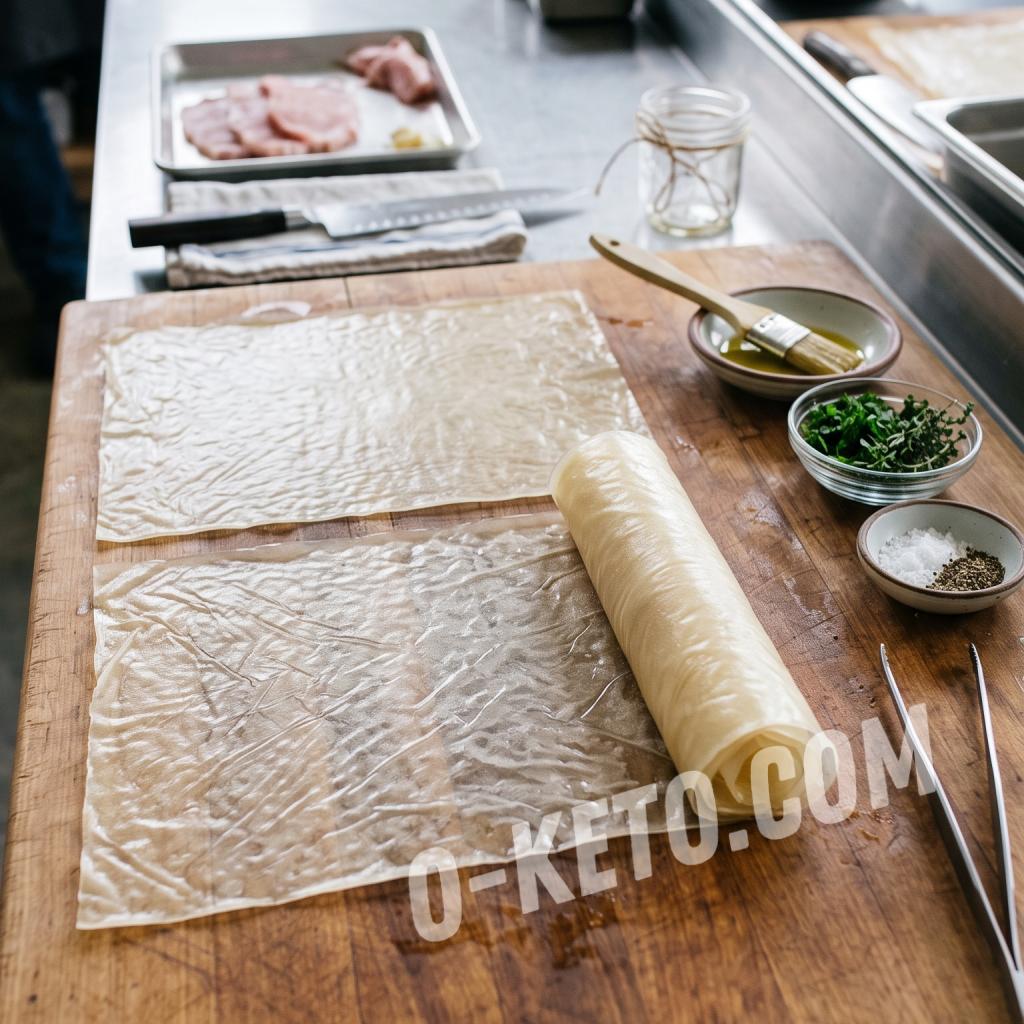

Collagen film is a thin sheet material made from food-grade collagen and used in home and craft meat processing to shape rolls, galantines, compact roasts, and other formed products that need structure without a classic sausage casing. Unlike collagen casing, which is tubular, collagen film works as a flat sheet that wraps or separates the product. It is not the same thing as ordinary kitchen cling film and it is not just a storage wrapper. It is a dedicated processing material used when a neat formed shape and cleaner slicing matter during cooking, sous-vide work, or other controlled heat treatments.
What It Is
Collagen film is sold as flexible sheets in different thicknesses and sizes. It is chosen when natural casings or tubular collagen casings are inconvenient, but the cook still needs a compact and stable cylindrical or rolled form. The sheet helps gather the filling, support the shape, and produce a smoother outer surface on meat or fish preparations. In some workflows it also acts as a practical assembly layer that makes rolling, pressing, and portioning easier before the product goes into a bag, net, mold, or heat treatment setup.
How It Is Used
Typical uses include poultry rolls, pork or beef roulades, fish rolls, galantines, deli-style formed roasts, and sous-vide preparations that need tight structure. The sheet can be wrapped around breast meat, shoulder, ham, forcemeat, or layered fillings when the goal is a cleaner slice and a more reliable final shape. This is especially useful for products that might spread or loosen during low-temperature cooking. In practice, collagen film helps the cook organize the product into a denser and more even form before tying, netting, pressing, or vacuum sealing.
How To Choose
Key factors are sheet thickness, flexibility, format, and temperature suitability according to the producer. Small rolls may need only compact sheets, while larger roulades benefit from wider and longer formats. It is also important to check whether the material should be moistened before use. If the sheet is too dry, it may crack or resist wrapping. If it is too delicate, it may tear under tension. For home use, the most practical option is usually a film that can be handled comfortably without specialized industrial equipment.
Practical Handling
The sheet is usually prepared according to the manufacturer instructions, then wrapped around the formed product and combined with other stabilizing methods such as butcher’s twine, elastic netting, or a vacuum bag if the recipe calls for them. Collagen film does not replace every other support method on its own. Instead, it improves how the roll is assembled and how evenly it holds together. During wrapping, large air pockets should be avoided and the material should not be overstretched. After cooking, the product is often cooled under light pressure or in a stabilized shape so the slice sets more cleanly.
What Matters In Practice
Collagen film does not meaningfully define the nutrition profile of the finished dish. In normal recipe work, calories and macros are calculated from the edible meat, fish, or filling mass, not from the technical wrapping material. It should also not be confused with collagen sausage casing, fibrous casings, polyamide casings, or regular household film, because each serves a different role under heat and pressure. When the task is to form a tight sheet-wrapped roll for sous-vide or similar methods, collagen film is often more appropriate than a tubular casing because it works as a flat structural layer rather than a tube.


