


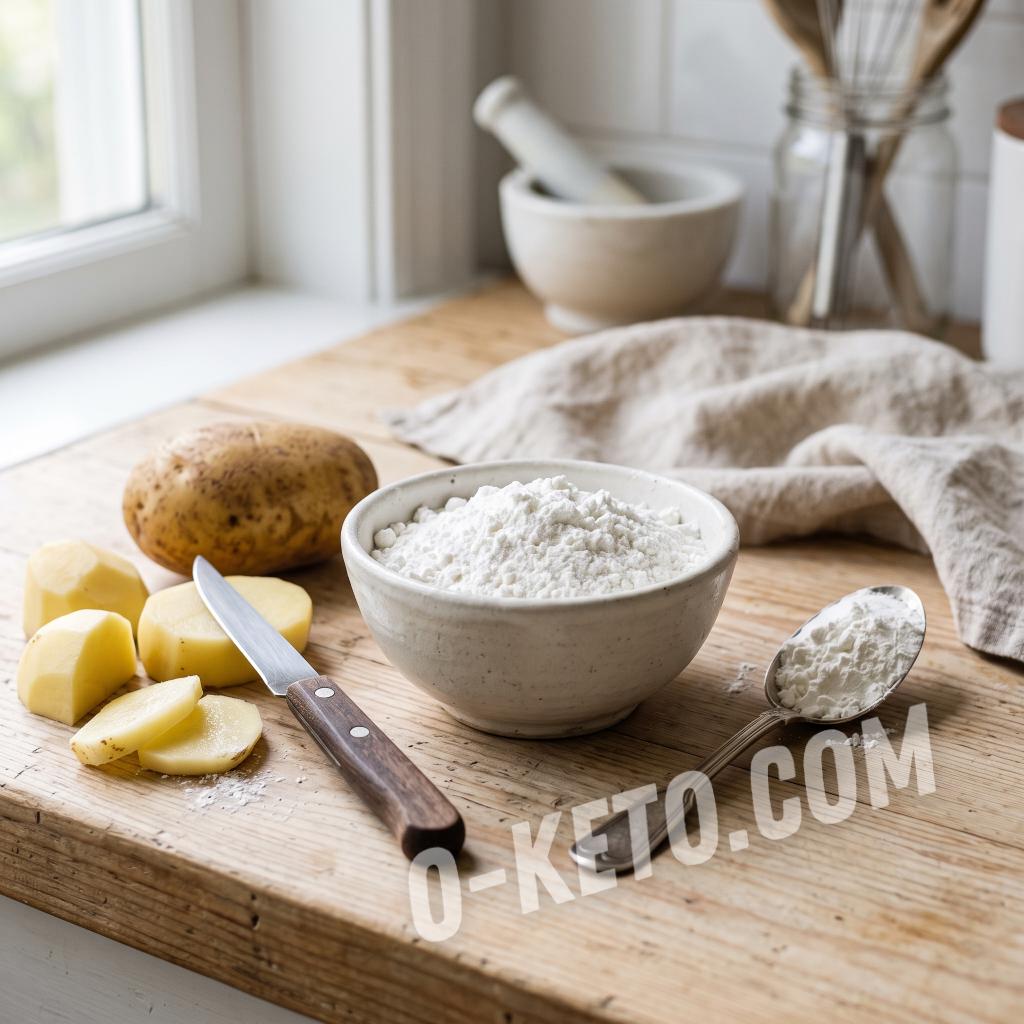

Potato starch is a refined starch extracted from potatoes and used in cooking as a thickener, binder, and texture-control ingredient. Unlike whole potato as a food, this product is not really about a root vegetable in the ordinary sense. It is mostly concentrated starch with a very high carbohydrate load. Its practical value is technological rather than nutritional: it thickens sauces, helps unify fillings, improves coating texture, and is often used when a cleaner starch finish is preferred over flour-like heaviness.
What It Is
Potato starch is a fine white powder with very little flavor or aroma of its own. Functionally, it sits close to cornstarch, tapioca starch, and arrowroot starch, but it behaves a little differently in the kitchen. It can produce a smoother, more translucent finish and is often useful for glossy sauces and lighter crisp coatings. This is a culinary tool ingredient, not a stand-alone food in the way people think of potatoes themselves.
How It Is Used
Potato starch is added to sauces, soups, batters, coatings, fillings, meat mixtures, homemade noodles, and many Asian-style dishes that need binding or controlled thickness. It can help retain juices, even out texture, and change consistency without adding a strong flavor. Some recipes use it instead of flour when a more purely starchy result is wanted, but that does not make it low-carb or nutritionally neutral.
How To Choose and Apply It
Most cooks simply want a clean product with minimal extra additives and predictable behavior. For thickening, it is often mixed first with cold water before being added to hot liquid so it does not clump. Long aggressive boiling can affect texture, so some recipes work better when potato starch is added closer to the end. In frying and coating applications, it can behave differently from ordinary flour and may create a lighter, crisper result.
What Matters Nutritionally
From a nutrition standpoint, potato starch is essentially a highly concentrated carbohydrate ingredient. That makes it difficult to fit into strict keto or very low-carb cooking, even when the recipe amount is not huge. It may be useful for texture, but it should not be mistaken for a harmless or diet-neutral pantry item. If carbohydrate control is the priority, portion size and recipe purpose matter much more than any vague appeal to traditional kitchen use.
How It Differs From Other Starches
In real cooking, potato starch is often compared with cornstarch, tapioca starch, and arrowroot starch. The differences are mostly about transparency, smoothness, heating behavior, and crust character in fried foods. That means it is best chosen for function, not for abstract “naturalness.” In low-carb work, the main question is not whether it thickens well, but whether the starch load is justified for the specific dish or whether a different approach would make more sense.


