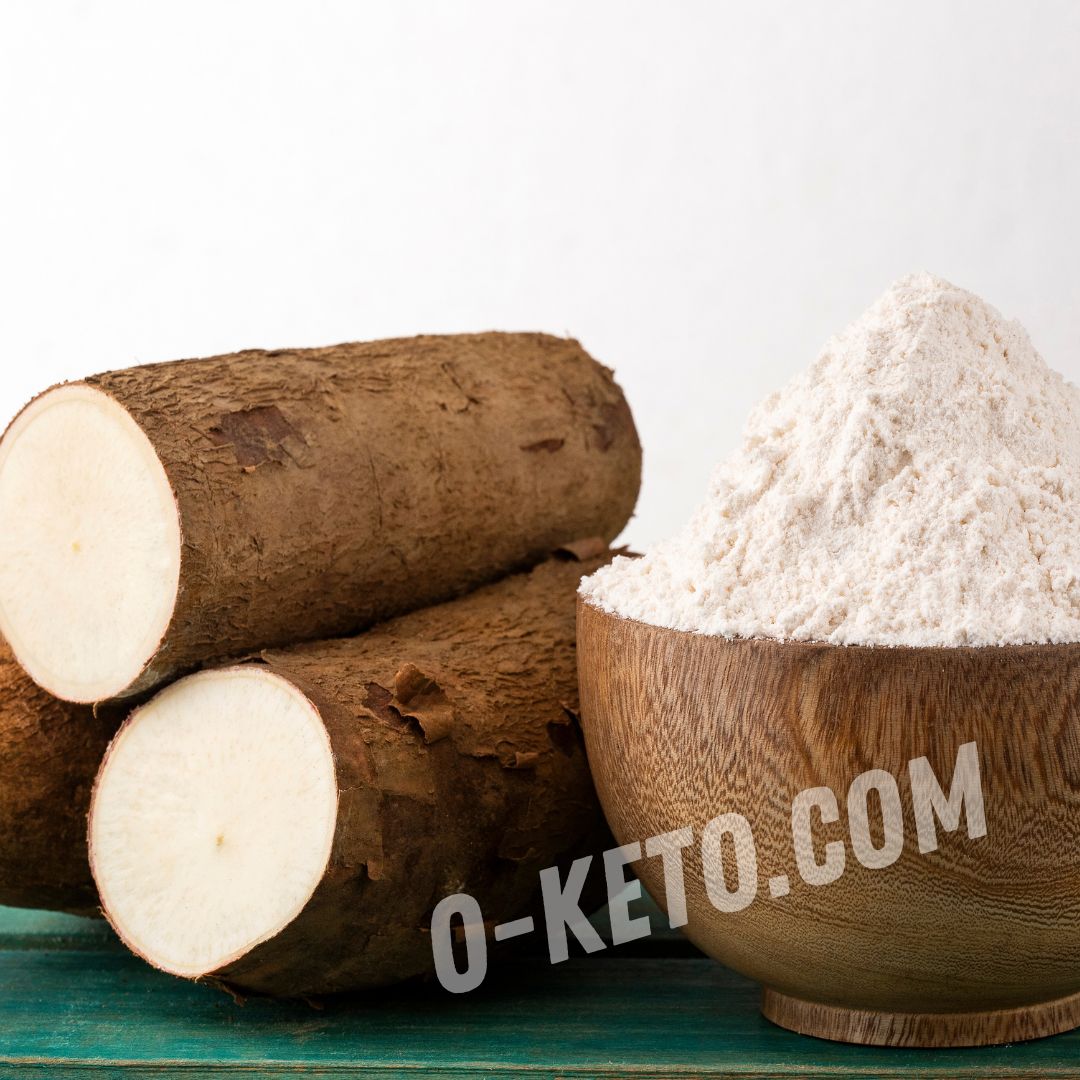

Tapioca starch is a fine white powder made from cassava root. In cooking it is used as a thickener, binder, and source of elastic texture. It is gluten-free, so it is common in gluten-free baking, Asian desserts, sauces, puddings, noodles, crepes, and pearls for bubble tea.
It is important not to confuse tapioca starch with low-carb flour. Despite its neutral taste and lack of gluten, it is almost pure starch. It solves technical tasks in a recipe, but by carbohydrates it is closer to an ordinary starch thickener than to almond or coconut flour.
Nutrition
In 100 g of tapioca starch there are usually about 350-360 kcal, roughly 88 g of carbohydrates, about 0.2 g of protein, and about 0.1 g of fat. It contains virtually no meaningful amount of vitamins or minerals. These numbers from the earlier description matter: the product mainly provides starch and energy, not protein, fat, or micronutrients.
The glycemic index of tapioca starch is often listed around 70. The actual response depends on the dish, portion, and combination with fat, protein, and fiber, but for a low-carb menu the conclusion is simple: even a small spoon quickly adds carbohydrates. One tablespoon may contain about 8-10 g of carbohydrates.
Place in keto and LCHF
For strict keto, tapioca starch is usually not suitable as a regular ingredient. If the daily carbohydrate limit is 20-50 g, one spoonful of starch can take a noticeable part of that limit. It is therefore not used as a base for dough, breading, or dessert when the goal is to keep carbohydrates very low.
Sometimes tapioca starch is used in micro amounts, for example 1-2 g per serving of sauce to bind liquid slightly. But this is a compromise, not a free keto product. If carbohydrates are tracked strictly, this addition should be counted rather than treated as invisible because the volume is small.
How it is used in recipes
Tapioca starch gives clear, smooth thickening and a slightly stretchy texture. In sauces it works faster than wheat flour; in desserts it can create elasticity; in gluten-free baking it helps bind dough and reduce crumbling. In Asian cooking it is valued specifically for elasticity and a mild neutral taste.
For thickening, the starch is usually first mixed with cold liquid and then added to the hot base. If the powder is poured directly into boiling sauce, lumps may form. After adding it, the mixture is heated briefly until thickened, but it does not need long boiling: the texture can become too gluey.
Keto substitutes
For low-carb sauces, xanthan gum, guar gum, gelatin, cream cheese, egg yolks, cream, cauliflower puree, or reduction are used more often. Xanthan and guar are needed in very small amounts: sometimes a pinch is enough, so they are easy to overuse.
For baking, there is usually no direct one-spoon replacement. Almond and coconut flour do not behave like starch, psyllium gives a different viscosity, and gelatin works differently. A recipe with tapioca starch is therefore better adapted as a whole rather than simply crossing starch off the ingredient list.
How to choose
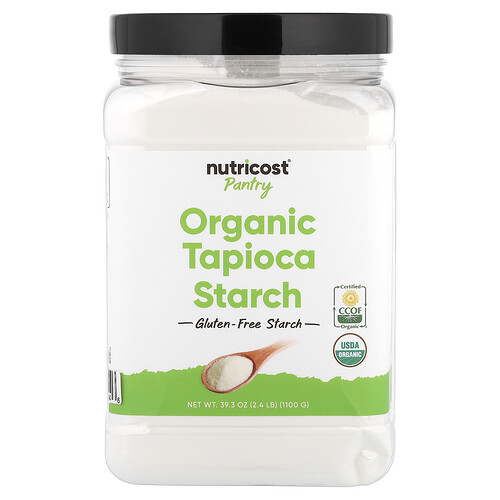
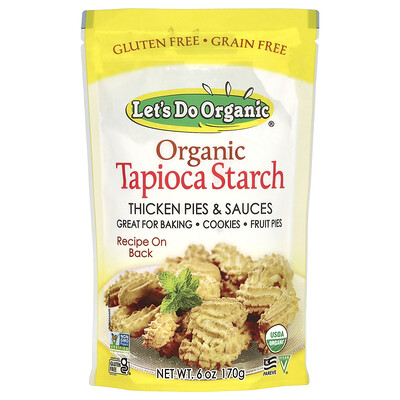
Good tapioca starch should be white and dry, without lumps, musty odor, or traces of moisture. The ingredient list should contain only cassava or tapioca starch. If the product is called a baking mix, it may include rice flour, sugar, leavening agents, or other additions, which makes it a different product.
Some packages say “tapioca flour” even when the product is starch. Names overlap in different countries, so it is better to check the ingredient list and nutrition panel. If carbohydrates are around 85-90 g per 100 g and protein and fat are almost absent, it is a starch product.
Storage
Store tapioca starch in a tightly closed dry package, away from steam, wet spoons, and strong odors. It absorbs moisture easily, clumps, and may take on smells from spices or household chemicals. After opening, it is convenient to transfer it to a lidded jar and write the date.
If there is a musty smell, insects, wet lumps, or color change, discard the product. For keto cooking, tapioca starch is not a basic ingredient, so buying a large bag makes sense only when it is regularly needed for specific family recipes.