


Glycemic index
A measure of how quickly a carbohydrate food raises glucose; useful for comparison, but misleading without portion size and meal composition.


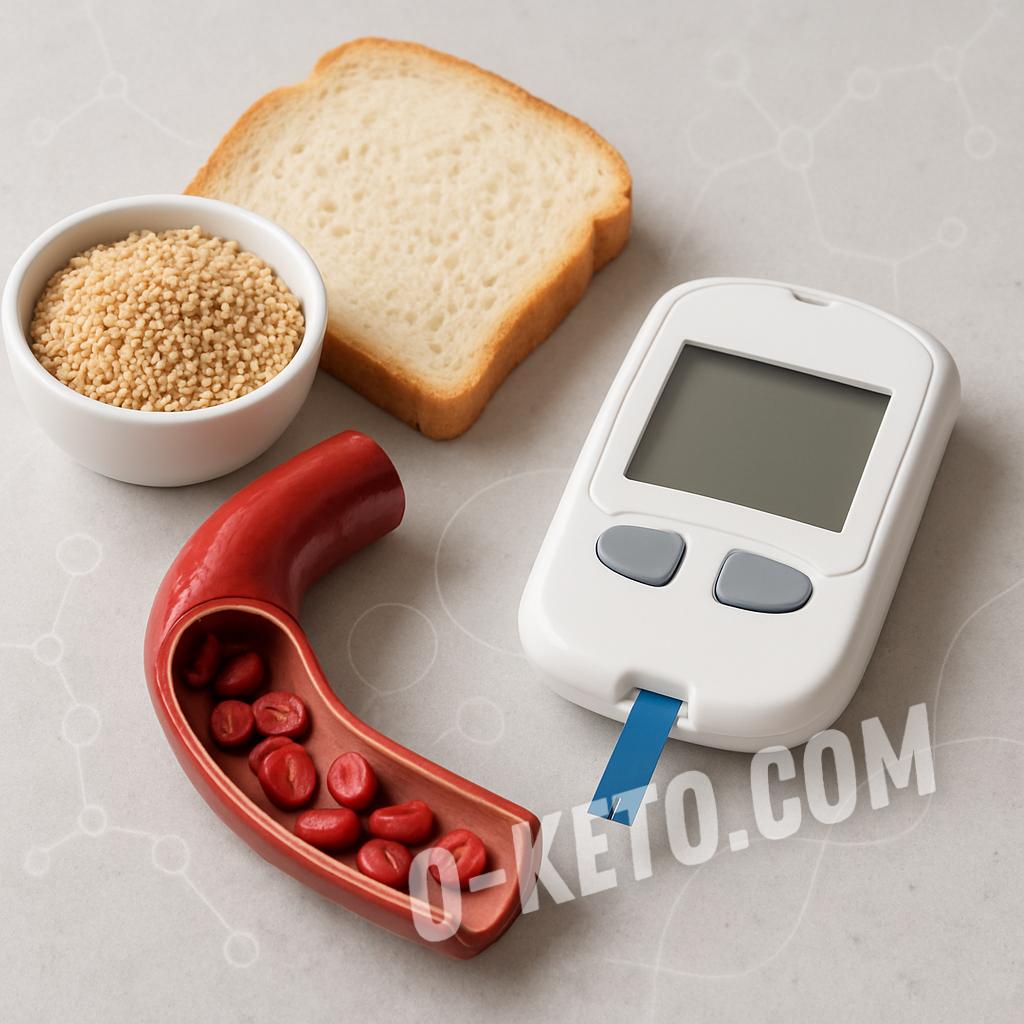
Glycemic index shows how quickly and strongly a carbohydrate-containing food raises blood glucose compared with a reference, usually pure glucose. It helps compare foods that contain the same amount of available carbohydrate, but it does not describe a real meal completely. The index does not account for serving size, protein, fat, fiber, acidity, processing, eating speed, time of day, or individual insulin sensitivity. GI is therefore useful as a guide but risky as the only criterion for food choice.
How it is measured
Glycemic index is measured in studies. Participants eat a portion of the test food containing a fixed amount of available carbohydrate, then blood glucose is measured and the area under the curve is compared with a reference. GI of 55 or less is usually considered low, 56–69 medium, and 70 or more high. These categories reflect an average response to a test portion, not a guaranteed result in every person.
The same food can have different values depending on variety, ripeness, grinding, cooking, and cooling. Overcooked porridge, al dente pasta, cooled potatoes, and mashed potatoes behave differently. Liquid form usually raises glucose faster than the whole food. GI tables may therefore differ, and this is not necessarily an error. Food really changes.
Why index is not the same as benefit
A low glycemic index does not automatically make a food healthy. Ice cream may have a lower GI because of fat, but that does not make it a good metabolic-health choice. Fructose can also have a low GI because it raises glucose less directly, while excess fructose in sweet drinks can stress the liver and increase energy intake. On the other hand, a higher-GI food may be acceptable in a small portion or after hard training.
This is why glycemic load is used alongside GI. Index speaks about speed; load speaks about portion. For diabetes, insulin resistance, or keto, the practical question is how much carbohydrate actually arrived in the meal and how the body responded. A large portion of a medium-GI food may be worse than a small portion of a high-GI food.
How to use it on keto and LCHF
On keto, most high-GI foods are also rich in starch or sugar, so they are usually limited. The problem is not only the index. Bread, rice, potatoes, sweet cereals, juices, and pastry provide many available carbohydrates and often do not satisfy well relative to their glucose response. A low-carbohydrate diet lowers peaks mainly by reducing the carbohydrate portion, not by magically choosing low-GI products.
If a person is not doing strict keto but follows LCHF, GI can help choose calmer options: whole foods instead of liquids, less overcooking, more protein and fiber, acidity in sauces, and walking after meals. In diabetes treated with medication, carbohydrate changes must account for hypoglycemia risk. Better glucose is useful only when it is safe.
Resistant starch is a good example of why preparation matters. When potatoes, rice, or legumes are cooked and cooled, part of the starch becomes less available for digestion. This may slightly reduce glucose response, but it does not turn the food into a keto food. If the portion is large, the carbohydrate load remains meaningful.
Another mistake is choosing foods only by low GI and forgetting satiety. If a low-index food triggers overeating, sweet cravings, or frequent snacking, its practical value is questionable. Metabolic health depends not only on the two-hour glucose curve but also on appetite, energy, and the overall diet afterward.
Individual response
Modern glucose meters and CGM show that responses to the same food differ greatly between people. Microbiota, sleep, stress, training, the previous meal, cycle phase, medications, and time of day all influence the curve. A GI table can suggest direction, but it cannot replace observation. If a food listed as low produces a long glucose peak in a specific person, that practical response matters more than the table.
Glycemic index is best used together with portion size, total glycemic load, diet quality, and well-being. It helps reject the idea that all carbohydrates are identical, but it should not create a new illusion that one number answers the whole nutrition question.
If you have any questions about the term "Glycemic index", you can ask them to AI. Please note, a low-cost OpenAI model is used. It may answer questions about disease treatment with errors!


 1 / 4
1 / 4

 1 / 4
1 / 4 1 / 4
1 / 4


 1 / 4
1 / 4