


Energy balance
The relationship between energy intake and energy expenditure; it affects body weight, appetite, hormones, diet adaptation, and low-carbohydrate results.



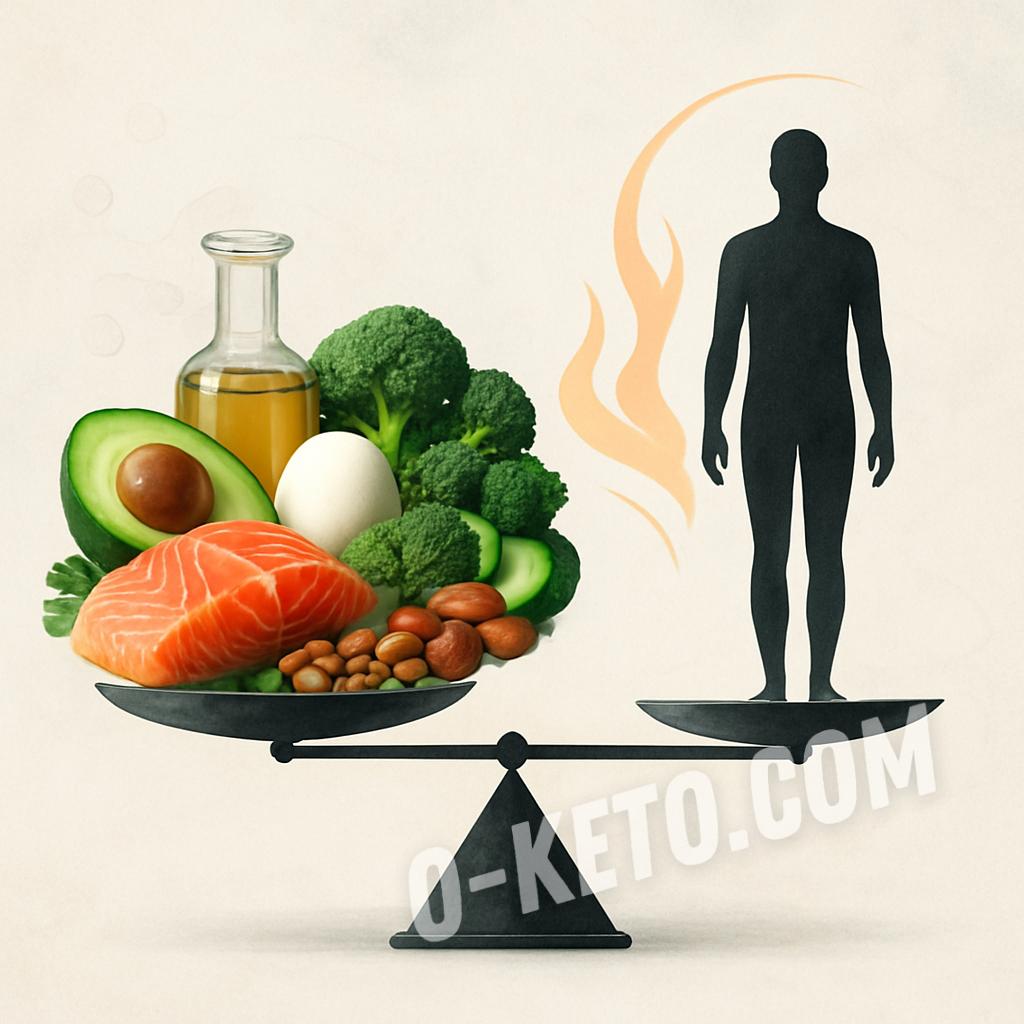
Energy balance is the relationship between energy coming from food and drinks and energy the body expends. When intake exceeds expenditure for long enough, stored energy usually increases, most often as body fat. When expenditure consistently exceeds intake, stores decrease. This is a basic law, but in real life it does not work like simple arithmetic in a tracking app. Appetite, hormones, adaptation, behavior, and food quality all shape the outcome.
Energy expenditure has several parts. Basal metabolism keeps organs, temperature, brain function, breathing, and circulation running. The thermic effect of food reflects the cost of digestion and absorption, and protein has a higher thermic effect than fat or carbohydrate. Physical activity includes formal training and ordinary movement. NEAT is also important: spontaneous movement, gestures, walking, household activity, and how much a person moves during the day.
The main mistake is treating energy balance as fully voluntary. When calories are cut sharply, the body can reduce expenditure: spontaneous movement falls, cold intolerance appears, mood worsens, hunger rises, and leptin, ghrelin, thyroid hormones, and sex hormones may shift. The same calculated deficit can therefore produce different results in different people. The body is not a calculator but an adaptive system.
Food quality affects energy balance through satiety and energy availability. Protein, fiber, whole foods, adequate sodium, and enough food volume help many people eat less without constant struggle. Ultra-processed foods, liquid calories, sugar combined with fat, alcohol, and frequent snacking bypass satiety more easily. Two diets with the same calories on paper can influence appetite and actual intake very differently.
Low-carbohydrate eating often helps not because it abolishes energy balance, but because it changes the practical side of it. Many people experience less hunger, fewer glucose swings, easier fasting between meals, better insulin control, and fewer sugar cravings. As a result, they may create a deficit without counting every calorie. But if keto includes constant overeating of nuts, cheese, cream, oils, and fat-based desserts, weight loss may stop.
Insulin matters, but it does not cancel calories. High insulin facilitates energy storage and can make access to fat stores harder, especially with insulin resistance. Lower insulin helps fat oxidation and appetite control. However, dietary fat is still energy. If too much energy is coming in even with low insulin, the body does not have to draw heavily from its own fat stores.
Energy balance changes during weight loss. A smaller body needs less energy to maintain. After weight loss, the body may also defend the previous level of stored energy: hunger can be higher, expenditure lower, and weight regain easier. This is not a reason to give up, but it is a reason to plan maintenance early with protein, strength training, sleep, steps, routine, and a realistic rate of fat loss.
Short-term body-weight changes are not the same as fat changes. Salt, carbohydrate, the menstrual cycle, inflammation after training, constipation, and poor sleep can shift water and glycogen by several pounds. In the first days of keto, a lot of water often drops because glycogen and sodium fall. This can be motivating, but it is not the rate of fat loss. Energy balance should be judged over weeks, not by one morning weigh-in.
A plateau does not always mean that “calories stopped working.” Sometimes movement has decreased, portions have grown unnoticed, fatty snacks have appeared, body weight and expenditure have fallen, sleep has worsened, or stress has increased. Sometimes recomposition is happening: waist size decreases, strength improves, and scale weight stays stable. Several markers should be evaluated together before cutting food aggressively.
Under-eating has a cost as well. A very large deficit can worsen sleep, libido, menstrual function, thyroid markers, mood, recovery, training performance, and the relationship with food. A person may lose muscle as well as fat, especially with low protein and no strength training. Good fat loss preserves strength, function, and nutrient density rather than simply pushing the scale down at any cost.
In practice, energy balance is better judged by trends than by a single day. Body weight, waist size, photos, strength, appetite, sleep, energy, and eating behavior matter more than a random water shift after salt, carbohydrate, or training. For keto and LCHF, the useful goal is not to defeat energy law, but to create a food environment where the needed balance becomes easier to maintain without constant hunger.
If you have any questions about the term "Energy balance", you can ask them to AI. Please note, a low-cost OpenAI model is used. It may answer questions about disease treatment with errors!


 1 / 4
1 / 4


 1 / 4
1 / 4
 1 / 4
1 / 4