
Seeds often enter a keto plate almost automatically: they are sprinkled over salad, stirred into yogurt, or eaten as a snack. That is where mistakes begin. Some seeds provide substantial fiber with few available carbohydrates, some add calories very quickly, and others are closer to grains by carbohydrate load. So the question “can I eat seeds on keto?” has no single answer. First decide what job the seed is doing in the dish and how much you will actually eat.
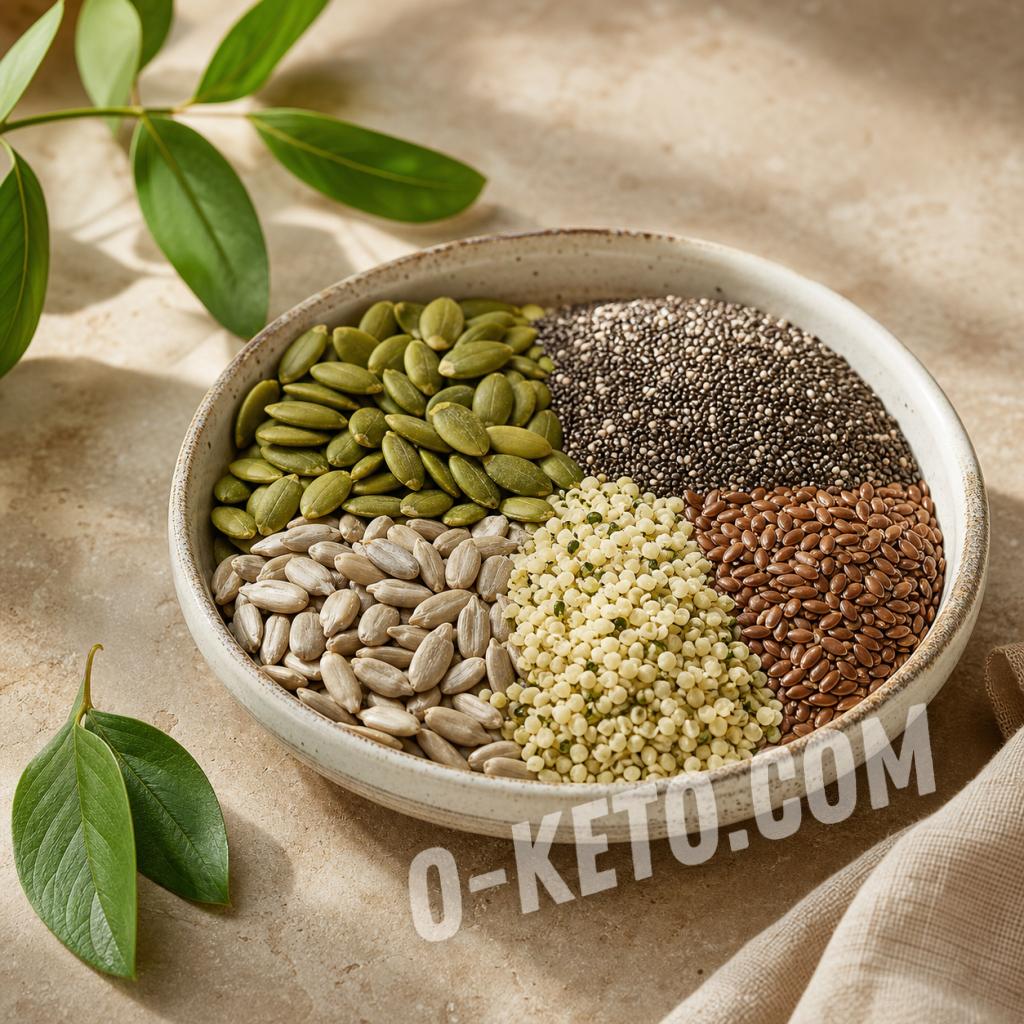
A useful way to judge seeds is not by “superfood” promises, but by three criteria: digestible carbohydrate, effect on satiety, and the way the product form changes the real portion. These criteria explain the differences between chia, flax, hemp, pumpkin, and sunflower seeds. Amaranth needs a separate section because it is often mistaken for an ordinary keto seed.
Which seeds usually fit keto
The table gives practical starting portions, not treatment doses. Its purpose is to compare the foods and prevent calories from disappearing into several dishes during the same day.
| seed | what it changes in a dish | starting portion |
| chia | thickens and adds fiber | 10–20 g |
| flax | adds fiber and plant omega-3 | 10–20 g |
| hemp | adds protein and mild nutty flavor | 20–30 g |
| pumpkin | adds crunch, magnesium, zinc, and protein | 15–30 g |
| sunflower | adds fat and vitamin E | 15–25 g |
Use less if the same meal already contains nuts, cheese, cream, or a fatty sauce. Seeds do not become unlimited just because they are small: two large handfuls can provide the energy of a full snack. If weight loss is the goal, measuring the portion is usually more reliable than deciding its size after eating.
Chia: when fiber and a dense texture are useful
Chia’s defining feature is its ability to hold water and form a gel. This turns unsweetened yogurt or coconut cream into a thicker pudding and makes a small serving more substantial. In keto cooking, that practical texture is more relevant than the vague label “superfood.”
The gel only works with enough fluid. A large dry serving can worsen bloating, heaviness, or constipation, especially when vegetables, nuts, and psyllium have also been increased. Start with about 10 g, let the seeds hydrate, and assess tolerance. Fiber should be increased gradually when bowel symptoms are present.
Flax: the form matters
Whole flax looks like a source of fiber and omega-3, but its firm coat limits access to the inside of the seed. Freshly ground flax is therefore more practical when the goal is to use its fats and lignans. Grind a small amount shortly before eating instead of preparing a large jar months in advance.
Flax provides alpha-linolenic acid, a plant omega-3, but ALA is not the same as EPA and DHA from fish. Conversion to long-chain forms is limited. The practical conclusion is that flax can be part of a keto diet, but it should not be presented as a complete replacement for fish or a prescribed omega-3 source.
Ground flax also loses quality quickly. A paint-like smell, bitterness, or rancid taste means the product should be discarded. Refrigerate it in a tightly closed container and protect it from heat and light.
Hemp hearts: when a protein accent is needed
Hemp hearts have a soft texture, so they blend easily into salad, cottage cheese, eggs, or unsweetened yogurt. Unlike chia and flax, they do not form a gel; they add protein and fat while keeping the dish loose. This makes them useful when you want a denser meal without changing its consistency.
Hemp protein does not make the seeds equivalent to meat, fish, or eggs: the amino-acid pattern and normal serving size are different. The best use is as an addition to an already complete protein source. Count the amount, because a large handful can quietly become a calorie-dense part of the meal.
Pumpkin and sunflower seeds: useful but easy to overeat
Pumpkin seeds are commonly chosen for protein, magnesium, zinc, and crunch. Sunflower seeds provide vitamin E, fat, and protein. Both work beside meat, salad, soup, or cheese because they add texture without flour or sugar.
These seeds are also often eaten directly from the bag, which hides the portion. Salt makes them more appealing, but salt itself does not make a food unsuitable for keto. Sodium restriction should be individualized for kidney disease, edema, hypertension, or a clinician’s instruction. For ordinary keto meals, check the ingredient list for sugar, syrup, starch, or sweet coating.
Sunflowers can accumulate cadmium from soil, so levels vary by growing region and batch. This is not a reason to exclude an ordinary serving, but people who eat large amounts daily should choose products from a reliable producer and rotate seed sources.
Why amaranth is not automatically a keto seed
Amaranth is a pseudocereal. It is sold as a grain, flakes, flour, or popped grains and is used much like other cereal foods. Dry amaranth contains substantial carbohydrate, so it belongs closer to quinoa and buckwheat than to chia or flax.
Gluten-free answers a gluten question, not a carbohydrate question. Strict keto usually does not include amaranth porridge, flour, or popped grains. A softer LCHF plan may allow a small calculated serving, but the carbohydrate must be counted in advance. Calling amaranth an ordinary low-carb seed is misleading.
How to use seeds in a finished keto meal
Start by deciding what the dish lacks. If you need thickness and fiber, use hydrated chia. If you need a nutty flavor and plant omega-3, use ground flax. Hemp is better for a protein accent, while pumpkin or sunflower seeds are better for crunch. This connects the choice to a cooking goal instead of treating every seed as the same topping.
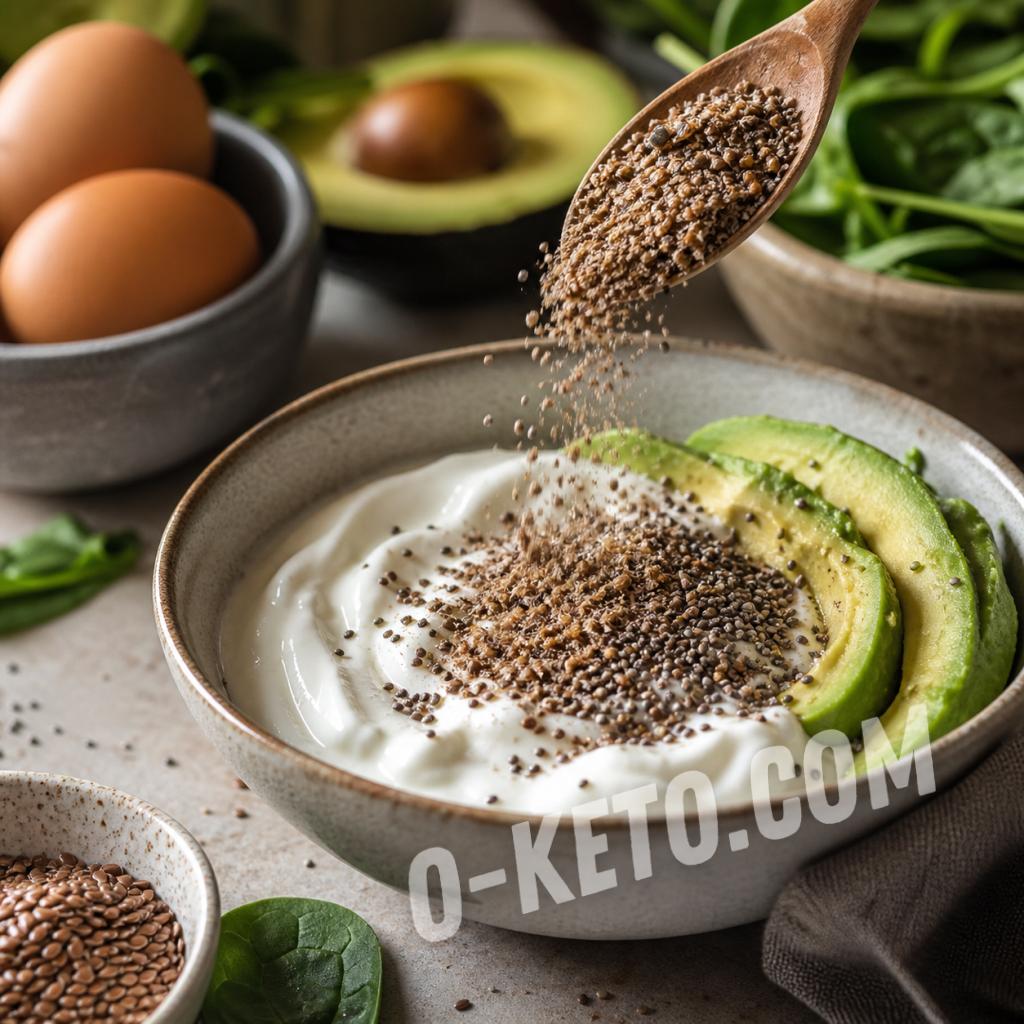
Add seeds to eggs, meat, fish, cheese, unsweetened dairy, or salad. Seed butters, flours, granola, and bars need separate tracking: once ground, it is easy to eat several dense spoonfuls, while the finished product may also contain honey, dates, syrup, or starch.
Soaking, grinding, and storage
Soaking is not a universal activation method. It is useful when a recipe needs a gel, softer texture, or later blending, but it does not guarantee a meaningful reduction in phytate or make seeds automatically more nutritious. For chia, hydration is the point; for flax, freshness after grinding matters; for other seeds, dry storage and a measured portion are often enough.
Store fatty seeds in a dry, tightly closed container away from heat and light. Ground flax, hemp hearts, and opened seeds lose quality faster, so refrigeration or freezing helps with longer storage. Discard products with moisture, mold, bitterness, or rancid odor.
Sources
FoodData Central — U.S. Department of Agriculture.
Clinical evidence on dietary supplementation with chia seed (Salvia hispanica L.): a systematic review and meta-analysis — Nutrition Reviews.
Effect of flaxseed supplementation on lipid profile: an updated systematic review and dose-response meta-analysis of sixty-two randomized controlled trials — Phytotherapy Research.
Efficacy of flaxseed in reducing blood pressure among patients with cardiovascular risk factors: a systematic review and meta-analysis of parallel randomized controlled trials — Journal of Cardiovascular and Thoracic Research.