


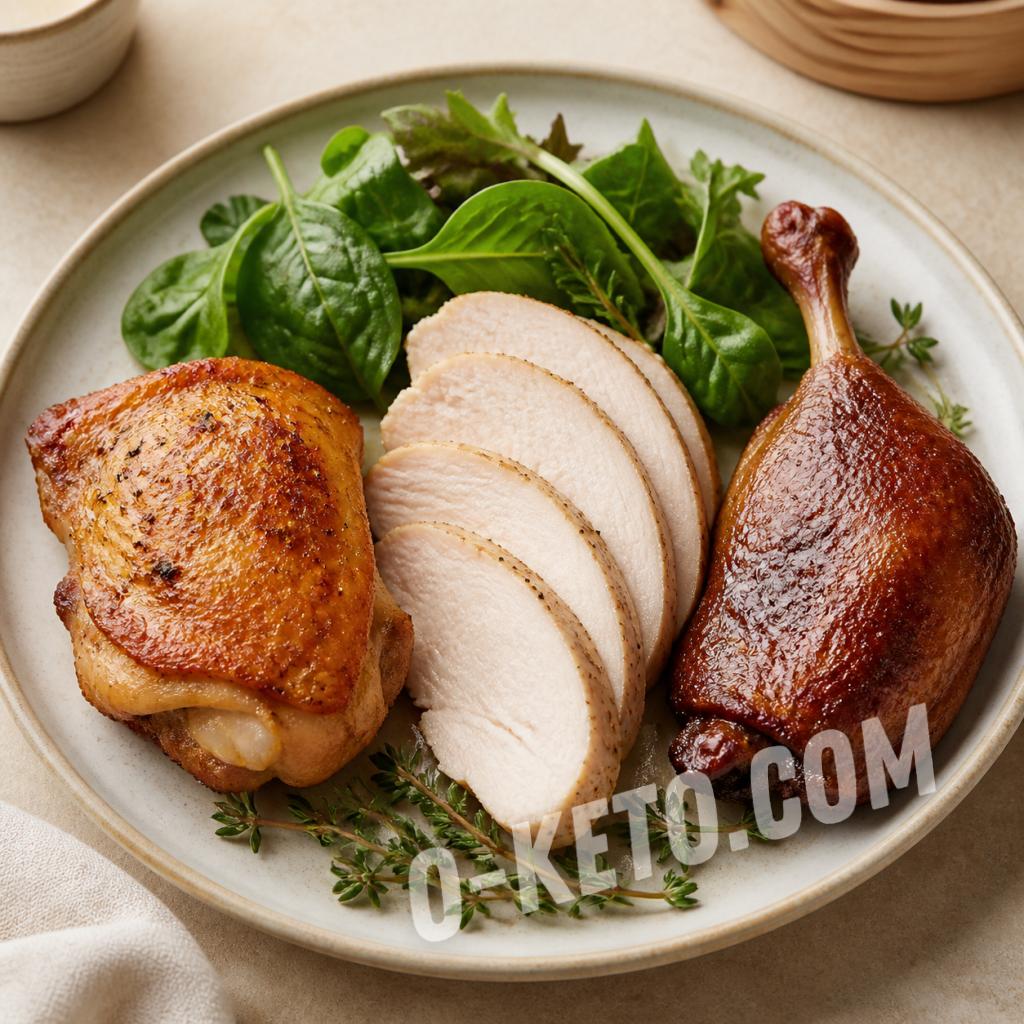

Poultry is often treated as one uniform food for keto and LCHF, but chicken breast, skin-on thigh, duck, and prepared mince behave very differently in a meal. The important question is not only whether the meat contains carbohydrates. You also need to choose the right cut for the amount of fat you want, check whether sugar or starch has been added, and consider how the meat will be cooked. A good choice therefore starts with the label and the purpose of the dish, not simply with the name of the bird.
What makes poultry suitable for keto
Plain chicken, turkey, duck, and quail contain virtually no carbohydrates. Their main macronutrients are protein and fat, which makes them convenient for a low-carbohydrate diet. However, the absence of carbohydrates in plain meat does not make every ready-made poultry product keto-friendly. Breaded coatings, flour, sweet glazes, honey, syrups, starches, and some prepared sauces can change the nutritional profile substantially.
The second criterion is fat content. Chicken or turkey breast provides a lean source of protein, while thighs, drumsticks, and skin usually make a dish juicier and more energy-dense. This does not mean that breast must be avoided on keto or that skin must always be eaten. It means that a lean cut can be combined with a suitable amount of fat, while oil, cheese, cream, and sauce should be counted as part of the whole plate.
The nutritional value of poultry depends not only on the species but also on the cut, the presence of skin, and whether the weight is raw or cooked. Breast meat without skin is lean, while skin and subcutaneous tissue contain much more fat; cooking removes water, so values per 100 g of cooked meat cannot be compared directly with raw values. For keto, manage fat through the actual portion and cooking method.
Poultry also provides B vitamins, selenium, iron, and zinc, but these nutrients do not make it a treatment and do not prove that poultry alone lowers disease risk. Choose fresh meat with a clear ingredient list, count the edible portion, and assess it together with the sauce, side dish, and total energy of the meal.
Which poultry to choose for different meals
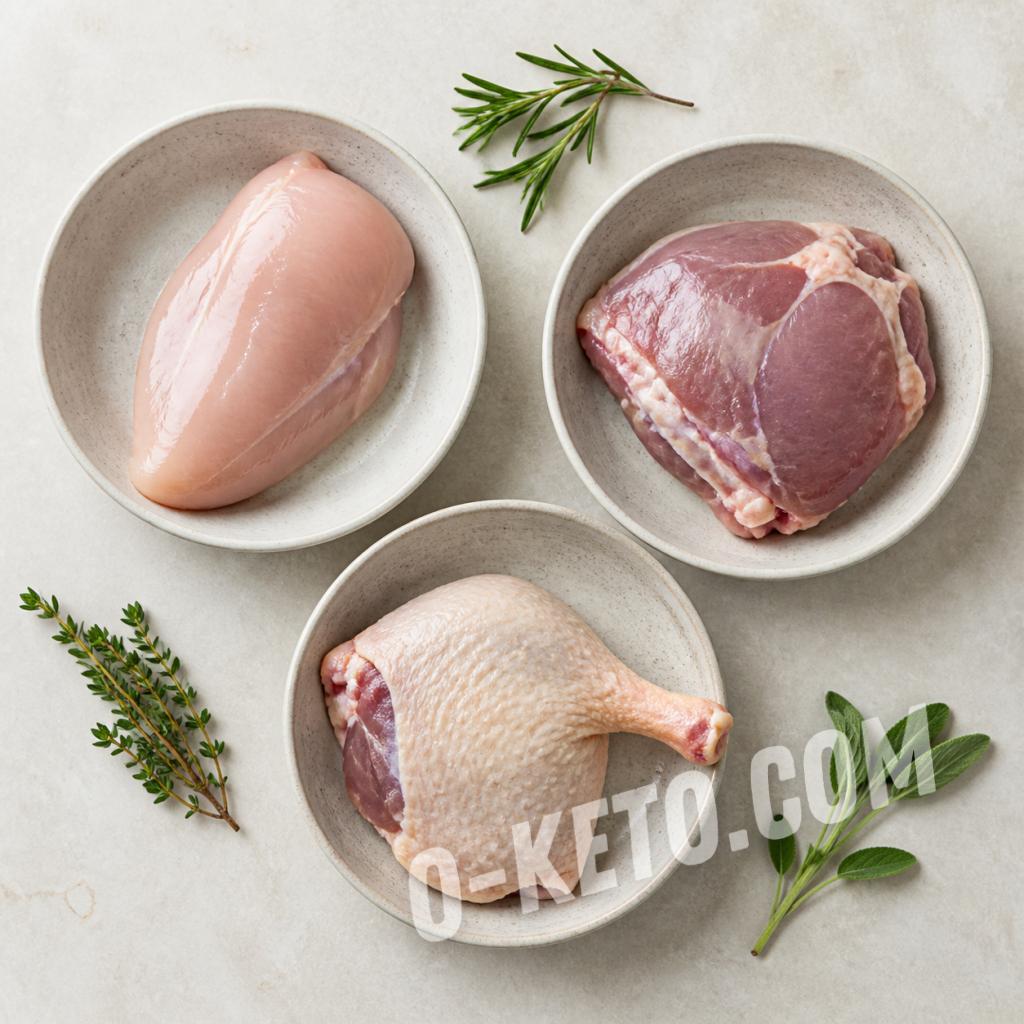
First decide what you want the finished meal to be: a lean dish with controlled calories, a juicy dinner, a fattier keto base, or a small portion for a salad. There is no single best bird for every situation.
| Product | What to consider | Practical choice |
|---|---|---|
| Chicken | Breast is lean; thigh and skin are fattier; mild flavour | Breast for salads and quick meals, thigh for roasting and stewing |
| Turkey | Breast can be dry; thigh and mince are juicier; check mince ingredients | Thigh or mince without flour, bread, sugar, or starch |
| Duck | Usually fattier and higher in calories, especially with skin | Leg or breast according to the planned fat content, without sweet glaze |
| Quail | Small carcass, firm meat, convenient portion | Roast or stew whole and serve with salad and a savoury dressing |
The simple rule is that lean breast makes protein easier to control, but it may be less satisfying; thigh and duck make a richer plate, but require attention to total calories. When cooking for a family, prepare the same bird and adjust fat separately with the sauce or side dish.
How to keep chicken and turkey from becoming dry
Chicken and turkey breast dry out quickly, especially when overheated or cooked for too long. A common mistake is to repair dry meat with a sweet commercial sauce. It is better to choose the cooking method in advance: short cooking, gentle stewing in an unsweetened sauce, covered roasting, or a naturally juicier thigh.
Good pairings include an unsweetened cream sauce, butter, avocado, cheese, mushrooms, green vegetables, and salad with dressing. If you buy mince, read the complete ingredient list rather than relying only on the fat percentage. If you want to keep the carbohydrate content low, avoid bread, breadcrumbs, flour, starch, dextrose, and unspecified plant fillers.
When duck or quail makes sense
Duck is useful when you want a more substantial and fatty poultry dish. Skin and subcutaneous fat affect calories more than the bird’s name, so some fat can be rendered during roasting and the portion can be adjusted to the rest of the day. Green vegetables, herbs, and sour savoury sauces without sugar work well; sweet glazes and fruit syrups require a separate carbohydrate calculation.
Quail is convenient for a small portion, an appetiser, or a meal where the size of the whole carcass matters. It is not a special medicinal food and does not need exaggerated health claims. Its practical advantages are firm meat, a compact portion, and the option to roast or stew it whole. For keto, the surrounding ingredients remain more important than the species itself.
How to read the label
Fresh poultry usually has a short ingredient list: the name of the product and, sometimes, information about chilling or freezing. Marinated meat, sliced poultry, smoked products, sausages, and convenience foods often have much longer lists. Look for sugar, syrup, dextrose, maltodextrin, starch, flour, breading, and sweet sauces. Words such as “fitness”, “diet”, or “made from turkey” do not replace checking the label.
Also consider salt and sodium. On a low-carbohydrate diet, fluid and electrolyte handling can change, but there is no universal amount of salt that is right for everyone. People with hypertension, oedema, kidney disease, or a specific medical recommendation should individualise sodium intake with their clinician rather than follow a general keto rule.
Safe storage and cooking
Keep raw poultry separate from ready-to-eat food, use a clean board, and never taste raw mince or marinade before cooking. Thaw meat in the refrigerator. A food thermometer is more reliable than colour; the usual safety target for poultry is an internal temperature of 74 °C. Meat colour can be misleading, particularly in dark poultry.
Refrigerate cooked poultry promptly in a covered container. Leftovers can be used in a salad, omelette, soup, or casserole, but they should not be left at room temperature for long periods. These handling rules matter more than arguments about which bird is “healthiest”: the main food-safety risk comes from storage and temperature control.
How to make the final choice
For a lean meal, choose chicken or turkey breast and add a measured amount of fat. For a juicier keto dinner, use thigh, drumstick, or skin-on poultry. For a fattier base, duck can work well; for a small serving, choose quail. In every case, inspect marinades, mince, and ready-made sauces because these are the places where carbohydrates are most often added.
Poultry fits keto and LCHF best when it is viewed as part of a complete plate: a protein base, an appropriate amount of fat, low-carbohydrate vegetables, and safe cooking. People with heart, kidney, liver, lipid, or other medical conditions should discuss the suitable fat and sodium intake with a clinician.
Sources
- Dietary Guidelines for Americans, 2020–2025 — U.S. Department of Health and Human Services and U.S. Department of Agriculture
- Chicken and Turkey Nutrition Facts — Food Safety and Inspection Service, U.S. Department of Agriculture
- Safe Minimum Internal Temperature Chart — Food Safety and Inspection Service, U.S. Department of Agriculture
- Duck and Goose from Farm to Table — Food Safety and Inspection Service, U.S. Department of Agriculture
- How do you handle and store eggs safely? — Food Safety and Inspection Service, U.S. Department of Agriculture


