Soaking and sprouting seeds, nuts, legumes, and grains are traditional methods of preparing plant products before consumption. These methods have been used in various cultures for thousands of years and help improve nutrient absorption, reduce the amount of antinutrients, and activate enzymatic processes in seeds.
When in contact with water, processes similar to the beginning of plant germination are triggered, altering the chemical composition of the product and making it more digestible. The size of these changes depends on the plant, the batch, the temperature, and the processing method, so the table times should be treated as practical starting points rather than universal rules.
Why soak and sprout foods
Most plant seeds contain protective substances—phytic acid, enzyme inhibitors, and other compounds. They help the seed survive in nature until germination but can simultaneously impair the absorption of minerals and proteins by humans.
Soaking and sprouting initiate enzymatic processes that partially break down these compounds:
- phytic acid content is reduced;
- seed enzymes are activated;
- mineral and amino acid absorption is improved;
- the amount of substances irritating the digestive system is reduced;
- the bioavailability of certain vitamins is increased.
During the sprouting process, some starch begins to break down into simpler sugars, and complex proteins become easier to digest.
How soaking works
Soaking is the first stage in preparing most seeds and legumes. The product is placed in water for a certain period to absorb moisture and initiate biochemical processes. Water softens the seed coat and activates enzymes.
The soaking time depends on the type of product. Different products require varying durations of contact with water:
| Product | Soaking time, hours |
| almonds | 2–12 |
| walnuts | 4 |
| Brazil nuts | 3 |
| cashews | 2–3 |
| hazelnuts | 8 |
| macadamia | 2 |
| pecan | 6 |
| pistachios | 8 |
| pine nuts | 2-3 |
| chickpeas | 8–12 |
| lentils | 8 |
| black beans | 8-12 |
| white and red beans | 8 |
| peas | 9-12 |
| corn | 12 |
| peanuts | no point in soaking – does not sprout |
| buckwheat | 30 minutes |
| amaranth | 8 |
| kamut | 7 |
| millet | 8 |
| oats | 6 |
| wild rice | 9 |
| quinoa | 4 |
| pumpkin seeds | 8 |
| sesame | 8 |
| sunflower seeds | 8 |
| flaxseed | 8 |
After soaking, the water is usually drained, and the product is rinsed. For legumes and grains, this also helps remove dissolved substances and reduce potential irritation to the digestive system. Dry beans and chickpeas should then be cooked in fresh water until fully tender; dry red kidney beans require vigorous boiling for at least 10 minutes after soaking because soaking alone is not enough to reduce the risk from natural lectins.
Sprouting foods
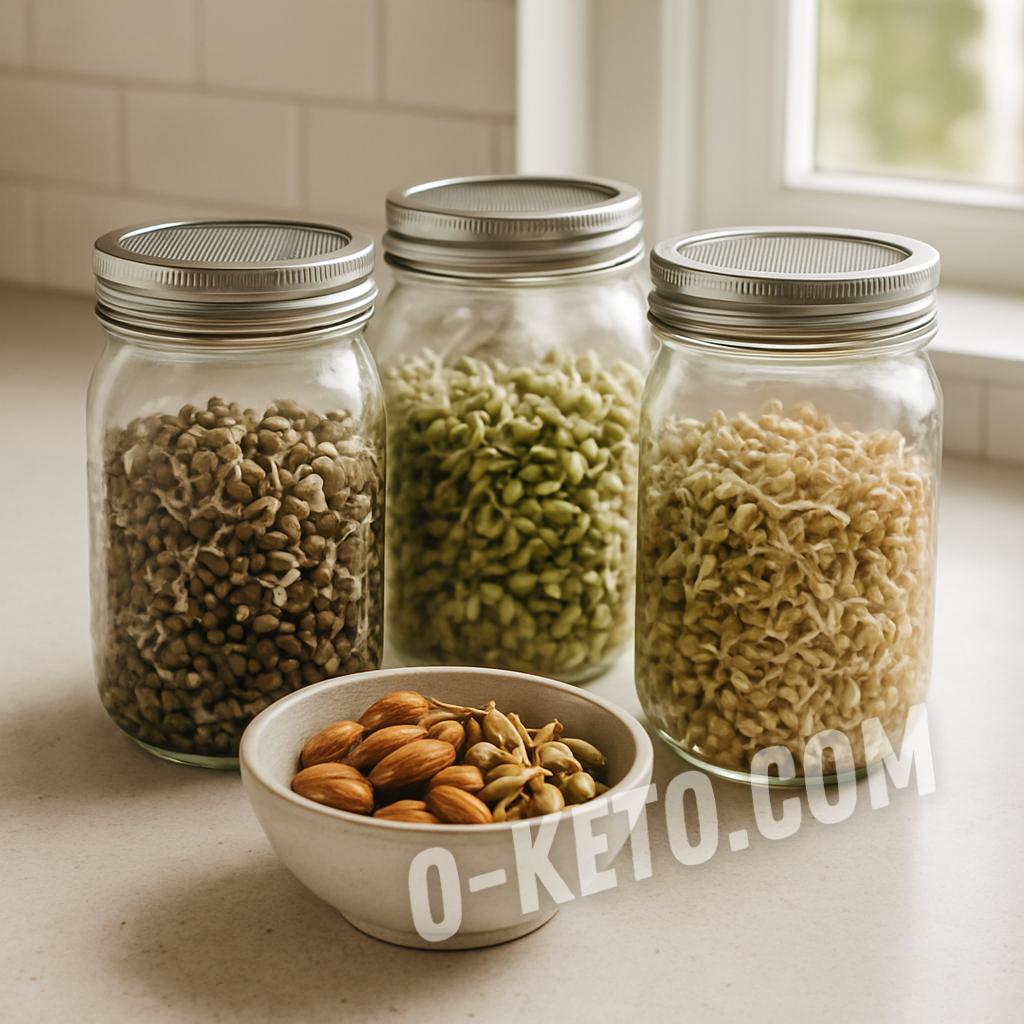
Sprouting is the next stage after soaking, during which seeds begin to form a sprout. During this period, intense metabolic processes occur in the seed: enzymes are activated, the content of certain vitamins increases, and the structure of nutrients changes.
Not all products can sprout. For example, most nuts lose their ability to fully sprout after harvesting, so they are usually just soaked. An exception is almonds, which can produce sprouts.
| Product | Sprouting time, days |
| almonds | 2–3 |
| chickpeas | 2–3 |
| lentils | 2–3 |
| black beans | 3 |
| white beans | 2-3 |
| red beans | 3–5 |
| peas | 2-3 |
| corn | 2-3 |
| buckwheat | 2-3 |
| amaranth | 1-3 |
| kamut | 2-3 |
| millet | 2-3 |
| oats | 2-3 |
| wild rice | 3-5 |
| quinoa | 1-3 |
| pumpkin seeds | 1-2 |
| sesame | 1-2 |
| sunflower seeds | 2-3 |
| flaxseed | 2-3 |
Which products do not sprout
Some products lose their ability to sprout after processing or storage:
- walnuts;
- Brazil nuts;
- cashews;
- hazelnuts;
- macadamia;
- pecan;
- pistachios;
- pine nuts.
In such cases, only soaking is used.
How sprouting is done
During the sprouting stage, seeds, legumes, or grains are no longer kept in water constantly. They are left in a moist environment with access to air. For this, the product can be placed in a glass jar, sieve, colander, or container where excess water will not stagnate.
The sprouting process looks like this:
- after soaking, completely drain the water;
- thoroughly rinse the product with clean water;
- transfer it to a jar, sieve, or other container with air access;
- cover with cheesecloth or a lid with holes;
- leave at room temperature away from direct sunlight;
- rinse the product 1–2 times a day;
- after each rinse, completely drain the water.
During sprouting, the product should remain moist but not submerged in water. This is important because growth requires not only contact with moisture but also access to oxygen.
If seeds or legumes are left in water too long, they may start to sour, ferment, and spoil.
When is sprouting considered complete. Sprouting continues until a small sprout appears. For some products, it appears within 1–2 days, while for others, it takes 3–5 days (see table). Usually, it is sufficient to wait for a small white sprout, after which the product can be consumed or stored in the refrigerator for short-term storage.
Practical recommendations
- use clean drinking water;
- after soaking, drain the water, rinse the product, and do not leave it at room temperature for a long time;
- do not leave seeds or legumes in standing water: sprouting requires moisture together with access to air;
- when sprouting, rinse seeds 1–2 times a day and drain them completely;
- keep sprouts away from direct sunlight;
- store finished sprouts in the refrigerator for a short time and discard them if they smell unpleasant or show slime or mold;
- treat soaking nuts as a culinary technique rather than a guaranteed way to improve mineral bioavailability.
Soaking and sprouting can change the texture and composition of plant products, but the size and direction of the change depend on the specific food and process. Research on legumes and grains cannot be transferred automatically to nuts, and these methods do not replace the cooking required for dry legumes.
Food safety after soaking and sprouting
Moist nuts, seeds, and sprouts spoil faster than dry products. Use soaked nuts promptly or dry them thoroughly and refrigerate them. The warm, moist conditions needed for sprouting can also support the growth of harmful microorganisms.
Raw or lightly cooked sprouts can carry foodborne pathogens, so cook them until steaming hot when safety is the priority. During pregnancy, for young children, older adults, or people with weakened immunity, cooked sprouts are the safer choice.
Use the timing tables as starting points, not guarantees: the final decision depends on the product, the package instructions, the appearance and smell, and whether the food still needs full heat treatment before eating.
Sources
- Can Sprouting Reduce Phytate and Improve the Nutritional Composition and Nutrient Bioaccessibility in Cereals and Legumes?
- Nutritional and End-Use Perspectives of Sprouted Grains: A Comprehensive Review
- Guidance for Industry: Reducing Microbial Food Safety Hazards in the Production of Seed for Sprouting: U.S. Food and Drug Administration
- Does “Activating” Nuts Affect Nutrient Bioavailability?