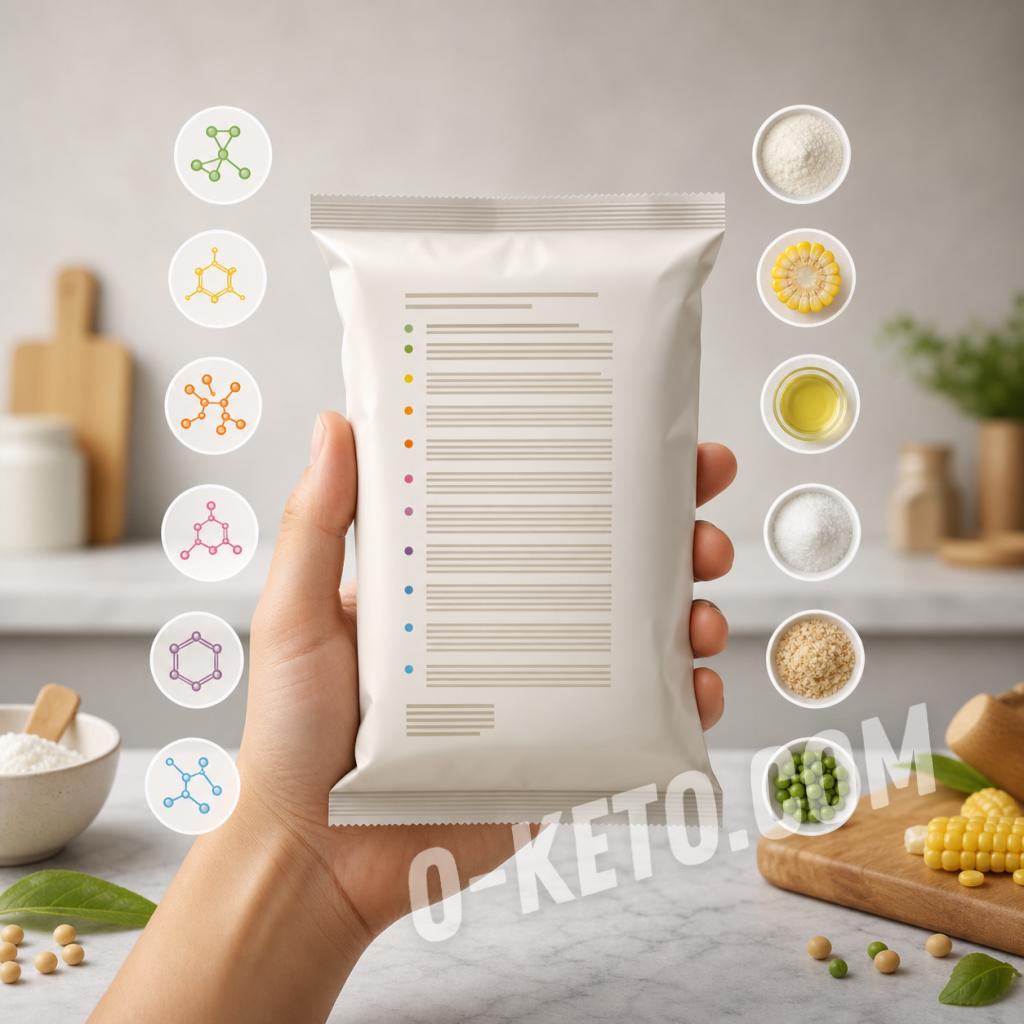

Food labels often make E-numbers look like a hidden danger signal: you see a code and immediately wonder whether the product is safe. Each E-number identifies a specific food additive, not a risk category. A technological function — colour, preservation, sweetening, emulsifying or, for example, packaging gas — describes why the additive is used. The same additive may have more than one technological function in different applications, but the number does not turn one substance into another. Safety depends on the substance, dose, food and rules in force in the country.
What an E-number means
The letter E followed by digits is an identifier for a food additive, not a quality mark and not a poison warning. In the European system, an additive receives a number after its purpose, composition and safety have been assessed for permitted conditions of use. On a label, the name of the substance is usually written next to the code or instead of it.
The number gives a rough idea of the technological group, but it does not replace reading the whole ingredient list. E100–E199 are mostly colours, E200–E299 preservatives, E300–E399 antioxidants and oxidation regulators, E400–E499 stabilisers, thickeners and emulsifiers, E500–E599 acidity regulators, raising agents and other technological substances, E600–E699 flavour enhancers, and E900–E999 glazing agents, gases, sweeteners and other additives. These ranges are only a guide: the exact status must be checked by the substance name and current rules.
This leads to a better question than “Is this E-number dangerous?” Ask instead: what is the substance, why was it added, how much can be present in the food, who may react to it, and is it authorised in this country and food category?
Why lists of banned additives differ
Internet tables often place current prohibitions, old restrictions, additives not authorised for a particular use, and substances that are not found in ordinary foods in the same column. Rules from different countries may also be combined. The reader then sees a long list and assumes that it is one current law.
A regulatory ban and a scientific concern are not the same thing. A substance may be unauthorised for a certain food category because its technological use was not approved, the evidence was insufficient, the rules changed, or countries use different standards. Conversely, an authorised additive is not automatically beneficial: permission applies only to specified foods, functions and maximum levels.
Safety assessments usually consider toxicological data, expected exposure and an acceptable daily intake. ADI is an estimate of the amount per kilogram of body weight that can be consumed every day over a lifetime without appreciable risk under current knowledge. It is not permission to consume unlimited amounts and it does not mean that an individual reaction is impossible.
ADI also cannot be treated as a separate safe allowance for each serving that guarantees safety regardless of the rest of the diet. If the same code appears in several foods, exposure is cumulative: a person may eat several portions of different products in one day and exceed the calculated level even when the amount in each product separately stays within its permitted limit. For an allergic reaction or another individual intolerance, ADI is not a universal threshold at all: the person’s sensitivity matters. When a reaction repeats, consider the whole day’s intake and frequency rather than checking foods one at a time.
Which bans appear in the commonly circulated list
The list below is commonly circulated under the wording “not authorised for use in Russia”, not as an automatically verified current edition of the law. To check a product today, compare the code with current technical regulations and official databases.
To keep the number, substance name and regulatory status separate, the same list is presented as a reference table. The names identify the additive; the row itself does not prove that all substances carry the same risk. Check the status of a specific code under the current rules for the country and food category.
Three codes are marked separately in the source list as “banned in Russia”; the remaining rows use the broader wording “not authorised for use”.
| Code(s) | Substance name | Function and brief description | Status in the list |
|---|---|---|---|
| E121 | Citrus Red 2 | Colour; marked in the list as “banned in Russia”. |
Banned in Russia |
| E173 | Aluminium | Silver-grey colour; marked in the list as “banned in Russia”. |
Banned in Russia |
| E240 | Formaldehyde | Preservative in older classifications; marked in the list as “banned in Russia”. |
Banned in Russia |
| E103, E107, E125, E127, E128, E140, E153–155, E160d, E160f, E166, E173–175, E180, E182 | Alkannin; Yellow 2G; Ponceau SX; erythrosine; Red 2G; chlorophylls; vegetable carbon; Brown FK; Brown HT; lycopene; beta-apo-8' carotenic-acid ester; sandalwood; aluminium; silver; gold; Lithol Rubine BK; orchil |
Colours. The names identify the substances and do not prove equal risk. | Not authorised for use |
| E209, E213–219, E225–228, E230–233, E237–238, E241, E252–253, E264, E281–283 | Heptylparaben; calcium benzoate; ethyl-, propyl- and methylparabens and sodium salts; sulphites and bisulphites; biphenyl; orthophenyl phenol; thiabendazole; formates; guaiac resin; potassium nitrate; sodium nitrite; ammonium acetate; propionates |
Preservatives. Dose, food and individual sensitivity matter especially for sulphites, nitrites and nitrates. | Not authorised for use |
| E302–305, E308–314, E317–318, E323–329 | Ascorbates; tocopherols; gallates; guaiac resin; erythorbates; Anoxomer; ethoxyquin; lactates |
Antioxidants and acidity regulators; one technological group does not mean one chemical composition. |
Not authorised for use |
| E343–345, E349–352, E355–357, E359, E365–368, E370, E375, E381, E384, E387–390, E399 | Phosphates, citrates and malates; adipic acid and salts; fumarates; heptonolactone; niacin; ammonium ferric citrate; isopropyl citrate; oxystearin; thiodipropionates; calcium lactobionate |
Acidity regulators, antioxidants and stabilisers in the source list. | Not authorised for use |
| E403, E408–409, E418–419, E429–436, E441–444, E446 | Ammonium alginate; yeast glycan; arabinogalactan; gellan and ghatti gums; peptones; polyoxyethylene stearates; polysorbates; gelatine; ammonium phosphatides; brominated vegetable oil; sucrose acetate isobutyrate; succistearin |
Thickeners, stabilisers, emulsifiers and gelling agents. | Not authorised for use |
| E462–467, E474, E476–480, E482–489, E491–496 | Cellulose derivatives; sucroglycerides; polyglycerol polyricinoleate; propylene-glycol esters; lauryl sulphates; stearoyl lactylates; stearates; tartrates; fumarates; ethoxylated mono- and diglycerides; sorbitan esters |
Thickeners, carriers, emulsifiers and stabilisers; the group contains different compounds. |
Not authorised for use |
| E505, E512, E519–523, E535, E537–538, E541–542, E550, E552, E554–557, E559–560 | Ferrous carbonate; stannous chloride; copper sulphate; aluminium sulphates; ferrocyanides; sodium aluminium phosphates; bone phosphate; silicates and aluminosilicates; kaolin |
Regulators, firming agents, anti-caking agents, antioxidants and phosphates. | Not authorised for use |
| E574, E576–577, E579–580 | Gluconic acid; sodium, potassium, iron and magnesium gluconates |
Acidity regulators, sequestrants and mineral salts. | Not authorised for use |
| E622–625, E628–629, E632–635, E640–641 | Glutamates; guanylates; inosinate compounds; ribonucleotides; glycine and its sodium salt |
Flavour enhancers; reactions depend on dose, the meal and individual sensitivity. |
Not authorised for use |
| E906, E908–911, E913, E916–919, E922–926, E929, E942–946, E957, E959, E1000–1001, E1105, E1503, E1521 | Gum and waxes; lanolin; iodates; nitrogen oxides; nitrosyl chloride; persulphates; potassium bromate; chlorine; peroxides; propellant gases; thaumatin; neohesperidin dihydrochalcone; cholic acid; choline salts; lysozyme; castor oil; polyethylene glycol |
Glazing agents, oxidisers, flour improvers, bleaching agents, gases, sweeteners and other technological substances in the list. | Not authorised for use |
The size of this list does not prove that every substance on it is equally dangerous. It shows that the table should be treated as a signal for checking, not as a diagnosis of the food. Some codes may be banned, unauthorised for a particular function, replaced in newer rules, or connected with substances that are rarely found in modern retail products.
Which additives raise the most questions
Older tables often place words such as “toxic”, “carcinogenic”, “causes asthma” or “banned in several countries” beside a code. These labels cannot automatically be applied to every person and every dose. They can, however, show which groups deserve closer attention.
Frequently discussed preservatives include benzoates E210–E219, sulphites E220–E228, nitrites and nitrates E249 and E252, and propionates E281–E283. Individual sensitivity matters especially with sulphites: some people may experience unwanted reactions. For nitrites and nitrates, the overall diet, dose, processing method and formation of nitroso compounds matter; the presence of a code alone does not establish the risk.
Preservatives do not share one mechanism: sorbates, benzoates, propionates and nitrites address different technological needs, and their performance depends on the food formulation and storage conditions. Antioxidants also help maintain quality, but they slow oxidation and are not automatically substitutes for microbial preservatives. The table is a quick reference, not a list of uses that are permitted everywhere.
| Group and example | Technological purpose | What to check |
| Sorbic acid and potassium sorbate (E200, E202) | Preservatives used to control spoilage by certain yeasts and moulds in foods where that use is authorised. | Permitted food categories and maximum levels depend on the country and product formulation. |
| Benzoic acid and benzoates (E210–E213) | Preservatives whose use depends on the specific application. | Check the substance name, food category and current limit, not only the number. |
| Propionic acid and propionates (E280–E283) | Preservatives; in the EU, authorised uses include selected categories of packaged bread. | Each category has its own maximum levels and conditions; this is not a blanket approval for all bread. |
| Nitrites (E249–E250) and nitrates (E251–E252) | In some meat, fish and cheese products, they help hinder microbial growth and serve technological functions related to colour and flavour. | Dose, permitted use, overall diet and nitrosamine formation are assessed separately. |
| Rosemary extract (E392) | An antioxidant that slows oxidative deterioration in some foods. | It is not a universal substitute for substances that control microbial growth. |
| Fermented ingredients, organic acids, chitosan and plant extracts | Possible approaches for specific food systems; some are studied in particular products. | Effectiveness, safety and legal status must be established for the finished formulation and market. |
Authorisation conditions can change even for one additive group. For example, in 2025 the European Commission authorised sorbic acid and potassium sorbate (E200 and E202) in non-heat-treated plant-based mousses at a maximum level of 500 mg/kg. This is a specific condition for one food category in the EU, not a general limit for all foods or a rule for Russia or the Eurasian Economic Union.
An ingredient’s origin alone does not prove its safety or effectiveness. Assessments consider the substance’s properties, toxicological data and actual dietary exposure. In one study of fresh rice noodles, chitosan was tested together with sorbate or benzoate as part of a specific food formulation; that result does not make chitosan a universal preservative replacement. Inhibiting microorganisms in food in a laboratory experiment by itself proves neither harm to the gut microbiota at ordinary dietary exposure nor the safety of every dose. A conclusion requires evidence about the specific substance, dose, exposure and relevant human outcomes.
Flavour enhancers E620–E635 include glutamate and related compounds. Reactions to foods containing glutamate may depend on dose, the meal and individual sensitivity. Reports of discomfort should not become a claim that every food with E621 is dangerous for everyone. At the same time, it is reasonable to consider the whole product, salt content, intensity of flavour and portion size.
Commonly highlighted colours include E102, E104, E110, E122, E124, E129 and E132. Reactions in sensitive people and possible effects on children’s behaviour have been discussed for some synthetic colours and combinations, but this does not mean that every coloured food causes hyperactivity or allergy in every child. If a reaction repeatedly follows one product, record the ingredient list and discuss it with a clinician instead of judging the issue by one number.
Another group is sweeteners E950–E967. Widely circulated tables describe aspartame E951, cyclamates E952 and xylitol E967 especially strongly. These substances must be assessed by separating hazard under particular conditions from permitted intake within an ADI. Aspartame has been discussed in terms of hazard classification and separately in terms of acceptable intake; those concepts are not identical. With sugar alcohols, individual tolerance and gastrointestinal effects at large portions are often more practical concerns. This does not cancel the need to check the rules, but it does not justify calling all sweeteners one category of “poisons”.
What may be true in these tables and what needs checking
The phrase “banned in several countries” is incomplete. You need to know which countries, from what date, for which food category and for what reason the restriction applies. Regulators may assess the same additive differently, update permitted levels or use different names and numbering systems.
The phrase “may cause” is also not the same as “will cause”. It may describe a rare reaction, an animal experiment, a laboratory mechanism, a high-dose observation or a demonstrated risk for a sensitive group. A useful review should show the type of evidence, dose, population and practical implication next to the code and warning.
Readers may disagree with an official assessment and look for studies suggesting harm. That is part of checking a claim. The comparison still has to be like with like: ordinary dietary exposure with ordinary dietary exposure, human research with human research, and not an experimental dose with the amount in one sweet.
How to read the ingredient list in a shop
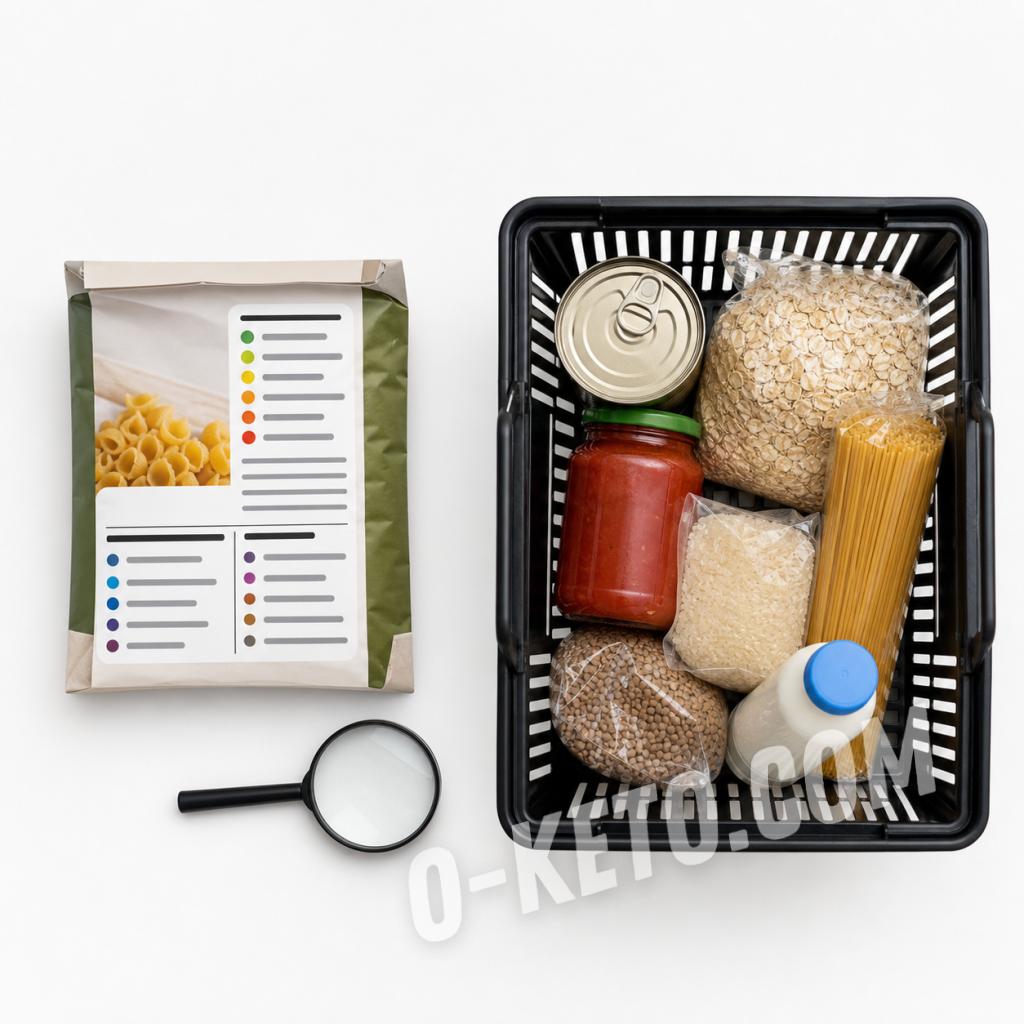
You do not need to memorise hundreds of codes. A fixed order is more useful:
- first check what the product is mainly made of and how much sugar, salt, fat, protein or starch it contains;
- then identify the additives and their function: preservation, colour, texture, sweetness, flavour or protection from oxidation;
- if a disputed code appears, check its full name, authorised food category and current status in your country;
- consider personal reactions, allergy, intolerance and portion size;
- compare similar products, because one code rarely describes the quality of the entire recipe.
A long list of additives does not automatically mean poisoning, but it may indicate a highly processed product. The more useful question is whether this food is needed, how much will be eaten and whether a simpler formulation is available, rather than hunting for one supposedly scariest number.
Who should be especially attentive
People with a confirmed allergy, asthma, intolerance to a specific substance or gastrointestinal disease may benefit from tracking not only the code but also whether the same reaction repeats. Children should not regularly receive intensely flavoured products with long ingredient lists simply because every additive is formally permitted: permission does not replace a varied diet.
During pregnancy, with chronic disease, a strong repeated reaction or a need to exclude a particular additive, rely on a clinician and current labelling rules. Do not turn a long internet table into a lifelong list of bans when it mixes countries and years.
Conclusion
A list of dangerous E-numbers can be a useful starting point if it is not treated as a final truth. Check bans against current regulation and judge harm claims by the quality of evidence, dose and population. In practice, the best way to read a label is to understand the additive’s function, look at the whole ingredient list, consider personal tolerance and avoid judging the entire product by one letter E.
Sources
- Food additives — World Health Organization
- Food additives — European Food Safety Authority
- Principles and methods for the risk assessment of chemicals in food — Joint FAO/WHO Expert Committee on Food Additives
- Food Additives and Color Additives — U.S. Food and Drug Administration
- Evaluations of the safety of food additives and contaminants — JECFA database
- Technical Regulation of the Customs Union TR CU 029/2012: Requirements for the safety of food additives, flavourings and technological aids
- Food Additives Database — European Commission
- Commission Regulation (EU) 2025/2060 of 14 October 2025 on the use of E200 and E202 in non-heat-treated plant-based mousses — EUR-Lex
- Nitrites and nitrates added to food — European Food Safety Authority
- Mold-free shelf-life extension of fresh rice noodles by synergistic effects of chitosan and common food preservatives — Food Control