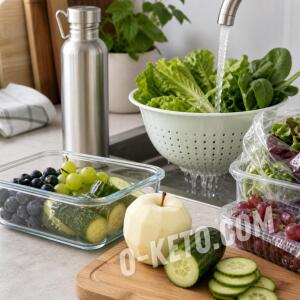
A complete meal is not a plate with identical proportions for everyone. Its purpose is more practical: provide enough protein, suitable sources of fibre and energy, and enough volume to keep a person comfortably satisfied until the next meal. The composition changes with the diet, goal, activity, food tolerance and the rest of the day’s intake.
One template cannot fit every diet. On keto, the meal is usually built around protein and non-starchy vegetables, while added fat is adjusted to satiety and the energy goal. On other diets, the same base can include grains, legumes, potatoes, bread or fruit in a suitable portion. The diet’s logic should therefore come first; only then should the plate be divided into parts.
What makes a meal complete
Start by assigning each component a job rather than starting with calories. Protein supports muscle and recovery, vegetables and other plant foods provide volume and fibre, and fats add flavour, energy and satiety while helping the body use fat-soluble vitamins. A carbohydrate source does not have to appear in the same amount in every diet, but it can be part of a complete meal when the eating pattern allows it.
This order prevents the plate from becoming a random collection of healthy-sounding foods. First choose the main protein, then the volume of plant food, and finally the amount of carbohydrate or fat that fits the chosen diet. It becomes easier to see what is missing and what has quietly become excessive.
A useful meal structure includes:
- a protein base such as fish, meat, poultry, eggs, cottage cheese, tofu or another suitable food;
- vegetables, greens, mushrooms, berries or fruit according to tolerance and the diet’s rules;
- an energy source such as fat, grains, legumes, potatoes, bread or another permitted component;
- flavour and texture from herbs, spices, sauce, acidity and a small amount of seeds or nuts.
The four parts do not need to appear in equal amounts. They are a checklist: the meal should serve a clear purpose rather than merely look varied.
A basic plate for a mixed diet
For a mixed diet, a visual plate model often combines vegetables, a protein food and a source of starchy or whole-grain carbohydrates. This is not a medical prescription and does not need to be followed to the gram. It is a starting framework; exact proportions change with appetite, goals and total energy intake.
| Meal component | Examples | Practical role |
| Protein | Fish, poultry, meat, eggs, cottage cheese, tofu, legumes | Satiety, muscle and recovery |
| Vegetables and greens | Cabbage, cucumbers, tomatoes, leafy greens, zucchini | Volume, fibre and variety |
| Carbohydrate side | Grains, potatoes, whole-grain bread, legumes | Energy and a convenient way to include carbohydrates |
| Fat and sauce | Oil, avocado, nuts, seeds, yoghurt-based sauce | Flavour, satiety and energy |
This layout explains why adding more salad is not enough when a meal contains almost no protein, and why a large handful of nuts is not always a light addition. A meal is complete when it meets the person’s needs, not simply when the plate contains several colours.
How to build a keto and LCHF plate
On keto and strict LCHF, a starchy side is not required at every meal. Choose the protein portion first, add non-starchy vegetables and greens, and use fat as part of the meal rather than as an automatic reason to pour oil over everything. This sequence helps keep carbohydrates within the chosen range and prevents a keto menu from becoming a combination of cheese, cream and butter with too little protein.
Does food order matter?
The plate composition answers what belongs in the meal. When the meal also contains a noticeable carbohydrate portion, the order of eating can matter: the same foods may produce a different short-term glucose response depending on which part comes first.
Small studies and a recent systematic review suggest that eating vegetables, fruit, or the protein component before a carbohydrate side dish is often associated with a smaller post-meal glucose rise in healthy adults than starting with carbohydrates or eating the foods in a mixed order. The evidence is still limited by small samples and different protocols, so this is a practical option rather than a universal treatment or a guaranteed result for everyone.
If the plate contains grains, potatoes, bread, or another carbohydrate component, start with vegetables or salad, continue with protein, and leave the starchy side for the latter part of the meal. There is no need to wait for a fixed number of minutes: the overall composition and portion size matter more. On strict keto, carbohydrate intake is usually small, so food order is less central; on LCHF and mixed diets, it can be an additional way to soften the short-term response, but it does not cancel carbohydrate counting.
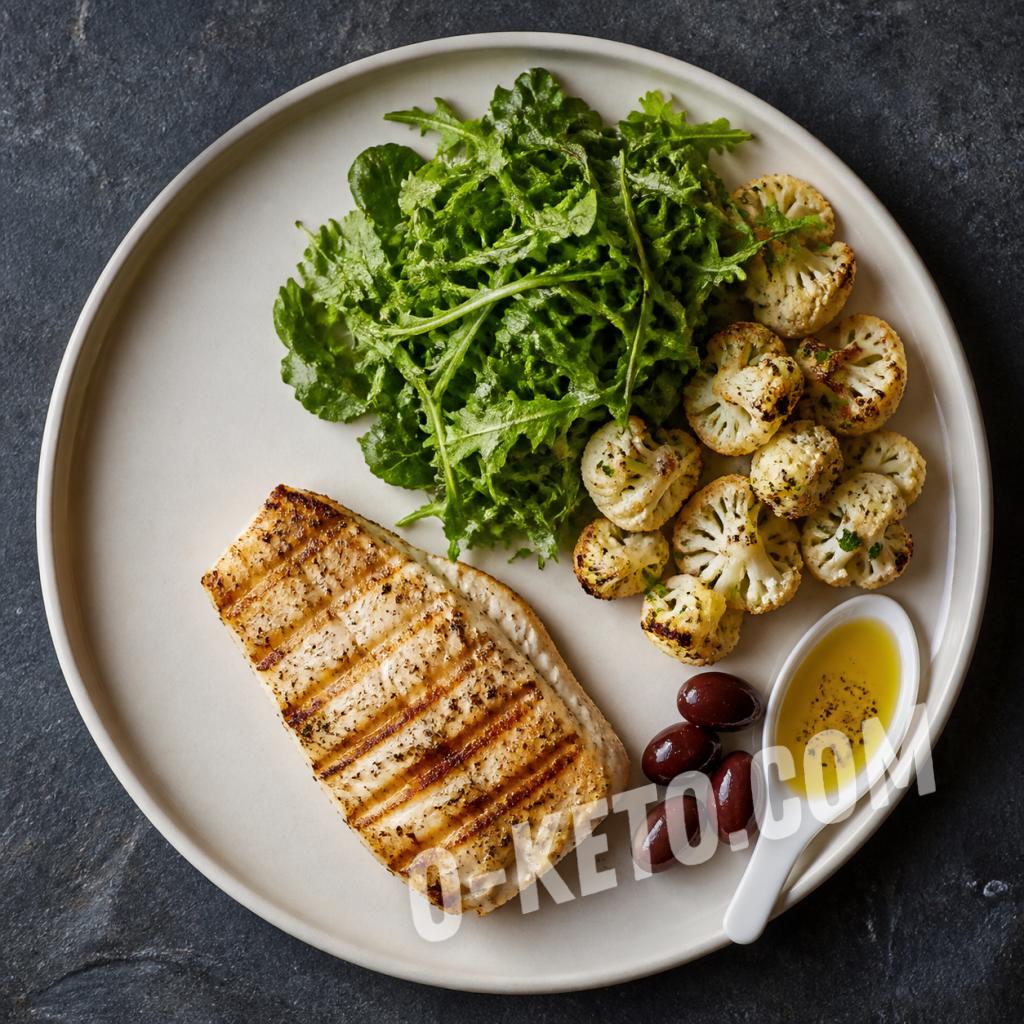
The protein component may be fish, meat, poultry, eggs, seafood or suitable dairy foods. The portion depends on body size, age, activity, number of meals and the individual goal. A portion that is too small often leads to searching for a snack, while an oversized portion does not become more useful simply because it contains very little carbohydrate.
Choose vegetables according to their carbohydrate density and your tolerance. Leafy greens, broccoli, cauliflower, zucchini, cucumber, mushrooms and many cabbage varieties provide volume without a large sugar load. Avocado, olives, seeds and nuts can add both fat and fibre, but they are energy-dense, so count them as part of the portion rather than as unlimited decoration.
Fat on keto can provide flavour, energy and satiety, but the amount does not have to be maximised. During weight loss, extra oil, a rich sauce and cheese can raise calories quietly even when carbohydrate intake is very low. For weight maintenance or a high-energy diet, more fat may be appropriate.
A practical keto check looks like this:
- is there a clear source of complete protein;
- are there vegetables or greens that you tolerate and are willing to eat regularly;
- have oil, cream, cheese, nuts, avocado and sauces been counted in the total portion;
- have sugar, flour, starch-based sides or a sweet drink changed the carbohydrate total;
- does the amount of food match the goal: fat loss, maintenance, gain or performance.
A keto plate therefore does not need to follow rigid geometric proportions. Its point is that the carbohydrate limit is chosen deliberately, protein is not lost beneath added fat, and vegetables and fats are selected to make the meal satisfying and tolerable.
How to choose portions on other diets
If a diet allows grains, bread, potatoes, fruit or legumes, these foods do not need to be treated as automatically bad. The important questions are what role they play and what amount fits the day. A whole-grain side can be useful, but a large portion combined with bread, a sweet drink and dessert creates a different energy total.
A Mediterranean-style pattern often combines protein and vegetables with legumes, whole grains, olive oil, nuts and fish. On a vegetarian diet, protein needs more deliberate planning: eggs, dairy foods, tofu, tempeh, legumes and other suitable foods can fill that role. When calories need to be reduced, it is often useful to keep the protein base and vegetable volume while reducing the most energy-dense additions.
With diabetes, bowel disease, food allergy or a therapeutic diet, a plate picture from the internet is not enough. Medication, medical instructions, individual tolerance and glucose response, when measured, all matter. The general model can orient the meal, but it does not replace personalised care.
How to choose the portion size
Scales and tracking apps can provide exact numbers, but visual cues are often easier for everyday eating. The size of a palm, fist or thumb changes with the person’s body and can be more practical than one fixed number. This is a starting estimate, not a treatment target; adjust it according to hunger, goals and weight trends.
| Component | Visual starting point | When to adjust |
| Protein food | About the size of the palm, excluding fingers | Increase with high activity or persistent hunger; reduce if protein is already abundant elsewhere |
| Vegetables and greens | One or two fists | Consider tolerance, bloating and total meal volume |
| Grains, potatoes or legumes | A cupped hand or a small cup cooked | Adjust to carbohydrate target, activity and goal |
| Fat | One or two thumbs for oil, nuts or a dense sauce | Reduce when calories run high; add when the meal is not satisfying |
If strong hunger returns an hour after eating, first check the protein, vegetable volume and actual amount of fat. If every meal causes heaviness, the issue may be an oversized portion, a poorly tolerated combination or eating too quickly rather than a lack of willpower.
For weight loss, the average energy balance over days and weeks matters more than the exact shape of one plate. During weight gain, recovery or heavy training, the portion may need to be larger and meals may be distributed differently. Scales and a food diary are useful when visual estimates no longer answer the practical question.
How to calculate a complex dish and a cooked portion
In soup, stew, casserole or sauce, energy is distributed among the ingredients after cooking. Add the calories of all edible ingredients, including oil and sauces, weigh the entire cooked yield and use the formula: calories per 100 g = total dish calories × 100 / final cooked weight.
For example, if the ingredients provide 2400 kcal and the cooked pot weighs 3000 g, 100 g contains about 80 kcal. You can then weigh your serving and multiply its weight by the calories per gram. Bones, peels and water should be counted only insofar as they remain in the edible portion or change the final weight.
Use this sequence for a complex dish:
- weigh the ingredients before cooking and record the amounts actually used;
- add oil, cream, cheese, sugar, flour and sauces separately;
- weigh the complete edible yield after cooking;
- divide the dish by weight rather than by the number of ladles or plates;
- check how much of the finished dish and its additions were actually eaten.
This calculation is especially useful on keto because oil and cheese may be small in volume but large in energy. It also prevents confusing the weight of dry grains with cooked grains, counting water as calories or assuming every serving from a pot contains the same amount of sauce.
Examples of complete plates
Examples are meant to show the principle, not to be copied to the gram. Each plate starts with a protein base, adds a plant-food component and then uses the carbohydrate or fat component that fits the diet and goal.
| Diet | Example | What to check |
| Keto | Fish, broccoli and greens with olive oil or avocado | Protein portion, total fat and net carbohydrates from vegetables |
| Mixed diet | Chicken, vegetables and a modest portion of buckwheat or potatoes | Whether a large side is being combined with bread and a sweet drink |
| Vegetarian | Tofu or eggs, vegetables, legumes or grains and a small amount of seeds | Whether protein is sufficient and nuts or oil have made the meal too energy-dense |
If a component does not fit because of an allergy, preference or intolerance, replace it by function rather than appearance. Fish can be replaced by another protein food, grains by another carbohydrate side, and oil by some avocado or seeds. The structure of the meal matters more than one exact list of foods.
Common portion mistakes
Most mistakes come from faulty logic rather than from a lack of tables. A person sees a healthy food and stops considering its amount, or transfers one diet’s plate model to another without checking carbohydrates, fats and total energy:
- treating any food described as healthy as unlimited;
- replacing protein on keto with large amounts of cheese, cream and butter;
- assuming a grain is harmless regardless of portion, preparation and the rest of the day;
- forgetting drinks, sauces, snacks and cooking oil;
- mixing dry-food weight with cooked-food weight;
- following a visually attractive plate even when it causes hunger or digestive discomfort.
Correction starts with one question: what should change after this meal — satiety, carbohydrate control, recovery or total energy intake? Once the goal is clear, the size of each component becomes easier to choose.
When a meal needs individual adjustment
During pregnancy or breastfeeding, with kidney or liver disease, disordered eating, glucose-lowering medication or high athletic loads, a generic template may be insufficient. Timing, medication, laboratory data, tolerance and the purpose of treatment or recovery may matter as much as the foods themselves.
For people using mealtime insulin, carbohydrate counting may help match an insulin dose to the amount of carbohydrate in a meal when this approach is part of their individual care plan. The ratio and dose should not be taken from a general template. Insulin and some medicines, including sulfonylureas, can increase the risk of hypoglycaemia if a meal is skipped or substantially delayed. Discuss changes in carbohydrate intake or meal timing with the diabetes care team. See the ADA guidance on carb counting and NIDDK guidance on healthy living with diabetes.
If a diet change is followed by repeated weakness, hypoglycaemia, severe diarrhoea, persistent pain or a marked decline in wellbeing, do not choose portions from an app alone. The cause of the symptoms needs attention and the plan may require personal medical guidance.
Conclusion
A complete meal combines a clear protein base, a suitable plant-food component and an amount of fat and carbohydrate that matches the chosen diet. On keto, a starchy side is usually replaced by non-starchy vegetables, while fat is counted separately so it supports satiety without turning the meal into a quietly excessive energy load.
Start with a visual portion, observe hunger, energy and overall trends for several days, and then adjust. For complex dishes, calculate the whole recipe and the final cooked weight instead of relying only on the plate’s appearance.
Sources
The article draws on these official guidance documents and assessment tools:
- USDA MyPlate: Vegetables.
- USDA MyPlate: Protein Foods.
- Body Weight Planner — National Institute of Diabetes and Digestive and Kidney Diseases.
- Eating and Physical Activity to Lose or Maintain Weight — National Institute of Diabetes and Digestive and Kidney Diseases.
- Current Dietary Guidelines for Americans, 2025–2030.
- Effects of meal sequence intervention on blood glucose response in healthy adults: a systematic review — Clinical Nutrition Research
- Carb Counting and Diabetes — American Diabetes Association.
- Healthy Living with Diabetes — National Institute of Diabetes and Digestive and Kidney Diseases.