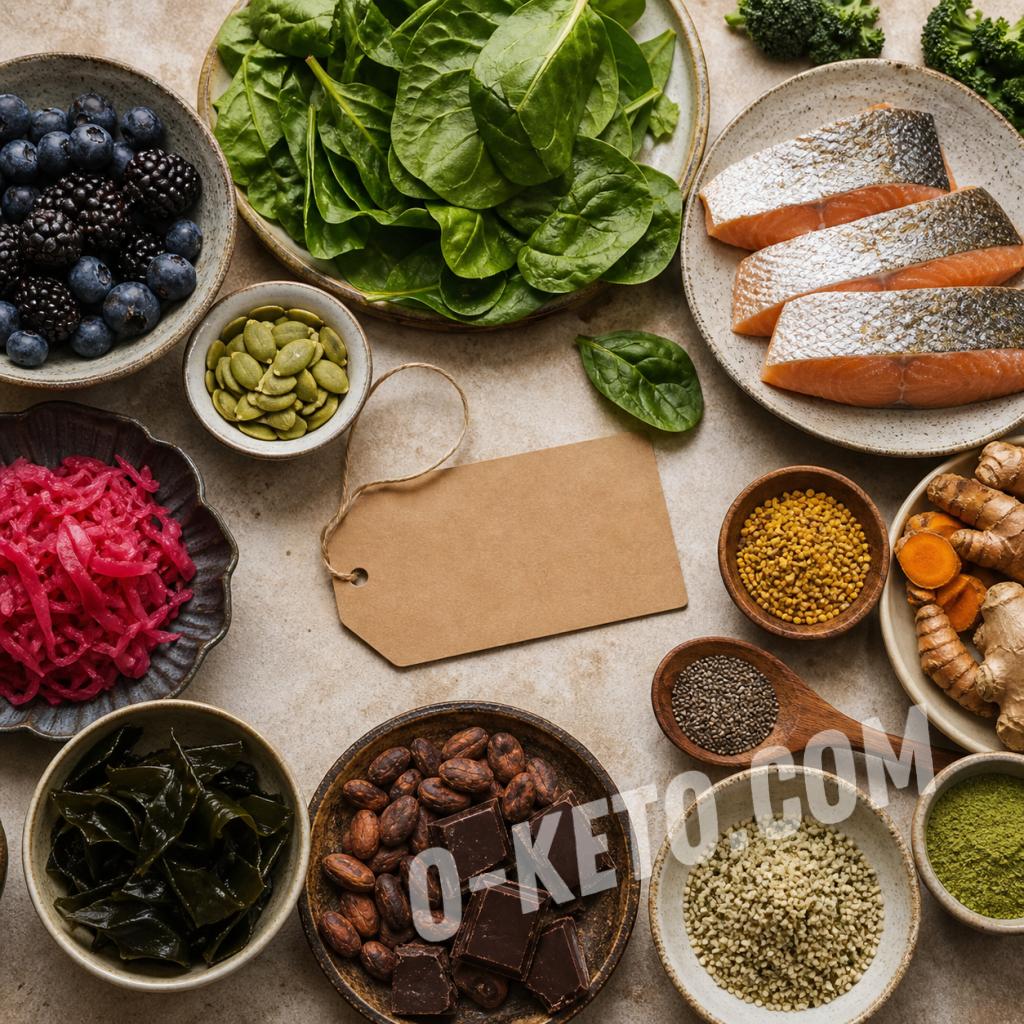

The word “superfood” sounds as if it describes a special category of food with almost medicinal powers. In practice, it is mainly a marketing and media term, not a single legal status. It can be applied to berries, fish, spices, seaweed, seeds, mushrooms, fermented foods, and plant powders. That is why it is more useful to ask what a product actually provides, in what portion, and which claims are supported than to ask which food has been declared “super.”
A sensible way to view a superfood is as ordinary food with an interesting composition, not as a miracle remedy. This does not diminish berries, oily fish, or spices. It puts them in context: dietary variety, tolerance, and regular use usually matter more than one fashionable ingredient.
What does “superfood” mean?
There is no single international definition or mandatory set of criteria for the word “superfood.” A producer may use it to highlight protein, fiber, vitamins, minerals, omega-3 fatty acids, polyphenols, or other bioactive compounds. But the word itself does not tell you how much of a substance is in a serving or what outcome a person will experience.
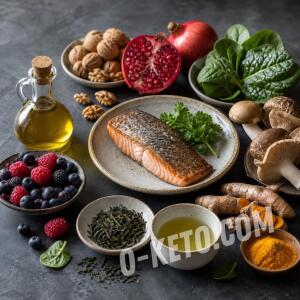
Berries do contain fiber and polyphenols, fish provides protein and long-chain omega-3 fatty acids, and seeds provide fatty acids, minerals, and dietary fiber. These are checkable properties of composition. Claims such as “detoxifies the body,” “restores hormones,” or “replaces medication” require separate evidence and do not follow automatically from a nutrient list.
For that reason, “Which superfood is the most powerful?” is not the most useful question. A better set of questions is: which component matters, in what form does it occur, how much food is needed, what evidence comes from human studies, and does the product suit this particular person?
Superfood, nutritious food, and supplement are different things
An ordinary nutritious food does not have to be exotic. Eggs, cabbage, herring, legumes, berries, greens, and fermented dairy products can all provide important nutrients. The word “superfood” highlights a product in advertising, but it does not automatically make it better than accessible foods with a similar composition.
A supplement differs from food in its form and use. A capsule or powder can provide a concentrated dose of one substance, while food delivers it together with water, protein, fat, fiber, and other compounds. Evidence from a concentrated extract cannot be transferred to an ordinary serving of berries or spices without checking. Conversely, a study of a whole food does not necessarily apply to a capsule containing one isolated component.
This distinction also matters for safety. Individual substances are usually less concentrated in food, but people may eat the food frequently and in large portions. A supplement makes it easier to take a high dose at once, and the risks of drug interactions or individual intolerance may be greater.
How to check a health claim
Before buying a product, break the marketing sentence into a few concrete questions. This moves the discussion from the broad word “superfood” to a claim that can actually be examined.
- What is supposed to act? It may be protein, fiber, EPA and DHA, iron, polyphenols, live microorganisms, or another substance.
- How much is in a serving? A label percentage may refer to a large dose of powder rather than an ordinary serving of food.
- What kind of research exists? A laboratory mechanism, animal experiment, observational study, and randomized clinical trial provide different levels of confidence.
- Was the whole food or an extract studied? An extract, oil, or standardized supplement may have a very different concentration and effect.
- What outcome was measured? A change in a laboratory marker is not automatically an improvement in symptoms, disease prevention, or treatment.
- What are the limits? Consider allergies, pregnancy, medical conditions, medicines, sugar, salt, iodine, caffeine, and the actual serving size.
If these questions have no clear answers, the claim is a marketing hypothesis rather than proof of benefit. It may be worth investigating, but it should not be turned into a promise.
Which foods are often called superfoods?
The table below is not a ranking. It groups foods that often appear on superfood lists and shows both their real nutritional strengths and the point where marketing may overreach.
| Group and examples | Potentially relevant components | What can reasonably be said | Limitations |
|---|---|---|---|
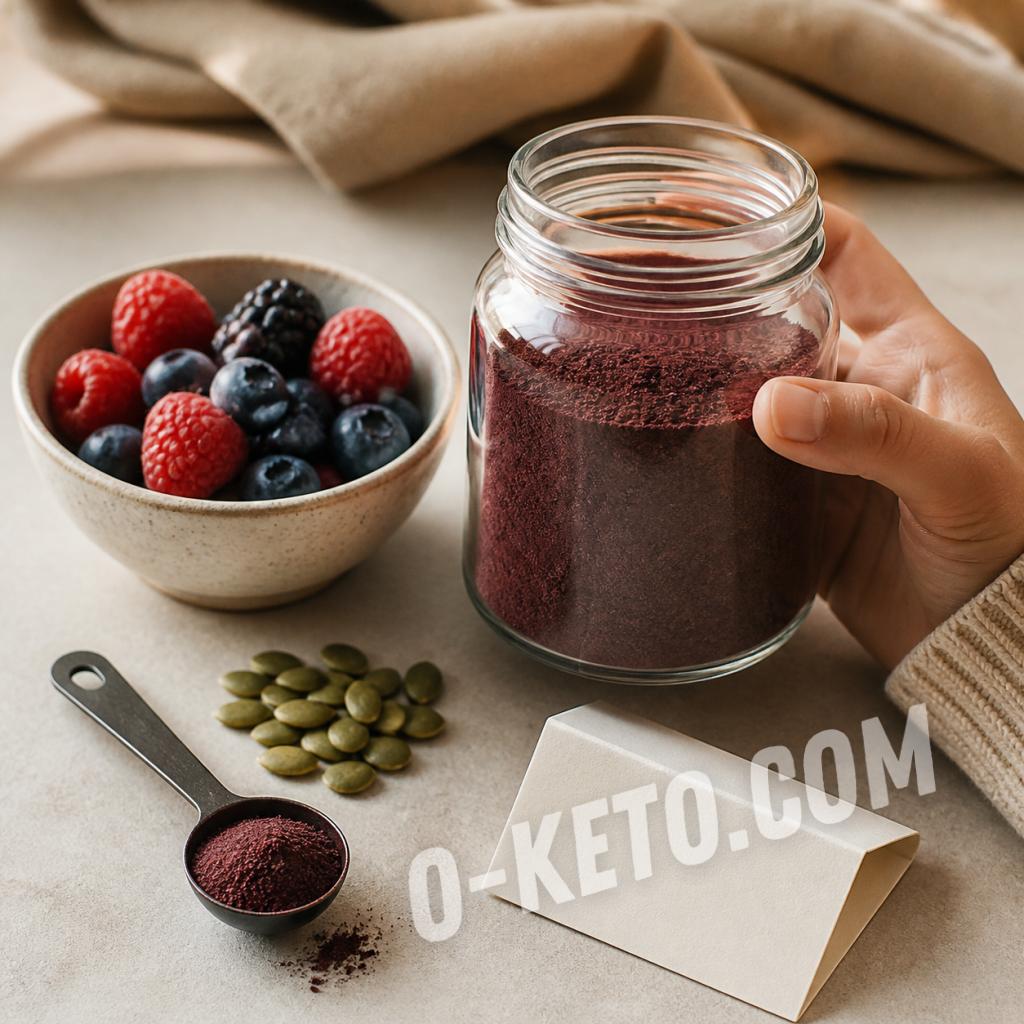
| Berries and cocoa | Fiber, polyphenols, anthocyanins, minerals | They add flavor and variety; links with vascular and metabolic measures are being studied | Mechanistic and extract data do not equal a treatment effect from an ordinary serving; cocoa products may contain sugar |
| Oily fish and roe | Protein, EPA and DHA, vitamin B12, and vitamin D in some species | Dense sources of nutrients that can be part of a balanced diet | Species, origin, contaminants, preparation, and the overall diet matter; an omega-3 supplement is not the same as fish |
| Seeds, nuts, and avocado | Fats, fiber, protein, magnesium, and other minerals | They can add variety, energy, and texture | Portions are energy-dense; allergy and intolerance are possible; soaking nuts does not guarantee special bioavailability |
| Bone broth | Protein, gelatin, amino acids, and variable amounts of minerals | Can be an ordinary nourishing dish; composition depends on the bones, water, cooking time, and added ingredients | Evidence for “repairing the gut” remains limited; protein and mineral content is not uniform, and some broths are high in sodium |
| Ghee | Fat, predominantly saturated fatty acids | Can be used as a culinary fat with a distinct flavor | Clarifying the butter does not make it therapeutic; total saturated-fat intake and the replacement fats in the overall diet matter |
| Apple cider vinegar | Acetic acid and acidity | Small studies allow for a possible modest effect on some fasting or post-meal glucose measures | Results are heterogeneous and evidence is limited; vinegar does not replace treatment and has no universal therapeutic dose |
| Sprouts | Freshness, texture, and plant compounds | Can add variety to meals | Warm, humid sprouting conditions favor pathogen growth; raw or lightly cooked sprouts are especially unsuitable for pregnant people, children, older adults, and people with weakened immunity |
| Spices, herbs, and garlic | Polyphenols, essential oils, and other plant compounds | They improve flavor and can make a varied diet easier to maintain | The amount used in a meal is usually not comparable with research-extract doses; concentrates need separate evaluation |
| Seaweed and matcha | Iodine, minerals, pigments, caffeine, and polyphenols | They can be useful ingredients when the portion and composition are clear | Iodine and contaminant levels vary; matcha contains caffeine, and powders are easy to overconsume |
| Fermented foods | Organic acids, changed food structure, and sometimes live cultures | Kefir, yogurt, kimchi, and fermented vegetables can broaden the diet | Not every fermented food is a probiotic; strain, amount, and tolerance matter |
| Mushrooms, maca, bee pollen, and exotic powders | Different polysaccharides, minerals, and plant compounds | They can be considered foods or ingredients with a particular composition | Many claims need better research; standardization, purity, and dose matter for powders |
| Liver and other organ meats | Protein, iron, B12, choline, and other nutrients | Very nutrient-dense foods that may help meet particular needs | Excess of some vitamins and minerals is also undesirable; frequency should reflect the diet and health status |
Why one food cannot replace dietary variety
Most foods on superfood lists are valuable because of a combination of substances rather than one magical molecule. In fish, protein matters alongside omega-3s; in berries, fiber matters alongside anthocyanins; in fermented food, the actual composition, live cultures, and tolerance matter more than the label.
When someone tries to solve one problem with a huge amount of one product, it can displace ordinary foods. This creates new imbalances: powder replaces a meal, nuts quietly add too much energy, seaweed provides too much iodine, or a sweet “superfood bar” turns out to be a dessert with only a small amount of the advertised ingredient.
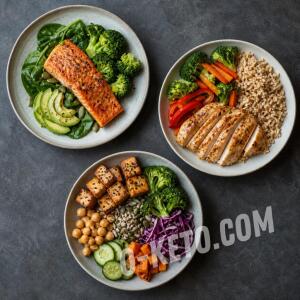
A steadier approach is to add foods for a clear reason: fish for protein and omega-3s, berries for flavor and fiber, greens and vegetables for variety, spices for taste, and fermented foods when they are well tolerated. The word “superfood” then becomes a prompt for a choice, not a promise of special status.
How to tell benefit from marketing
The problem is not the food itself but the overly broad conclusion. Words such as “contains,” “may provide,” and “is being studied” describe composition or a research direction. Words such as “treats,” “detoxifies,” “restores hormones,” and “guarantees prevention” promise a medical outcome that cannot be established by a list of vitamins.
Check the label: how large is the serving, is there sugar or syrup, are the active substances named, and are the production date and origin clear? Also check whether the product duplicates something already in the diet. Several products may contain the same component, so the combined daily dose matters more than the attractive name on each package.
If a product is being used as a concentrated remedy rather than as food, discuss it with a doctor or pharmacist. This is especially relevant during pregnancy, with chronic disease, allergies, or regular medication. Otherwise, start with a modest serving, observe tolerance, and do not build the diet around one advertising hero.
Conclusion
“Superfood” is a convenient word for foods with notable amounts of particular nutrients or bioactive compounds, but it is not a guarantee of benefit or a medical category. Evaluate the component, its amount, form, evidence, and limitations rather than the label.
The best superfood is not necessarily rare or expensive. It may be ordinary fish, berries, greens, cabbage, eggs, seeds, or fermented dairy that fits a varied diet and works for you consistently.
Sources
- Position of the Academy of Nutrition and Dietetics: functional foods — Journal of the Academy of Nutrition and Dietetics
- Functional foods — FAO AGROVOC
- Report of the regional expert consultation on functional foods and their implications in the daily diet — FAO
- Superfoods or Superhype? — Harvard T.H. Chan School of Public Health, The Nutrition Source
- Health Professional Fact Sheet on EPA and DHA — National Institutes of Health, Office of Dietary Supplements
- Dietary Guidelines for Americans, 2020–2025 — U.S. Department of Agriculture and U.S. Department of Health and Human Services
- Bone Broth Benefits: How Its Nutrients Fortify Gut Barrier in Health and Disease — Digestive Diseases and Sciences
- Effects of apple cider vinegar on glycemic control and insulin sensitivity in patients with type 2 diabetes — Frontiers in Nutrition
- Effects of diets rich in ghee or olive oil on cardiometabolic risk factors in healthy adults — PubMed
- Selecting and Serving Produce Safely: raw sprouts — U.S. Food and Drug Administration