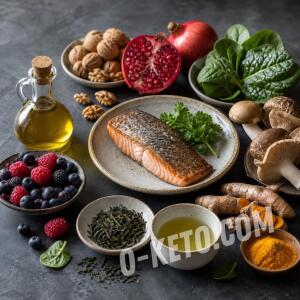


The color of vegetables, fruits, berries, leafy greens, and spices gives a quick view of how varied the plant foods in a diet are. Red tomatoes, orange carrots, green cabbage, purple berries, and white garlic differ not only in appearance: their colors are produced by different groups of plant compounds. These compounds are often called phytonutrients or phytochemicals.
The idea is useful, but it is easy to turn it into the claim that every color heals a particular organ. Color is not a medical test, does not replace attention to protein, fiber, or energy intake, and cannot show the exact amount of a compound in one fruit. It can, however, keep a person from eating the same two or three vegetables every day.
Color is a guide, not a medical classification
Plants use pigments and other compounds to cope with light, oxidation, and environmental stress. People obtain some of these substances from food. They include carotenoids, anthocyanins, flavonoids, betalains, glucosinolates, and sulfur-containing compounds. They differ in structure and metabolism, so the word “antioxidant” does not fully describe what any one of them does.
The same group of compounds may occur in foods of different colors, and a food’s color usually comes from more than one compound. Carotenoids, for example, are common in yellow, orange, and red plants, but some are also present in green leaves. Chlorophyll can hide other pigments, while variety, ripeness, storage, and cooking all affect composition.
Use the rainbow as a diversity prompt. It answers a simple question: “Am I repeating the same foods all the time?” It does not promise a therapeutic result from one color.
Red and pink foods
Red, pink, and raspberry shades may come from lycopene, anthocyanins, betalains, and other polyphenolic compounds. Sources include tomatoes, watermelon, red peppers, cherries, strawberries, raspberries, pomegranate, and some apple varieties. The foods are not identical; color groups them visually, not pharmacologically.
Lycopene is especially characteristic of tomatoes and some red fruits. Its amount and availability can change after chopping and heating, but that does not turn tomato sauce into medicine. Berries and pomegranate also provide fiber, organic acids, and other polyphenols. In ordinary meals, it is more sensible to obtain them from whole foods than to replace variety with a concentrated extract.
The red group is useful for culinary variety: tomatoes and peppers add juiciness, berries add acidity, and pomegranate adds texture. Choose foods according to the whole meal and personal tolerance, not because red is supposed to protect one particular organ.
Orange and yellow foods
Yellow and orange shades are often associated with carotenoids such as beta-carotene, alpha-carotene, and beta-cryptoxanthin. The body can convert some carotenoids into vitamin A, which is needed for normal vision, immune function, growth, and organ function. This group includes carrots, pumpkin, apricots, melon, mangoes, citrus fruits, and yellow or orange peppers.
A bright color does not automatically make a food the best source of vitamin A. The amount depends on the plant and the serving, and people differ in how efficiently they convert carotenoids to vitamin A. Preformed vitamin A is also found in eggs, dairy products, and liver, so plant pigments are only one route to this nutrient.
Turmeric and other yellow spices contain plant pigments too, but spices are eaten in small amounts. Do not transfer findings from concentrated curcumin products to a pinch of turmeric, and do not describe turmeric as an antibiotic or a liver-repair treatment. In cooking, its main value is flavor, color, and another way to vary meals.
Green foods and cruciferous vegetables
Green leaves contain lutein, zeaxanthin, folates, vitamin K, and other compounds. Spinach, lettuce, parsley, arugula, green peppers, avocado, and green beans provide different combinations of fiber and micronutrients. Green color cannot tell you the exact amount of chlorophyll or any single vitamin, so a color chart does not replace composition data.
Broccoli, Brussels sprouts, cabbage, watercress, radishes, and other cruciferous vegetables contain glucosinolates. Chopping and digestion produce several compounds, including isothiocyanates and sulforaphane. Researchers study them in relation to cellular defense and processes connected with inflammation and carcinogenesis, but human findings are mixed. It is therefore accurate to discuss their nutritional value and an active research area, not cancer prevention or treatment.
Green foods are easy to rotate through everyday meals: add leafy greens to a salad, cabbage to a side dish, broccoli to fish or eggs, and parsley or dill to soups and sauces. This broadens the menu without requiring a single “healthiest” vegetable.
Blue and purple foods
Blue, purple, and deep red shades are often linked with anthocyanins. They occur in blueberries, blackberries, black currants, plums, cherries, purple cabbage, eggplant, and some potato varieties. The amount depends strongly on the variety and on whether the pigment is concentrated in the skin, flesh, or both.
Human studies of anthocyanins describe possible changes in selected inflammatory, glucose, lipid, and vascular markers, but the quality of evidence varies and the findings do not turn berries into medicine. Whole berries provide water, fiber, and organic acids in addition to pigments. Juice, sweet syrup, and extracts are different products with different concentrations and effects.
White and brown foods
White or brown foods are not free of phytonutrients. Garlic, onions, shallots, and horseradish contain sulfur compounds, while mushrooms, nuts, seeds, cocoa, coffee, and tea provide other polyphenols and bioactive components. Ginger contains pungent compounds including gingerols, but its flavor and possible effects do not make it a universal anti-inflammatory or immune treatment.
Garlic and ginger work well as small flavor additions. They make meals more varied, but they do not selectively disinfect the intestine, eliminate “bad microflora,” or replace treatment for an infection. With a sensitive stomach, reflux, or medication use, individual tolerance and moderation matter.
How to use color as a practical guide
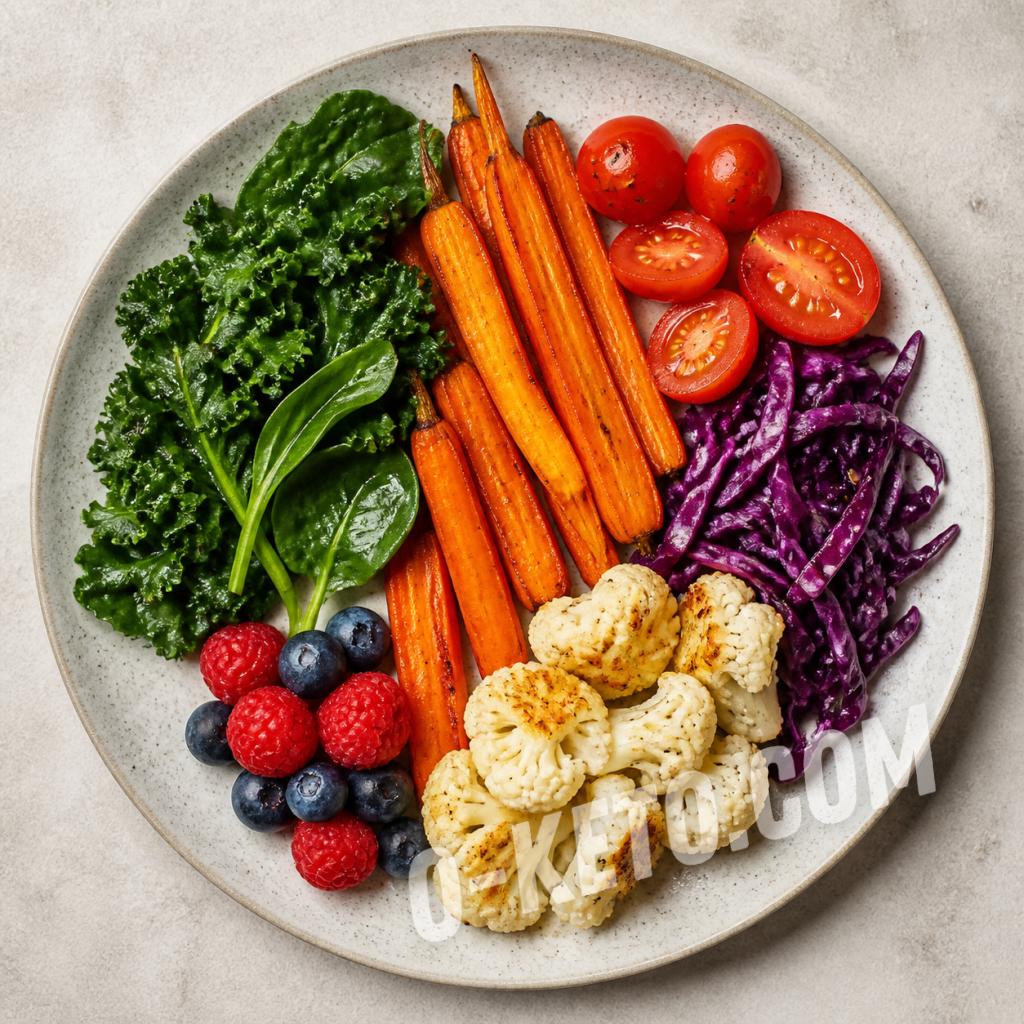
You do not need every color at every meal. Look at the diet over several days and replace repeated foods with a few options from another group. After green cabbage, for example, choose red pepper; later add purple cabbage or berries; on another day use pumpkin, carrots, mushrooms, onions, or garlic.
Fresh, frozen, and canned foods without unnecessary sugar can all contribute to variety. Look beyond color at serving size, added syrups, salt, cooking method, and personal tolerance. Frozen berries and vegetables can be useful parts of a varied diet; the rainbow does not require fresh produce only.
If plant foods cause bloating, pain, diarrhea, or another pronounced reaction, do not force yourself to “complete the rainbow.” Change foods gradually, consider preparation methods, and discuss persistent symptoms with a qualified professional. Variety is useful when it fits real life and is tolerated.
What food color does not promise
Color does not show the exact dose of a phytonutrient, prove a therapeutic effect, or allow two foods to be compared without considering the serving. A compound can behave differently in a laboratory experiment, a concentrated supplement, and ordinary food. Be cautious with words such as “detox,” “antibiotic,” “cancer-protective,” “anti-aging,” and “liver repair” when specific clinical evidence is not provided.
The main value of the color approach is simpler: it helps make the plant part of a menu more varied. Whole foods provide different types of fiber, vitamins, minerals, organic acids, and plant compounds together. That is a more reliable goal than choosing one color as a universal health remedy.
Conclusion
Use the colors of vegetables, fruits, berries, greens, mushrooms, and spices as a reminder to vary the menu, not as a treatment chart. Red foods provide one set of pigments, orange and yellow foods provide other carotenoids, green and cruciferous foods add another group of compounds, while blue, purple, white, and brown foods broaden the range. Rotate foods according to taste, season, availability, and tolerance, while keeping whole forms and sensible portions.
Sources
- Vegetables and Fruits — The Nutrition Source, Harvard T.H. Chan School of Public Health.
- Vitamin A and Carotenoids — Consumer Fact Sheet, National Institutes of Health, Office of Dietary Supplements.
- The Healthy Colors of Your Diet — USDA Agricultural Research Service.
- Should We “Eat a Rainbow”? An Umbrella Review of the Health Effects of Colorful Bioactive Pigments in Fruits and Vegetables — Advances in Nutrition.
- Cruciferous Vegetables and Cancer Prevention — National Cancer Institute.
- Cancer and Complementary Health Approaches: What You Need To Know — National Center for Complementary and Integrative Health.