
Mycotoxins are toxic substances produced by some molds that can grow on food crops and stored raw materials. They may occur in grains, nuts, spices, dried fruit, coffee, and other foods when growing, drying, transport, or storage conditions allow fungal growth. The practical goal is not to fear every pantry item or to search for a home “detox” method, but to lower the chance of exposure through sensible purchasing, dry storage, and timely disposal of spoiled food.
Risk depends on the crop, the batch, moisture, temperature, and the conditions of transport and storage. It cannot be determined reliably from color or smell alone, yet visible mold, mustiness, damp clumps, and damaged packaging are clear reasons not to use a product. Mycotoxins are not one single molecule: different compounds have different sources, toxicities, and resistance to processing. There is therefore no universal kitchen technique that guarantees removal from every suspicious food.
Where mycotoxins are more likely to occur
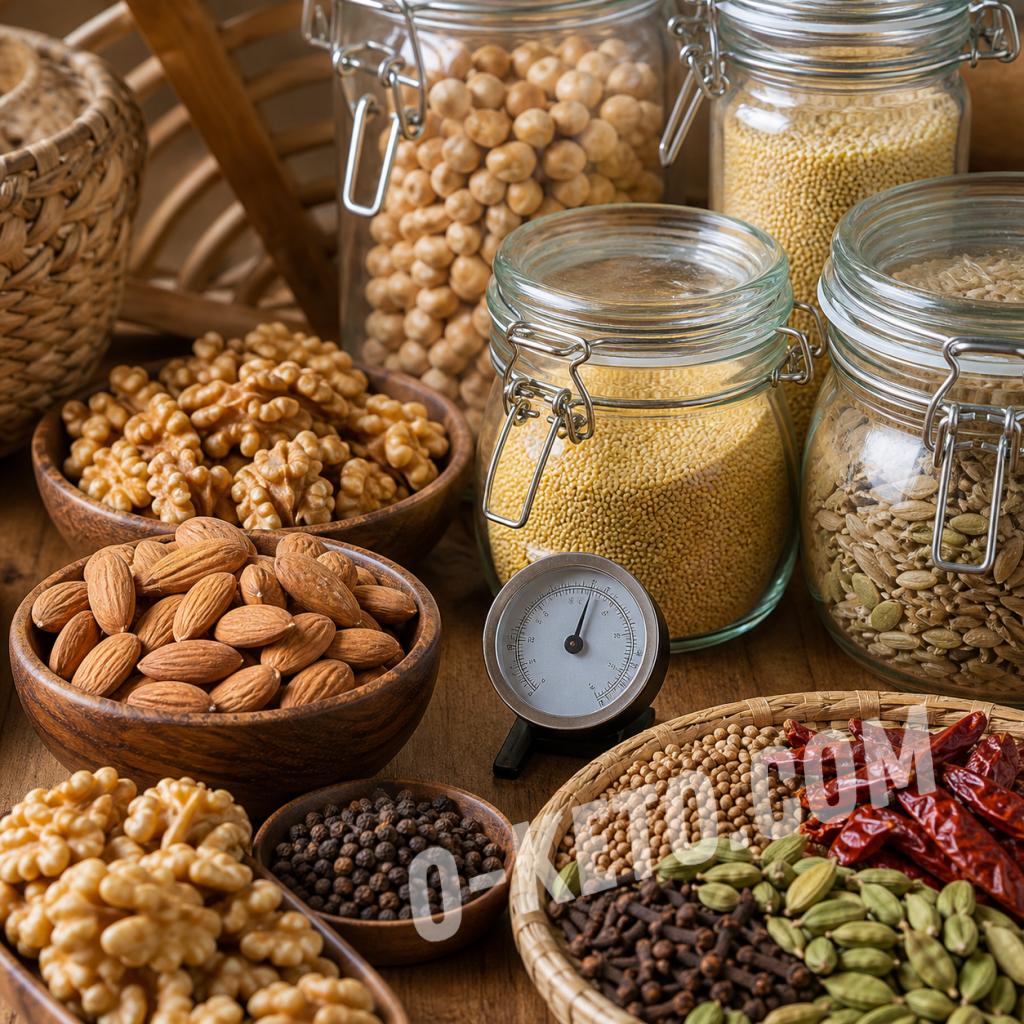
Attention is usually focused on raw materials that can become damp and remain in storage for a long time. This includes maize and other grains, peanuts and some tree nuts, spices, dried fruit, coffee, and foods made from contaminated ingredients. Different crops favor different molds and different toxins, so a conclusion about one safe batch cannot automatically be applied to every other food.
Aflatoxins are especially associated with peanuts, some nuts, maize, and other crops that can be contaminated by Aspergillus molds. That does not mean that every peanut or bag of grain is dangerous. Food chains are monitored by producers and regulators, and an individual risk depends on actual contamination and the amount eaten, not on a frightening word. That is precisely why proper drying, intact packaging, a reliable seller, and refusing visibly spoiled food matter.
Why visible mold is not the only criterion
Visible mold helps identify a spoiled product, but its absence does not prove that mycotoxins are absent. Mold may grow inside a raw material or leave toxins behind after the visible growth is no longer obvious. Conversely, a change in appearance cannot tell you which compound is present or how much of it there is. Those questions require laboratory testing rather than a home inspection.
It is especially unwise to scrape mold from porous foods and use the remainder. In nuts, grains, ground spices, and dried fruit, contamination may extend beyond the visible spot. Roasting, cooking, or grinding can change flavor and microbial counts, but they do not automatically make a questionable batch safe. If a product has mold, a musty smell, dampness, or other spoilage signs, discarding the whole item is the practical choice.
How to choose nuts and peanuts
Buy nuts and peanuts in dry, intact packaging that shows the producer, expiry date, and storage information. When buying from bulk containers, look for clean bins, low moisture, and good product turnover. Do not choose nuts with a musty, moldy, or unusual chemical odor, a wet oily surface, insect damage, or marked dark spots. One suspicious piece does not tell you exactly what happened to the entire batch, so when in doubt it is better not to sort a questionable lot piece by piece.
Peeled, chopped, and ground nuts need extra care because more surface is exposed and dampness or rancidity can develop faster. Buy an amount you can use within a reasonable period. Small factory-sealed packages may be more practical than a large sack for occasional use. Rinsing is not a way to remove toxins that have already formed, and soaking without thorough drying creates an additional moist environment.
How to choose grains and flour
Check that a package of grains or flour is dry and intact, without signs of water damage, holes, clumping, or insects. After opening, assess the smell: mustiness, sourness, or a mold-like note is a reason not to taste the product “just to check.” Do not mix a new batch with leftovers until you know the older batch is dry, clean, and normal-smelling. This makes disposal easier and prevents a questionable product from spreading through a fresh container.
Keep grains and flour in a dry place away from sinks, steam, and foods that may leak. Transferring them to a clean airtight container protects against moisture and insects, but it cannot repair raw material that is already spoiled. For larger supplies, smaller batches and a first-in, first-out routine are useful. If a product became damp, clumped, or musty, do not try to compensate with a longer cooking time.
How to handle spices, dried fruit, and coffee
Ground spices are vulnerable to moisture and may sit open for a long time, so buy modest quantities and close the container immediately after use. Whole spices are not invulnerable either: protect them from condensation and keep them dry. Dried fruit should be free of mold, wet patches, and a fermentation smell. Stickiness alone does not identify a mycotoxin, but stickiness together with moisture and an off odor is enough reason to reject the package.
Choose coffee in intact packaging and keep it tightly closed after opening. Do not expose it to steam. Strong roasting or adding spices should not be treated as a guaranteed solution for contaminated raw material. Processing can affect individual compounds, but the degree of reduction depends on the specific mycotoxin, temperature, time, and the food matrix.
What to do during home storage
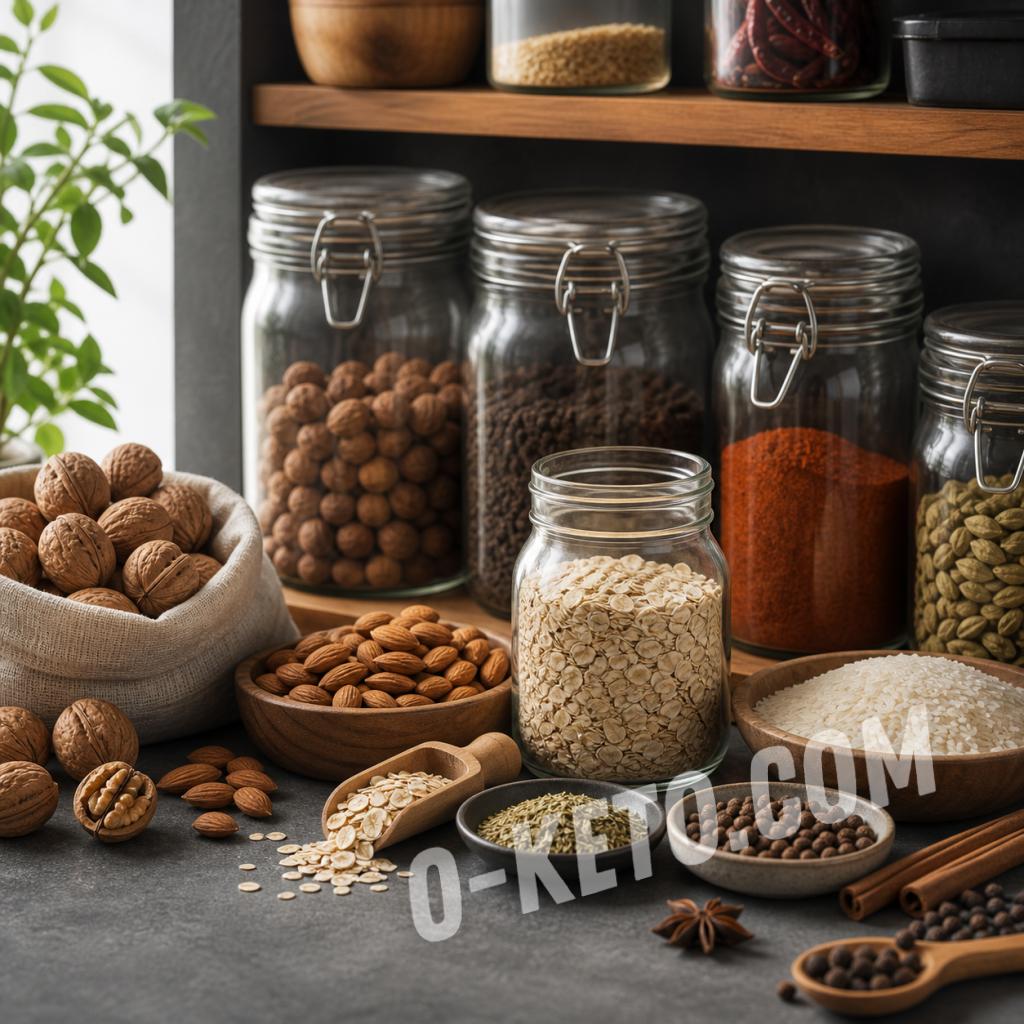
Home prevention starts with moisture control. Keep nuts, grains, flour, and spices in a cool, dry cupboard rather than next to a stove, kettle, dishwasher, or a wall where condensation forms. Use clean, dry containers with lids for foods that will be stored. Do not pour a new batch over an old one, and inspect supplies from time to time, especially in a warm or humid room.
The date on the package does not replace checking the food itself. After opening, smell, dryness, insects, and storage conditions still matter. Large amounts of nuts and some flours can be divided into small portions; refrigeration or freezing may help with quality when the packaging and product allow it. After taking a cold package out of storage, keep it closed until it warms, so condensation does not settle on the food.
Do cooking, roasting, and washing help?
Washing removes some surface dirt but is not a reliable way to remove mycotoxins from contaminated raw materials. Cooking and roasting may reduce certain compounds, but many mycotoxins are relatively stable and the result depends on the food and processing conditions. “Cook it longer” is therefore not a universal protective rule. Heat may be necessary for the ordinary culinary safety of a food, but it does not replace quality control of the raw material.
Freezing can stop or slow the growth of many microorganisms, but it should not be considered a method for neutralizing a toxin that has already formed. Soaking is not a guarantee either: it may soften food, while an unsuitable temperature or a long soak can increase spoilage risk. When a raw material looks or smells spoiled, do not experiment with processing; discard it.
A simple risk-reduction routine
In practice, a few linked decisions are enough. Buy dry foods in intact packages from sellers with clear storage conditions. At home, protect them from moisture, note when a package was opened, and keep batches separate. Use older supplies first, and discard porous foods at the first sign of mold, mustiness, dampness, or an unusual smell. Do not try to rescue them by sorting, rinsing, or roasting.
This reasonable caution does not require giving up nuts, grains, spices, or coffee. It means managing the factors a person can actually control: source and packaging, dry storage, the size of supplies, and timely disposal. Producers and regulators perform additional batch controls, but the home environment still matters because damp storage can accelerate spoilage and obviously damaged food should not be eaten.
Bottom line
Lowering mycotoxin risk is a chain of ordinary actions rather than a single detox trick: choose dry products in intact packaging, store them cool and sealed, avoid oversized supplies, and discard foods with mold, mustiness, or water damage. Mycotoxins can remain after processing, so cooking, roasting, washing, and freezing do not provide a universal guarantee. A suspicious item is not a reason to panic, but it is also not a reason to taste-test it or salvage the porous part.
Sources
- Mycotoxins — World Health Organization
- Safety evaluation of certain mycotoxins in food — World Health Organization and Food and Agriculture Organization of the United Nations