


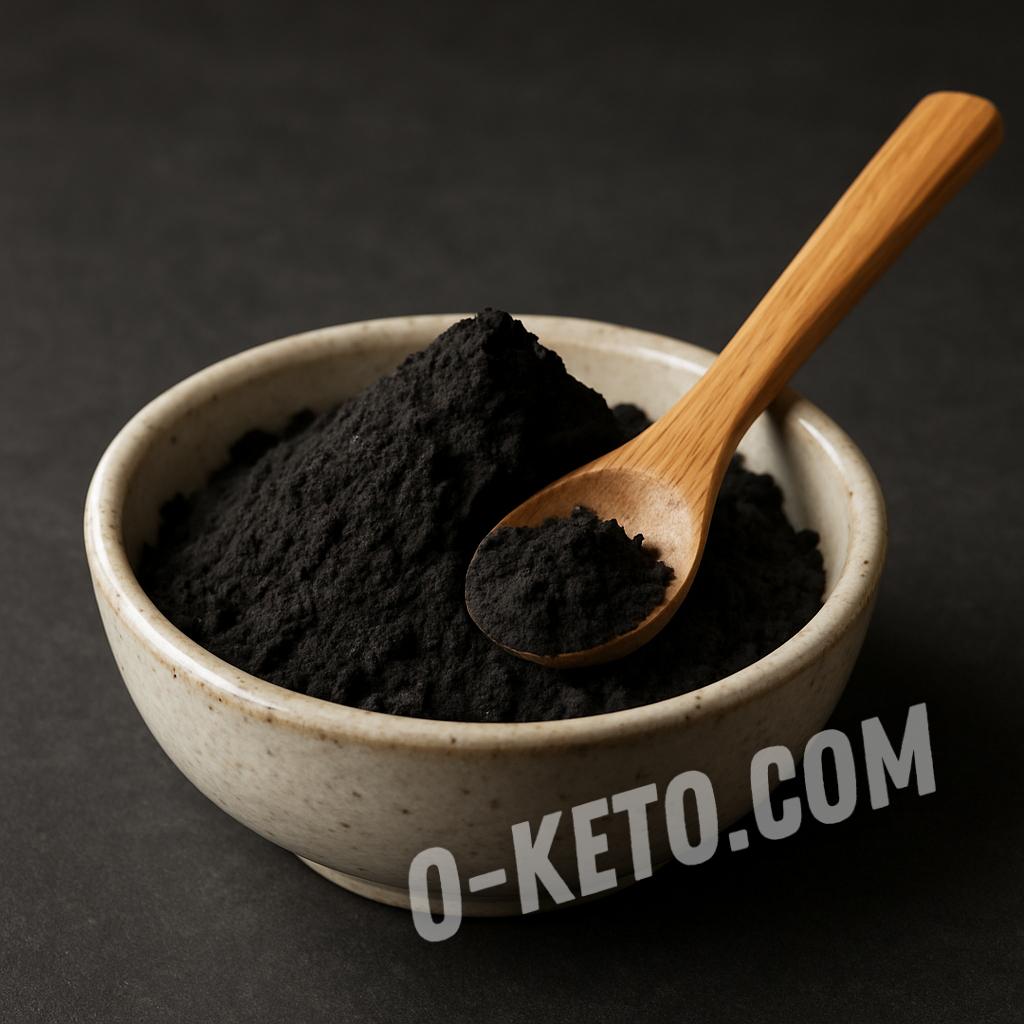

Bamboo charcoal is a fine black powder made from charred bamboo and used in cooking mainly as a colorant. It can turn dough, sauces, creams, noodles, ice cream, and decorative elements deep black without adding much flavor.
It is not a normal spice or a nutrient source. In recipes it is a technological ingredient: it changes appearance and sometimes texture, but it should not be treated as a source of protein, fat, vitamins, or minerals.
Nutrition
For macro calculation, bamboo charcoal is usually not counted as a nutritive ingredient, so macro and BJU tables are best hidden. Doses are tiny and it provides essentially no usable energy.
Do not confuse culinary charcoal with a reason to self-use activated charcoal medically. Charcoal can bind substances in the gut, so regular or large intake with medicines and supplements is not a casual choice.
How to Use
Add it in small amounts and mix thoroughly into dry ingredients or a liquid/fat base to avoid clumps. Color appears quickly, so build it gradually.
In keto recipes it is used for black buns, crackers, decorative sauces, savory dough, and presentation. Flavor should come from cheese, spices, fat, acid, and salt.
Choosing and Storage
Choose food-grade bamboo charcoal with clear labeling. Grill charcoal, technical charcoal, and unknown black powders are not suitable for food.
Store tightly closed away from moisture, odors, and steam. It stains easily, so use a dry spoon and close the package promptly.


