


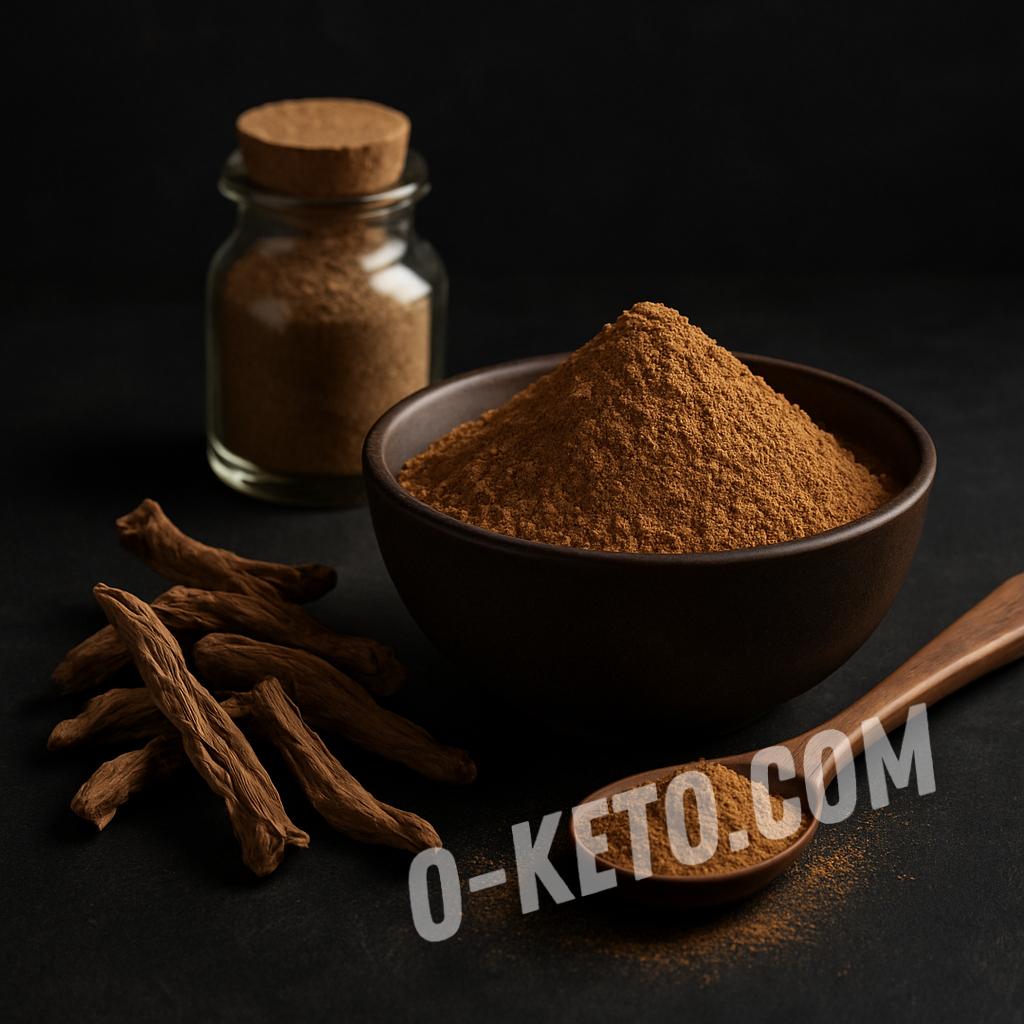

Qust al-Hindi is a strongly flavored plant material usually sold as powder or coarse root pieces of costus and used in household infusions, mixtures, and some traditional support practices. People do not value it for calories or ordinary macro balance, but for its bitter-spicy profile and for its reputation in traditional use around prolonged upper-airway inflammation, thick mucus, and similar supportive contexts. That does not mean it should be treated as an automatic answer to chronic sinus disease or any infectious process. It is better viewed as concentrated botanical raw material that may be included in a broader plan, not as a substitute for diagnosis when pain, fever, or complications are in the picture.
What kind of product it is
The name Qust al-Hindi is usually used for dried costus root sold as powder, small pieces, or part of mixed formulations. It has a dense aroma and a marked bitterness that many people do not find pleasant in ordinary food. For that reason it is more often brewed, mixed in small amounts, or used in specific home practices than treated like a casual seasoning. In practical terms, it makes more sense to think of it as concentrated herbal raw material rather than a daily table spice used freely and thoughtlessly.
Where people usually use it
In real-world discussion, Qust al-Hindi is often mentioned around upper-airway mucus, lingering rhinitis, sinus-related discomfort, and some broader traditional antimicrobial or antiparasitic narratives. That does not mean every such use is equally supported or that the plant has one guaranteed effect across all these settings. More realistically, it has a long-standing reputation as a strong traditional botanical used in short courses and in modest amounts. When people include it in a home plan, freshness of the raw material, preparation method, tolerability, and the wider clinical context all matter.
Why quality and form matter
With Qust al-Hindi, smell, freshness, and grinding quality matter a lot. Material that has sat too long, absorbed moisture, or lost most of its aroma does not perform the same way as fresh raw product. If the powder smells flat, stale, or otherwise doubtful, confidence in its practical value drops immediately. Origin also matters because the market contains different costus variants, mixed products, and uneven-quality batches. For that reason it helps to judge not only the label, but also the actual aroma, dryness, and supplier reliability.
How it is commonly used at home
At home, Qust al-Hindi is often prepared as a bitter infusion, more rarely blended into mixtures, and sometimes used in room-fumigation style traditions. Because of its strong taste and possible irritant effect, it is not a plant to treat like an ordinary daily beverage for unrestricted long-term use. If it causes heartburn, stomach irritation, nausea, cough worsening, or other unpleasant reactions, the method or the whole idea should be reconsidered rather than continued automatically just because the product is traditional.
What to watch for with tolerability
Bitter and pungent herbal materials do not suit everyone equally well. Extra caution makes sense with active gastritis, marked reflux, irritated stomach lining, pregnancy, strong sensitivity to spices, or situations where a person is already using several active supplements or medicines and cannot tell which one is responsible for side effects. For children, pregnant people, or those with major chronic disease, this kind of botanical is best handled only with additional caution. The fact that something is plant-based does not automatically make it mild or risk-free.
Does it function like a normal culinary spice
In ordinary cooking, Qust al-Hindi has a limited role. It is not the kind of spice around which people usually build a dish in the way they might with turmeric, coriander, or cinnamon. Its taste is more specific and more bitter, so in the diet it is usually closer to a functional infusion ingredient than to an everyday seasoning. That is why it makes little sense to force it into all kinds of meals. It works better when used deliberately in the formats where both the taste and the purpose are clear.
How to store it
Qust al-Hindi should be stored in a tightly closed container away from moisture, strong light, and foreign smells. Like many aromatic roots and powders, it can lose intensity and absorb humidity relatively easily. If the material starts clumping, smells weak, or develops an off-note, it is better not to keep treating it as active household stock out of habit alone. For this product, freshness is not a cosmetic detail; it is part of its practical usefulness.


