


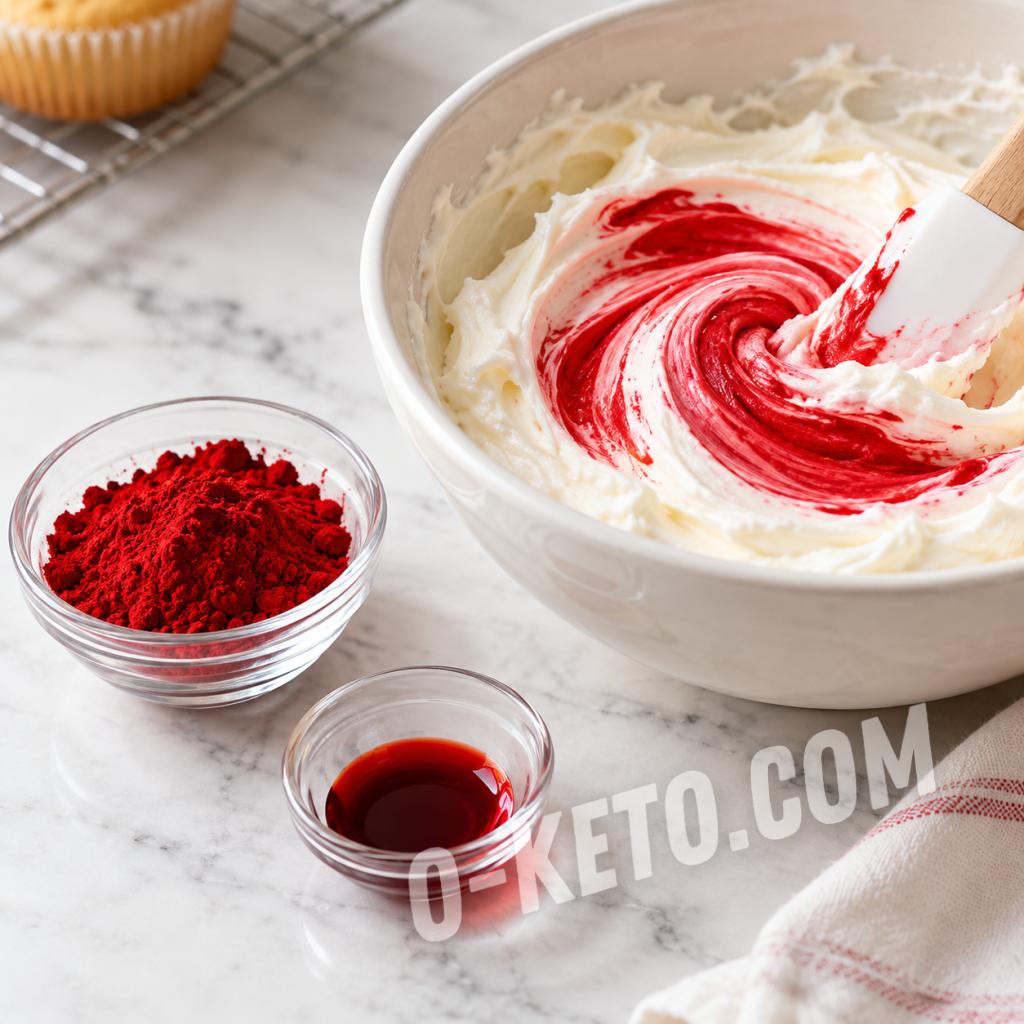

Red food coloring adds color to drinks, creams, icing, desserts, dough, and other foods. It is not the name of one substance: products sold under this description may be plant extracts, individual pigments, synthetic colors permitted for food use in a particular country, or ready-made blends with carriers. The exact composition determines the shade, solubility, intensity, heat stability, and nutritional contribution of the mixture.
Red color may come from beet pigment betanin, anthocyanin extracts from berries or fruit, carmine made from cochineal, or synthetic colors authorized for food use in a specific market. Annatto, which already exists as a separate product, is extracted from achiote seeds and is used mainly for yellow-orange shades; it is not another name for every red coloring.
Types of red food coloring
Plant extracts can produce shades from pink to deep red, but the hue may shift with acidity, light, and temperature. Beet powder or concentrate is useful when a slight beet note is acceptable; berry anthocyanins can respond to pH and produce different shades. These properties matter in creams, beverages, and confectionery coatings where a predictable color is important.
Carmine and cochineal extract are animal-derived: the pigment is obtained from insects. They are not suitable for vegan foods, and anyone with a known reaction to cochineal or carmine should read the ingredient list carefully. Synthetic colors are manufactured to provide a bright, consistent shade, but the permitted substances, food categories, and conditions of use depend on local rules. The same commercial description does not guarantee the same formula in different countries.
Products are sold as powders, liquids, gels, and dispersions. A water-soluble form is generally convenient for drinks and water-based icings, while pigment dispersions or lakes may be used in higher-fat or dry systems. These are only starting points: the manufacturer’s directions specify the intended medium and dose. A powder may also be diluted with maltodextrin, starch, sugar, or salt, so the color pigment and the complete blend are not the same thing.
Choosing a form for a recipe
First identify what needs coloring: water, dairy icing, chocolate, a rich cream, dough, or a dry mix. Then confirm that the color is intended for that food matrix. A water-based coloring may disperse poorly in chocolate, while dry powder can leave visible specks in a smooth cream unless it is dispersed as directed. For baked goods, heat stability also matters.
Begin with a small amount and build the shade gradually. Liquid and gel concentrates may be much stronger than food powders, and using more can change moisture or texture as well as color. When the directions allow, dissolve powder in a small amount of a suitable liquid before blending it into the full batch. For repeatable results, record the amount of coloring and the batch size rather than relying only on a number of drops.
Acidity, temperature, storage time, and light can shift some natural pigments. A red raw frosting may become less vivid after baking; a berry extract can move toward purple or blue as pH changes. Before coloring a large batch, test the product in a small amount of the same dough, drink, or cream that will be used in the final recipe.
Composition and nutrition
There is no single nutrition profile for red food coloring. One package may contain nearly pure pigment, while another may include water, glycerin, sugar, starch, dextrose, maltodextrin, acidity regulators, or preservatives. Powder blends with a carrier can contribute carbohydrate, while a concentrated liquid may have a different formula. The amount used in a serving is often small, but that does not make every product identical.
Calories and macronutrients should therefore be taken from the label of the actual package and calculated from the amount used. If the listed ingredient is a pure pigment added in trace amounts, its contribution to a meal is usually small; if the product contains sugar or starch and is used generously, those ingredients should be counted. The pigment source, carriers, allergens, and exact additive name also matter.
Authorized use and practical safety
Use only a coloring explicitly labeled for food. Dyes made for cosmetics, fabric, crafts, candles, or laboratory work do not become edible because they have a similar color or number. For a food additive, the precise identity and purity matter, as do the food categories where it may be used and any limits that apply in the country of sale.
Authorization differs between countries and can change over time. The European Commission’s food additives database provides information on additives approved for use in the European Union and their conditions of use; in the United States, FDA publishes the applicable rules. Those lists should not be automatically applied to another market. Check the local product label and manufacturer’s directions, and commercial food producers should verify the current rules for the intended food category.
Carmine or cochineal extract requires attention to its animal origin and possible individual sensitivity. People who avoid animal-derived ingredients for ethical, religious, or personal reasons may not want this color, even when it is authorized for food use. If an unwanted reaction occurs after consumption, stop using the product and keep the package so its full ingredient list can be checked.
Storage
Keep powders tightly closed in a cool, dry cupboard away from steam, direct light, and heat. Moisture can cause clumping, make small doses harder to measure, and affect the stability of the blend. After opening, store liquid and gel products according to the manufacturer’s directions. Do not use a coloring past its stated shelf life or when its smell, color, texture, or packaging has changed unexpectedly.
Sources
European Commission, Food Additives Database — information on additives approved for use in the European Union and their conditions of use.
U.S. Food and Drug Administration, Color Additives Questions and Answers for Consumers — food-color use, labeling, permitted categories, and carmine.


