


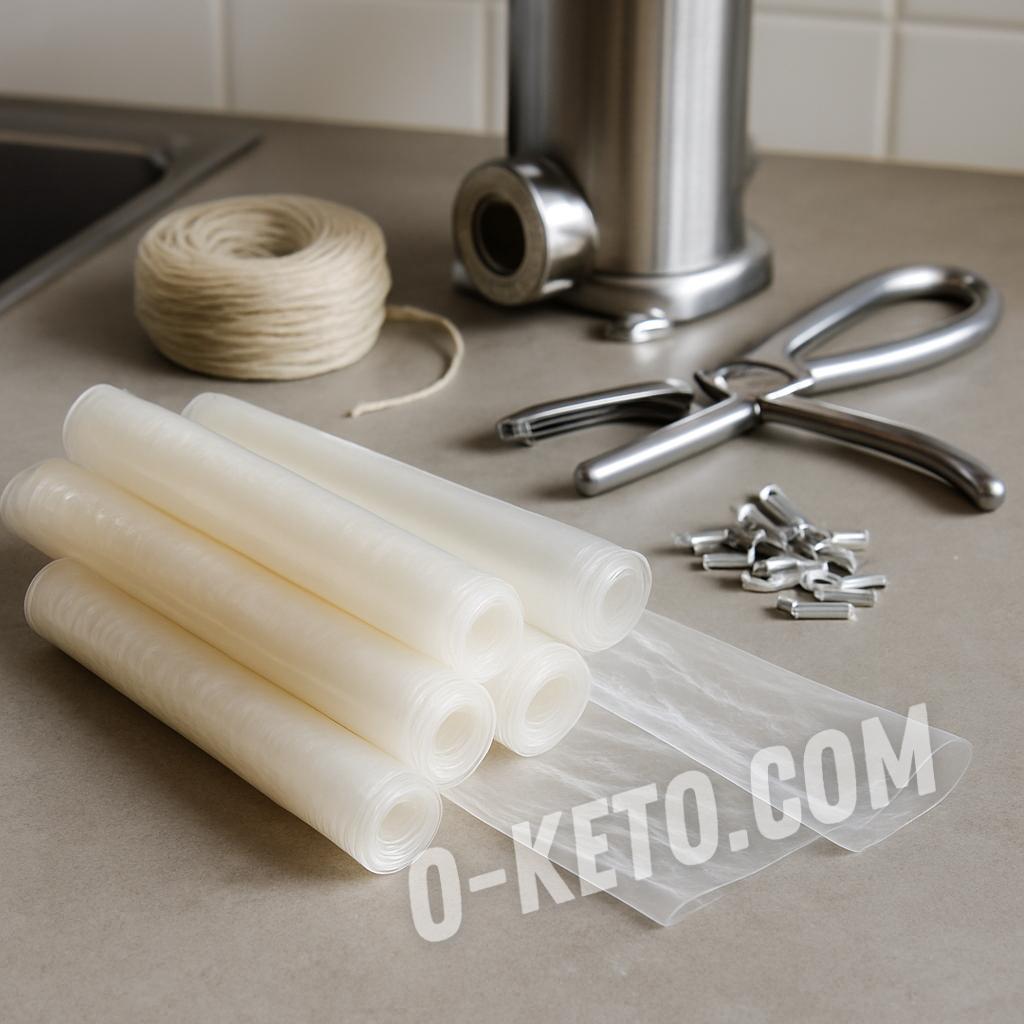

Polyamide casing is a synthetic sausage casing used for cooked sausages, ham, rolls, and products that need shape, moisture retention, and dense stuffing. Unlike natural casing, it is usually not eaten and is removed before serving.
Its purpose is technological, not flavor. It helps form a loaf, reduce moisture loss during heating, and produce an even slice, especially in homemade ham, sous-vide, and sausage recipes.
Nutrition
Polyamide casing is not a food ingredient in the usual sense, so macro and BJU tables should be hidden. It can appear in a recipe for process control, but it should not add calories, protein, fat, or carbohydrate to the edible portion.
If a recipe says “1 casing,” weight depends on caliber, length, and manufacturer. For technical conversion, about 10 g per small casing is a reasonable placeholder, while edible yield is calculated from the filling.
How to Use
Follow the manufacturer instructions: some casings are soaked, some are used dry, and temperature tolerance, barrier properties, and clipping method vary. Overfilling can cause bursting during heating.
Polyamide casing is useful for cooked sausage, ham, meat loaf, rolls, pressed products, and sous-vide preparations. It does not replace edible natural casing in fried sausages where bite texture matters.
Choosing and Storage
Choose food-grade casing with clear caliber, temperature range, and intended use for boiling, smoking, or baking. Technical films and non-food materials must not contact food.
Store dry, clean, away from sunlight and strong odors. Damaged, sticky, or contaminated material should not be used.


