
Safflower oil is obtained from the seeds of the safflower plant. It is a light vegetable oil with a mild, almost neutral taste, so it is used where the strong aroma of olive, coconut, or butter is not needed. It works for dressings, homemade mayonnaise, marinades, sauces, and some types of cooking if the right type of oil is chosen.
There are two main types of safflower oil. High-linoleic oil is rich in omega-6 linoleic acid and is better suited to cold dishes or moderate use. High-oleic oil contains more oleic acid, closer in profile to olive oil, and usually tolerates heat better. On the label, this difference matters more than the word “safflower” alone.
Nutritional value
Like any pure oil, safflower oil is almost entirely fat. In 100 g there are about 884–900 kcal, 0 g of protein, and 0 g of carbohydrates. One tablespoon gives about 120 kcal and 13–14 g of fat. The glycemic load is zero if there are no additives, but the energy density remains high.
The fatty acid profile depends on the variety. High-linoleic oil may contain a large share of polyunsaturated omega-6 fats. High-oleic oil contains more monounsaturated oleic acid. The oil may also contain vitamin E, but the amount depends on raw material, pressing, refining, storage, and freshness.
Is it suitable for keto?
For keto and LCHF, safflower oil fits by carbohydrates because it contains none. But the absence of carbohydrates does not mean that any oil should be used without limits. In a keto diet, fat quality, heat stability, the overall food pattern, and serving size matter.
If the diet already contains many nuts, seeds, mayonnaise, chicken skin, and ready sauces, high-linoleic safflower oil may increase the omega-6 share even more. Therefore it is better not to make it the only daily fat. The high-oleic version is usually more versatile, but it is still worth rotating with olive oil, butter, ghee, avocado, and fatty fish.
How to use it
The neutral taste makes safflower oil convenient for sugar-free mayonnaise, dressings with lemon or vinegar, marinades for chicken and fish, and sauces with mustard, garlic, and herbs. In cold dishes, it does not overpower greens, eggs, seafood, avocado, and low-starch vegetables.
For heating, refined or high-oleic oil is better, and it should not be brought to smoke. If the oil darkens, smells like old frying, or starts smoking, the temperature is too high. For long frying and repeated use, oils with a large share of polyunsaturated fats are less suitable than more stable fats.
How to choose
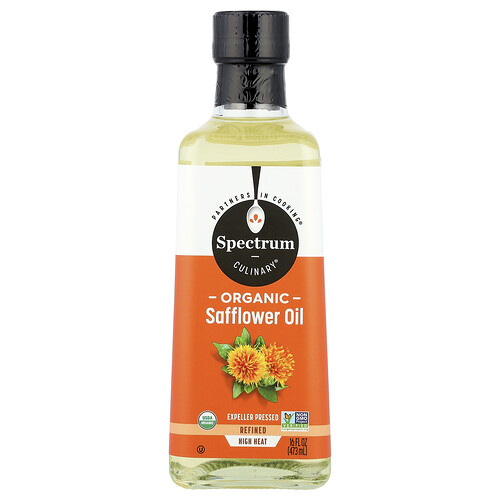
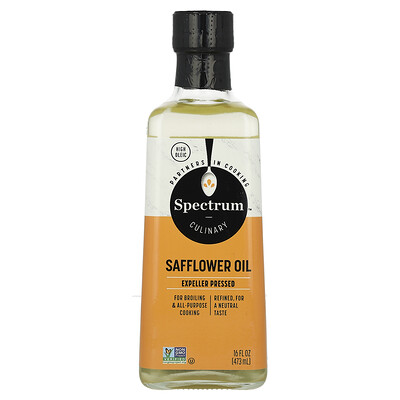
Look for the type on the label: high oleic, refined, unrefined, cold pressed. For neutral taste and moderate heating, refined high-oleic oil is often chosen. For cold dressings, unrefined oil can be used if its taste is pleasant. The ingredient list should be short: only safflower oil, without flavorings or blends of unclear origin.
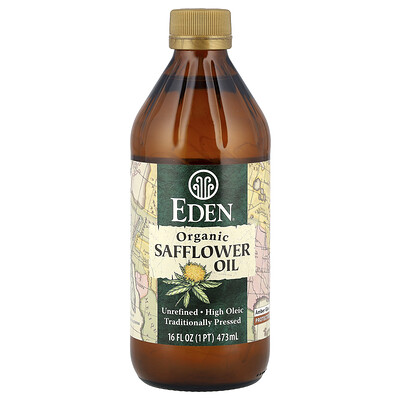
Good oil should not smell of rancid nuts, paint, or old frying. A dark bottle and small volume help preserve freshness. Oils high in unsaturated fats are sensitive to light, air, and heat, so bottling date and storage conditions matter.
Limitations
The main limitation is not sugar, but the overall fat balance. Large daily portions of high-linoleic oil are undesirable if the diet is already rich in omega-6. With sensitive digestion, excess of any oil may cause heaviness or loose stool. Allergy to safflower is uncommon, but individual reactions are possible.
How to store it
Keep the bottle tightly closed in a dark cool place, away from the stove and direct light. After opening, it is better to use the oil without long storage. If a bitter taste, sharp smell, or sticky film near the neck appears, the oil is better discarded.
What can replace it?
For neutral dressings, avocado oil, mild olive oil, refined olive oil, or a little MCT oil in cold dishes can work. For frying, ghee, avocado oil, or high-oleic sunflower oil can be used. For a more expressive salad flavor, extra virgin olive oil often works better.