


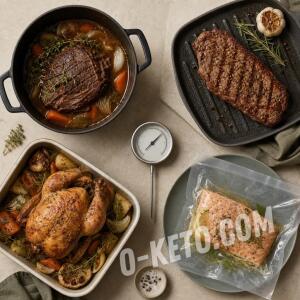


There is no universal beef cut that works equally well for steak, kebabs, braising, stroganoff, and slow oven cooking. The same piece can be excellent in the right method and disappointing in the wrong one. That is why the first question is not “which cut is best” but “what exactly am I going to cook with it”.
The useful way to judge beef is to look at fiber structure, fat, and connective tissue together. Delicate muscles with little connective tissue are happiest with short heat. Harder working muscles with denser fibers need time, slicing strategy, moisture, or a slower cooking environment. Price matters less than fit between the cut and the technique.
What to check when buying
Good beef should feel springy. If you press it lightly, the indentation should recover quickly. The color should be even red to deep red without gray patches, rainbow sheen, slime, or suspicious wet tackiness. Fresh beef smells neutral and meaty. Sour, stale, or sweet-heavy off notes are a reason to walk away.
Fat should be pale, closer to white or light cream. Strongly yellow fat may point to the age of the animal or poor storage. The surface of chilled beef can dry slightly without being spoiled, but sticky texture, mucus, and unstable smell are warning signs. Clear rather than cloudy juices on the cut side are another good practical clue.
Why the cut must match the method
Tenderloin, shoulder, rump, and brisket are not different because one is universally “good” and another “bad”. They differ because they react differently to heat. Tenderloin has little coarse connective tissue, so it stays tender with short cooking but dries out quickly. Shoulder has more structure and more pronounced fibers, so it performs better in mince, braises, stroganoff, skewers with proper slicing, and longer cooking. Rump sits in between: it can be pleasant for roasting and some steaks, but it is not as delicate as tenderloin. Brisket is valued for flavor, fat, and collagen, all of which need slow cooking to shine.
A common mistake is trying to force a dense working cut into a premium steak role, or wasting a delicate tenderloin in heavy prolonged cooking. The cut should be used according to its strength instead of being bullied into another identity.
Tenderloin
Beef tenderloin is the most delicate option for short cooking. It is chosen for medallions, fast pan cooking, tartare, carpaccio, and careful steaks. Because it is leaner and finer textured, its juiciness depends heavily on thickness, timing, and proper resting after cooking.
If you overcook tenderloin, price will not save it. For open-fire cooking it is less forgiving than people expect. If it is used for skewers, the pieces should not be too small and the heat should not be aggressive for too long.
Shoulder
Shoulder is useful because it has strong beef flavor and is usually more affordable than tenderloin. But it rewards technique. Its denser fibers mean slicing direction matters a lot. For kebabs or quick frying, shoulder is best cut across the grain and not left in rough oversized chunks. A marinade can support flavor and surface tenderness, but it does not magically turn shoulder into tenderloin.
Shoulder is excellent for mince, meatballs, roulades, braised dishes, and sauces with a deeper meat profile. If you want honest beef character rather than the softest possible bite, it is one of the most practical cuts in the kitchen.
Rump
Rump is often chosen as a compromise between delicate and heavily worked cuts. It suits roasting, some steaks, and thin sliced pan applications when the knife work is correct. But it should not be treated as an automatic guarantee of tenderness. Thickness, slicing across the grain, and controlled heat still matter.
For grilled meat or skewers, rump can work well when you want more beef flavor and are willing to give it enough marinating time. It often performs better when expectations are realistic and the cooking method respects its structure.
Brisket
Brisket is rich in fat and connective tissue, which is exactly why it excels at slow cooking and often disappoints in quick steak-style treatment. In braises, long roasts, and brothy preparations, collagen gradually turns into gelatin and the meat becomes succulent and deeply flavored. In a short hot cook, the same piece can feel stubbornly tough.
Brisket is not a bad cut when it feels firm after fast heat; it is simply a cut for another method. Its strength is patience.
Choosing beef for kebabs and grilling
For grilled beef, it helps to choose cuts that offer flavor but can still be cooked over open heat without becoming dry immediately. In practice this often means tenderloin, marbled steak cuts, or suitable parts of shoulder or rump when sliced correctly. It is important to accept that an ordinary dense beef cut will not become a luxurious steak just because it sat in an acidic marinade for a day. A marinade may soften the surface a little, but it does not replace the nature of the cut.
For firmer meats, cubes around 3 to 4 cm often work better than very large rough chunks. Beef and lamb for skewers usually need at least about 6 hours of marinating, sometimes overnight in the refrigerator. But an overly aggressive marinade is not a miracle either: it can make the outside loose without making the center truly juicy.
Chilled versus frozen
If you have a choice, chilled beef is usually easier to handle for texture-sensitive dishes. It keeps fiber structure more predictably and often browns more cleanly. Frozen beef can still work well, but it should be thawed slowly in the refrigerator rather than in warm water or on the counter. Fast thawing often leaves more surface water and makes browning harder.
After thawing, pat the meat dry and let it settle sensibly before cooking. If water is actively leaking from the surface, building a good crust becomes much more difficult.
Practical conclusion
Good beef is not simply the most expensive piece in the display. It is the cut that matches the result you want. Tenderloin is for delicate quick cooking, shoulder is for deeper everyday beef dishes, rump sits in the middle, and brisket rewards long slow heat. When the structure of the cut matches the technique, you no longer need to try to rescue the meat with excessive marinades, harsh heat, or unrealistic expectations.
Sources
- Beef From Farm to Table — U.S. Department of Agriculture, Food Safety and Inspection Service
- Does a Change in Color Indicate Spoilage? — U.S. Department of Agriculture, Food Safety and Inspection Service
- Understanding the Role of Connective Tissue in the Heat-Induced Changes of Meat Palatability — Meat Science
- Muscle, Ageing and Temperature Influence the Changes in Texture, Cooking Loss and Shrinkage of Cooked Beef — Foods


