



Buying fish should start with freshness and storage conditions, not with the species name or a pretty display. Even expensive fish becomes mediocre if it has sat too long, partially thawed and refrozen, lost its elasticity, or been stored too warm. That is why it is better to judge quality first and only then decide whether the fish is suitable for frying, roasting, stock, light curing, or grilling.
Good fish usually looks structured and alive in texture. Bad fish tends to look tired, watery, dull, or suspiciously hidden under spices and marinades. The more carefully you check the basic signals, the less likely you are to bring home a product that later needs to be “rescued” with lemon, vinegar, and aggressive heat.
General signs of freshness
Fresh whole fish should have clear, raised eyes without a cloudy film. Sunken, dull, or dried-looking eyes are one of the clearest signs that the fish is no longer very fresh. The gills should be bright pink to red, moist but not slimy. Gray, brown, or greenish gills are a bad sign, especially if the fish is meant for delicate uses such as salting or gentle cooking.
The smell should be light: sea-like, river-fresh, clean, or almost neutral. Fish should not smell sour, sharply ammoniac, rancid, or swampy. When pressed lightly, the flesh should spring back quickly. If the indentation remains, the tissue has already lost resilience. The skin and scales should be glossy, smooth, and well attached, without heavy film, dry patches, cracks, or stains. The belly should not be swollen, and the fins should not look dry and frayed.
How to judge whole fish
A whole fish is often safer to buy than pre-cut fillet because it gives you more evidence of freshness. A fresh body should hold itself together; the tail should not hang in a lifeless way, and the muscles should look compact. If you pick up the fish or ask the seller to show it fully, a very tired fish often sags noticeably. This simple practical test is often more useful than elegant wording on the label.
If the fish is displayed on ice, the ice itself should be clean rather than melted into cloudy warm water. Once the ice has mostly collapsed and the fish looks both damp and dried at the same time, the cold chain has probably already been broken. This matters especially in warm weather and at open markets.
Live and chilled fish
Live fish should be active and reasonably full-bodied. The tank should not contain dead specimens, the fish should not be overcrowded, and the water should not look neglected. Sluggish behavior, cloudy water, and cramped conditions are reasons to be careful.
Chilled fish is usually best bought whole. That way you can check the eyes, gills, belly, and skin for yourself. The surface should not show deep tears, excessive slime, or obvious damage. If the fish is already gutted, flesh firmness and a clean smell still matter.
Frozen fish
With frozen fish, the freezing quality matters as much as the fish itself. A good product should have a thin even glaze rather than a heavy icy coat. The ice should look relatively clear. Snowy frost inside the package, gray icy crust, large cracks, and odd stains often suggest refreezing or poor storage.
It is useful to look for packing or catch dates, expiration information, and country of origin. Missing or vague labeling is a warning sign in itself. If fish is sold as a frozen block with no real information, the buyer is taking on unnecessary uncertainty.
How to choose fillets
Fillets are convenient, but they are also where freshness problems are most easily hidden. Good fillets should be firm, evenly colored, and free from dark patches, yellowing, gray areas, and loose flaking. They should not collapse under light pressure. Excess liquid in the tray is another warning sign because it often reflects poor thawing and re-chilling.
Marinated fillets are worth buying only from a seller you trust and only when the ingredient logic is clear. Heavy spice mixes and sour aromatics can hide less-than-ideal freshness. If the goal is quality fish, a neutral unseasoned product is usually a safer and more informative buy.
What to avoid
Some warning signs should stop the purchase altogether: cloudy or sunken eyes, bloated belly, harsh unpleasant smell, fillets with obvious separation, fish covered in thick ice and internal snow, products with poor labeling, and suspiciously strong marinades. One of these signs is already enough to slow down; two or three together are usually a reason to walk away completely.
It is also wise to be skeptical of fish sold in a hurry at a sharp discount when the seller cannot clearly explain storage conditions. With fish, low price does not compensate for risk very well.
Storage after purchase
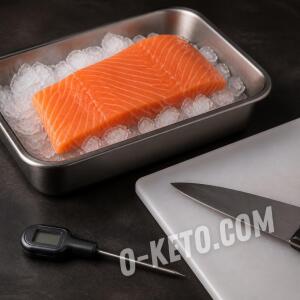
Even good fish is easy to ruin at home. Chilled fish is best kept around 0-2 °C and ideally used within 1 to 2 days. If you do not plan to cook it immediately, it is better to decide right away whether it will be frozen or cooked on a set day. Frozen fish should be thawed slowly in the refrigerator. Room-temperature thawing and microwave thawing often hurt texture more than they save time.
Once thawed, fillets are best cooked right away and should not be refrozen. If the fish is meant for frying or grilling, it should be dried well so it sears instead of steaming. This step matters especially with delicate fish.
Fresh vs Frozen Fish: What to Check First
If possible, it helps to ask the seller two very simple questions: when the fish arrived and whether it has already been thawed before. This is not always obvious from the display, especially with fillets and steaks. A reliable seller usually answers clearly; vague evasive answers are already a warning sign.
Different cooking tasks benefit from different fish formats. For stock, fish soup, light curing, or home filleting, a whole fish is usually better because freshness is easier to judge. For a quick dinner, steaks or fillets can work well too, but only when the date is clear, there is no excess liquid in the tray, and the product does not look like it has been sitting around long after cutting.
Another practical point is not to confuse industrial shock-freezing with repeated shop-level thawing and refreezing. Properly frozen fish is often safer than “chilled” fish that has already spent several days moving between storage, ice, and display. Freezing itself is not the problem; the real problem is an unclear storage history.
Choosing fish for the task
Whole fish is useful when you want stock bones, easier freshness control, or more flexible breakdown. Fillets or steaks of even thickness are better for a fast dinner. For light curing or salting, confidence in gills, smell, and flesh firmness matters even more. For grilling, it helps to choose fish that will not fall apart from excess water before it even cooks properly.
The clearer your cooking plan, the easier the purchase becomes. Then you stop trying to make the same fish work equally well for soup, grilling, and curing all at once.
How to prepare fish for cooking
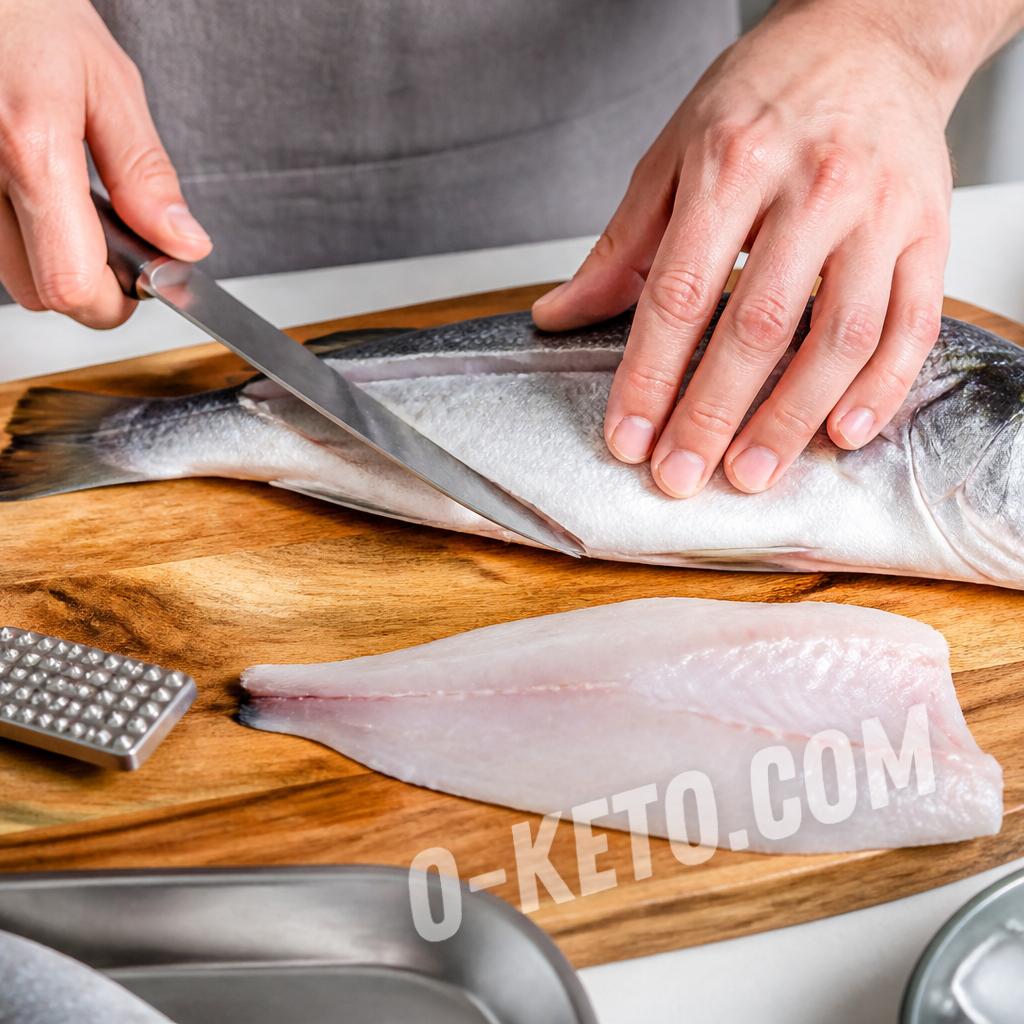
After buying fish, do not leave it in a shopping bag on the kitchen counter. Put it in a clean covered container and keep it cold until you start working. If you plan to clean a whole fish, prepare a separate board, a fish scaler or the blunt side of a knife, tweezers for pin bones, and a sharp fillet knife. Fillets do not need to be rinsed: water does not sanitize them, but it spreads splashes around the kitchen and prevents a dry surface for frying. Scale the fish, remove fins and entrails, pat it dry, and only then portion it.
Choose the format for the intended dish. A whole fish is easier to inspect and fillet at home, evenly thick fillets are convenient for quick pan-frying, and thick steaks hold their shape on a grill or in the oven. The cooking method therefore matters at the buying stage: a thin fillet can dry out quickly, while a thick piece needs gentler heat and a check in the center.
How to transport fish home
Keep the trip from the shop as short and cold as possible. Use an insulated bag or cold packs, keep fish away from warm groceries, and refrigerate it as soon as you get home. Fish at the counter should be refrigerated or displayed on clean ice; a home kitchen cannot repair a product that has already warmed for too long. If the package is damaged, the smell is sharp, or thawed fish releases a large amount of liquid, it is safer to reject it instead of trying to hide the problem with spices.
Practical conclusion
Good fish is judged by freshness, resilience, and storage rather than by a fashionable species name or a dramatic marinade. Clear eyes, bright gills, neutral smell, glossy skin, clean ice, and honest labeling matter more than marketing language. If the fish already raises doubt at the buying stage, it is usually better to leave it behind, because lost freshness cannot be repaired at home.
Sources
- Selecting and Serving Fresh and Frozen Seafood Safely — U.S. Food and Drug Administration
- How long can you store fish? — U.S. Department of Agriculture Food Safety and Inspection Service
- Freezing and Food Safety — U.S. Department of Agriculture Food Safety and Inspection Service
- Cold Food Storage Chart — FoodSafety.gov
- Fish Advice: Selecting and Serving Seafood Safely — U.S. Food and Drug Administration