


Shrimp are one of the easiest seafood products to use at home. They cook fast, freeze well, and work in both hot dishes and cold appetizers. That apparent simplicity is exactly why people ruin them so often. Many buyers choose shrimp only by color or size, thaw them in warm water, or boil cooked-frozen shrimp as if they were raw. Even a good product then turns watery, dry, or rubbery.
The first real task is to identify the shrimp type before deciding how to cook it. For shrimp, this matters more than almost any spice blend or sauce. Raw-frozen shrimp must actually be cooked through, while cooked-frozen shrimp are already done and usually only need proper thawing or a very gentle reheat. Once that basic rule is clear, the rest becomes much easier.
How to choose shrimp
Freezing type. In shops you usually see two main options, and they need different handling:
- raw-frozen shrimp: frozen raw and requiring full cooking;
- cooked-frozen shrimp: already boiled before freezing, so they should not be cooked again for long.
Do not judge only by appearance. Check the package or ask the seller. Color is not a reliable quality signal because different species vary naturally depending on habitat and diet.
What to look for when buying:
- a thin, even glaze rather than thick ice buildup or snow inside the package;
- intact shells without obvious dark spots, drying, or damage;
- a neutral marine smell without ammonia notes;
- shrimp that are not fused into one hard block from thawing and refreezing.
Chilled shrimp. If you buy chilled shrimp, cook them as soon as possible and keep them only briefly in the refrigerator. Their texture is usually more delicate and springy. If the source and freshness are fully reliable, they can also be used in preparations such as carpaccio or other raw-style dishes where quality is critical.
Common shrimp types
Shrimp vary not only in price and size but also in texture, sweetness, and the cooking methods they suit best.
Small cold-water shrimp are often useful for simple snacks, quick heating, and cold dishes. Their small size makes them practical for salads and spreads.
Northern shrimp often have a stronger flavor and firmer meat. They are especially good in salads and cold applications where you want the shrimp taste to stay clear.
Tiger shrimp are firmer and hold shape well. They are a strong choice for grilling, pan cooking, and dishes where shrimp should remain a visible, structured component.
Vannamei shrimp are softer and often slightly sweeter. They are one of the most universal options for soups, salads, stir-fries, and quick hot meals.
King shrimp are large and tender. They are convenient for marinating, grilling, and serving as a separate hot appetizer with garlic, lemon, herbs, butter, or mayo-based sauces.
Argentinian shrimp are naturally reddish even when raw, so they can easily be mistaken for cooked shrimp. That is why packaging matters more than color with this product.
Botan or spot prawns are valued for a sweet, delicate texture and are often used where the shrimp itself should remain the central flavor.
How to read size labels
Numbers on the package do not mean the weight of one shrimp. They show the approximate number of pieces per pound or kilogram, which helps you judge size.
For peeled shrimp or headless shell-on shrimp, labels like 26/30 usually mean 26 to 30 shrimp per pound, roughly 454 grams. The smaller the numbers, the larger the shrimp.
For whole unpeeled shrimp with head and shell, labels are often given per kilogram, for example 70/90. That means much smaller shrimp, which are better suited to salads, soups, and fillings than to dramatic grill presentation.
If a recipe needs shrimp that should look substantial on the plate, choose lower count numbers. For soups, minced fillings, and chopped salads, medium and smaller sizes are often perfectly fine.
Head, shell, and buying format
Whole shrimp with heads give more flavor for broths, sauces, and grilling. The heads and shells can be sautéed and simmered to make a deeper seafood base without relying on prepared flavor enhancers.
Headless shell-on shrimp are very practical for grilling and pan cooking because the shell helps protect the meat from drying out. Fully peeled shrimp are easier for soups, salads, omelets, and fast hot dishes where time matters.
Head color can also be informative. A reddish-brown head can appear in shrimp carrying roe and is not automatically a bad sign. A greenish tint may be linked to diet. But a very dark head together with an unpleasant smell and soft texture can point to poor storage.
Which shrimp for which dishes
For salads, peeled shrimp with or without tail are usually the easiest option. If the goal is elegant presentation, the tail can stay on. If the salad should be easy to eat, fully peeled shrimp are more practical.
For grills and skillets, larger shrimp in shell or at least with tail are usually better. They lose less moisture, are easier to turn, and tend to keep a more attractive texture.
For soups and sauces, shells and heads are especially useful. They can be quickly cooked with oil, then simmered in water or broth and strained for more depth.
For tartare, ceviche, and raw-style presentations, use only shrimp whose quality and source you trust completely, and never leave them at room temperature for long after thawing.
Thawing and storage
Correct thawing is half the result. The best method is to move shrimp from the freezer to the refrigerator 12 to 24 hours in advance depending on size. Slow thawing helps preserve texture and reduces moisture loss.
- do not thaw shrimp in hot water;
- do not leave them for long at room temperature;
- do not refreeze shrimp that have already been thawed.
If you must speed things up, cold water in a sealed bag is possible, but refrigerator thawing gives more reliable texture.
Preparation before cooking
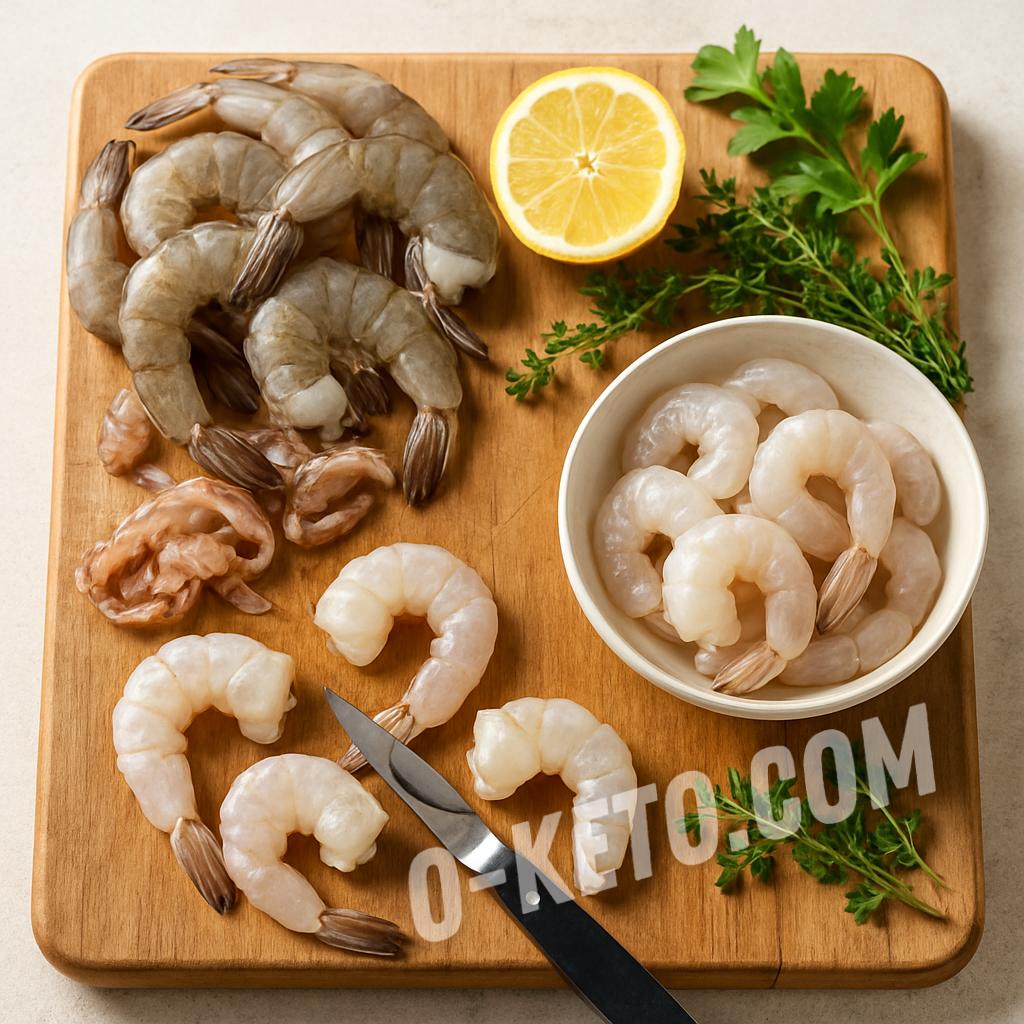
Before cooking, shrimp benefit from a little preparation because this affects both appearance and texture:
- remove the digestive vein with a shallow cut along the back;
- if the shrimp are shell-on, use scissors to open the shell and access the vein more easily;
- if you want more even seasoning, leave shrimp in a light brine for 20 to 30 minutes, then rinse and dry them.
After thawing, it is also useful to dry shrimp well, especially before pan cooking. Excess moisture prevents browning and makes them steam instead.
How to cook raw-frozen shrimp
Raw-frozen shrimp must be fully cooked, but only briefly. The key is to stop before they toughen.
The best methods are:
- steaming;
- pan cooking;
- grilling;
- adding them near the end of soups or sauces.
Usually 2 to 4 minutes are enough depending on size. Doneness signs are simple: the meat turns opaque and firm, and the shrimp curves into a loose “c” shape. If it curls into a tight ring and becomes tough, it has gone too far.
Cook shrimp in small batches if using a skillet. Overcrowding releases too much water and ruins browning.
How to use cooked-frozen shrimp
This is where most mistakes happen. Cooked-frozen shrimp are already cooked. Their job is not to cook again but to thaw properly or warm very gently. If you throw them into boiling water for several minutes or leave them in a hot sauce for too long, the meat will almost always become dry and rubbery.
For salads and cold appetizers, it is usually enough to thaw them slowly in the refrigerator, dry them well, and use them without further heat. This is one of the safest ways to preserve texture.
If you need them warm, reheat them only briefly. Good methods include:
- dipping them into hot but not violently boiling water for 30 to 60 seconds;
- adding them to a finished cream, tomato, or butter sauce for the last 30 to 60 seconds;
- placing them into hot soup after the heat is switched off and resting it under a lid for about 1 minute;
- warming them quickly in a skillet with butter or garlic oil without trying to fry them hard.
If cooked-frozen shrimp go into pasta, a wok, an omelet, or a warm salad, finish the rest of the dish first and add the shrimp at the very end. Otherwise you lose the main benefit of the product and end up with worse texture than what came out of the package.
Another important detail is surface water after thawing. Cooked-frozen shrimp often seem watery not because they are low quality, but because they were never dried after defrosting. Pat them dry before using them in salads, pans, or sauces so they do not dilute the dish.
Boiled Frozen Shrimp: How to Keep Them from Turning Rubbery
The main mistake with boiled frozen shrimp is treating them like raw frozen shrimp. If the shrimp are already pink and effectively cooked, they do not need another long boil. For salads and cold dishes, it is usually enough to thaw them gently in the refrigerator or under cold water and pat them dry.
If you want them warm, do not really cook them again; just reheat them gently. The safest option is to place them briefly into hot but not violently boiling water with salt and aromatics, or stir them into a sauce at the very end when the rest of the dish is already finished.
Long reheating almost always makes boiled frozen shrimp dry and rubbery. This is especially obvious in creamy sauces, wok dishes, and soups, where it is tempting to leave them in for a few extra minutes. In practice, it is better to finish the sauce or broth first and add the shrimp just before serving.
Common mistakes with cooked-frozen shrimp
The same mistakes appear again and again:
- boiling them like raw shrimp for several minutes;
- leaving them for too long in a hot soup or stew;
- thawing them in warm water and then overheating them again;
- skipping the drying step after thawing and ending up with watery sauce or salad;
- assuming that more heat always means better safety or better flavor.
In practice, cooked-frozen shrimp usually benefit from less heat, not more. Their convenience lies in the fact that they are already ready.
Spices and pairings
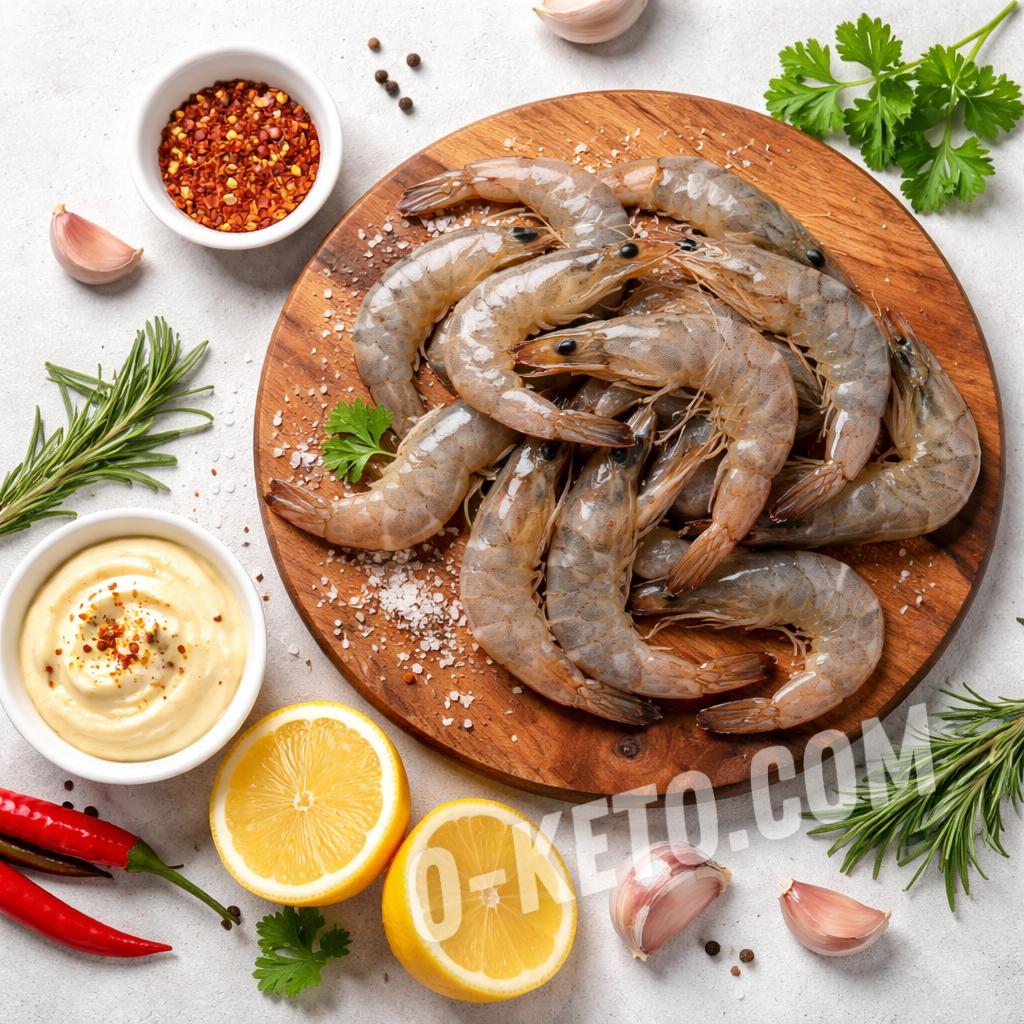
Raw-frozen shrimp work well with garlic, parsley, rosemary, chili, lemon juice, tomato sauces, butter, mayo, and aioli. They can handle stronger flavor because they still go through full cooking.
Cooked-frozen shrimp usually do better with shorter, gentler pairings: dill, black pepper, a little lemon, mild mayo or yogurt-based sauces, olive oil, and lightly infused garlic oil. Heavy marinades and aggressive reheating tend to bury their advantages.
Conclusion
To cook shrimp well, first identify the freezing type and then choose the cooking method. Raw-frozen shrimp need short but real cooking. Cooked-frozen shrimp are already done and usually only need proper thawing or a gentle reheat. Slow refrigerator thawing, drying off excess water, and avoiding overcooking matter more for texture than almost any expensive sauce. That is what separates juicy, springy shrimp from a dry and rubbery result.
Sources
- Selecting and Serving Fresh and Frozen Seafood Safely: U.S. Food and Drug Administration
- Effect of Cooking Shrimp at Different Temperatures Using Different Methods on Meat Quality and Protein Structure
- Effect of Steam Cooking on Textural Properties and Taste Compounds of Shrimp (Metapenaeus ensis)
- Optimum Cooking Conditions for Shrimp and Atlantic Salmon