




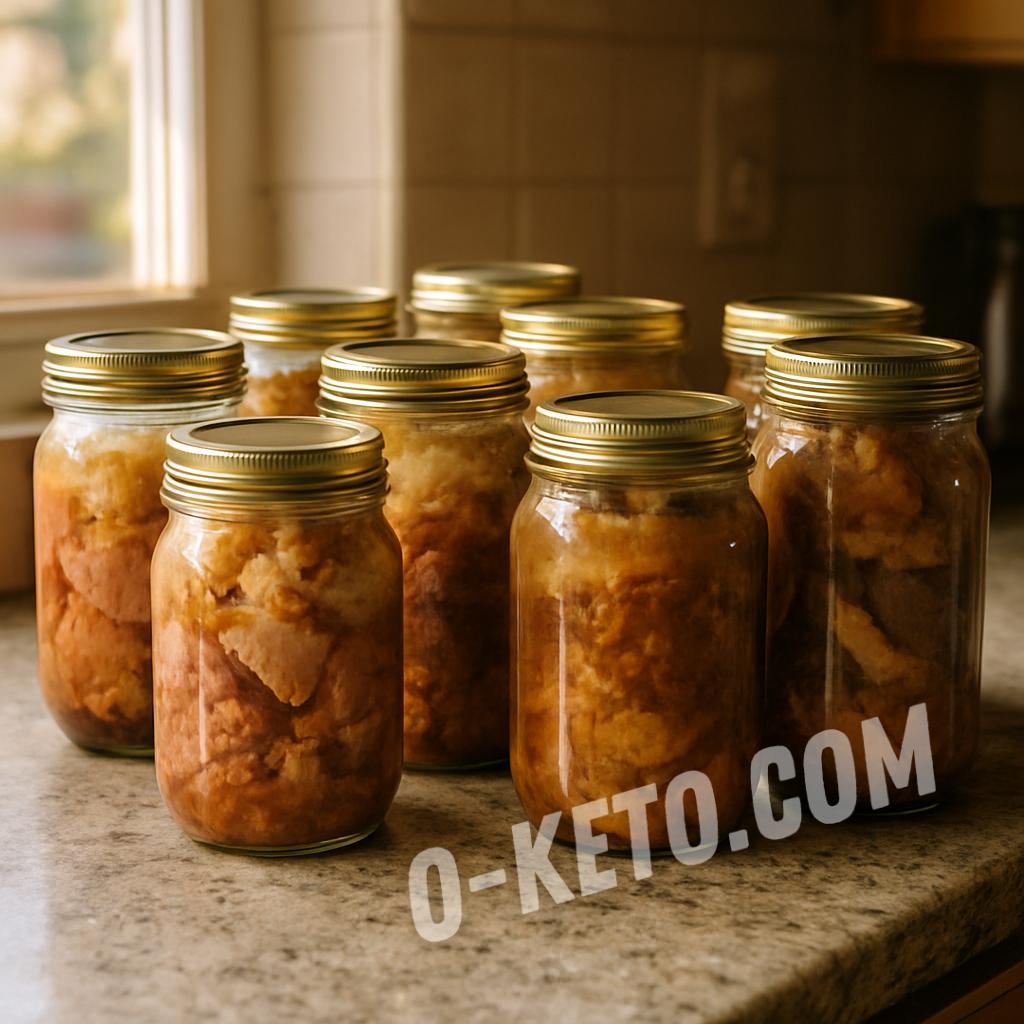

Meat, poultry, and fish cannot be made shelf-stable simply by heating sealed jars in an ordinary pot or oven. These are low-acid foods. Safe home canning for room-temperature storage requires a tested process in a suitable pressure canner. Ordinary boiling, oven heating, a tight lid, or a longer cooking time is not a substitute.
Without a suitable canner and tested recipe, prepare meat or fish as food for prompt use, refrigerate it promptly, or freeze it. Do not transfer schedules from a pot, oven, sous-vide recipe, or small pressure cooker to shelf-stable canning: safety depends on the food, jar size, temperature, pressure, and altitude. Clean jars matter, but they do not make the contents safe.
Why meat and fish need a stricter approach
Meat, poultry, and fish are low-acid foods. In a sealed jar, an oxygen-poor environment can allow Clostridium botulinum to grow if a tested process has not destroyed its dangerous spores. Ordinary boiling-water temperatures are not sufficient for that purpose, so cleanliness, headspace, spices, and prolonged boiling do not guarantee pantry safety.
Safety depends on following a tested pressure-canning process with suitable equipment. Packing density, ingredients, and jar size affect heat penetration; do not change them casually or use visual doneness as a substitute for the tested schedule.
How to prepare jars and lids
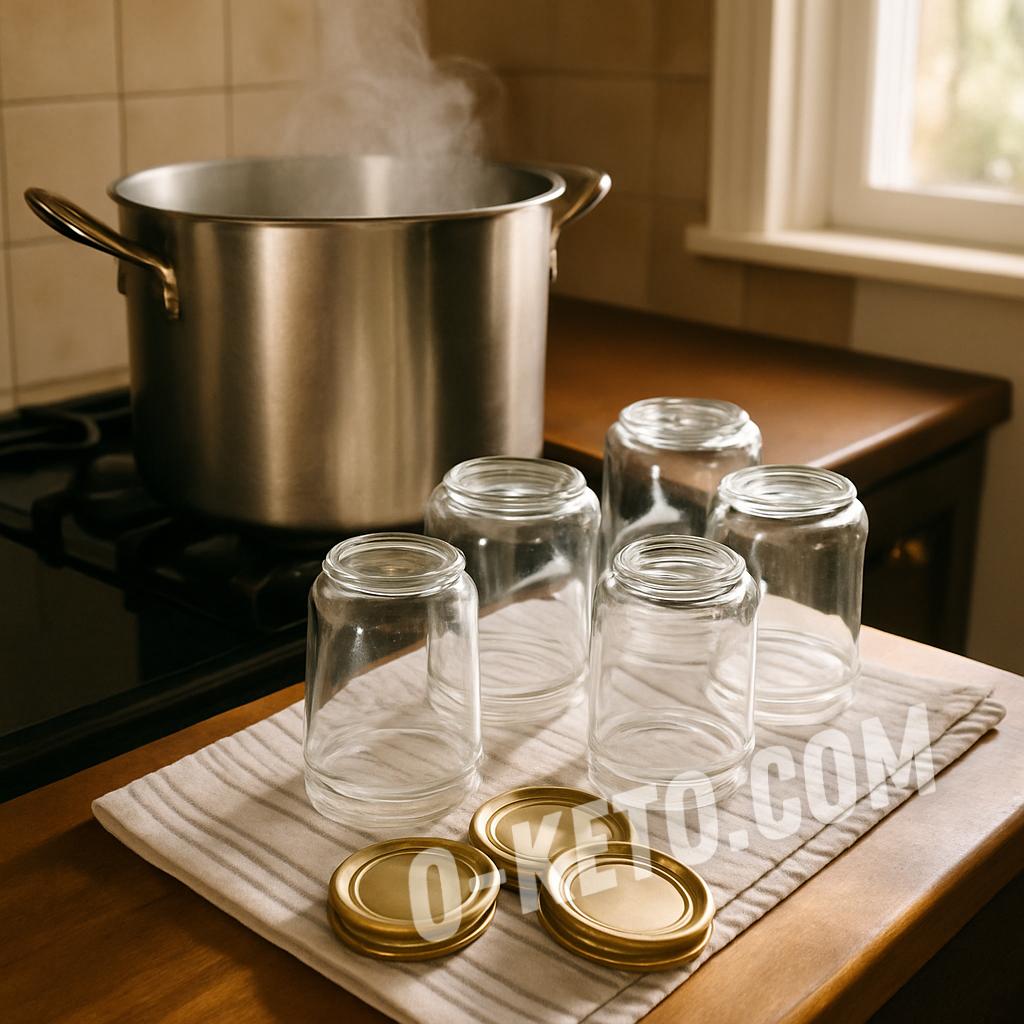
Inspect empty jars for cracks and chips, wash them, and prepare them according to a tested recipe and the manufacturer’s directions. Lids must be intact and fit the jars; use single-use lids only as their manufacturer directs.
Preparing empty containers is a separate step, not a way to make meat or fish safe inside the jar. Heating an empty jar in a pot or oven does not replace pressure processing the filled jar according to a tested schedule. Do not use oven heating as a stand-alone method for canning food in sealed jars.
When to use a pot and when to use an oven
For meat, poultry, and fish intended for room-temperature storage, an ordinary boiling-water pot and an oven are not safe substitutes for a pressure canner. These foods are low-acid, so home canning requires suitable pressure-canning equipment and a tested recipe specifying the time, pressure, jar size, and altitude adjustment.
Not every pressure cooker is suitable for canning: small appliances and multicookers should not be treated as substitutes for equipment used to validate the process. Do not compensate by extending the time in an ordinary pot, or transfer schedules for vegetables, pickles, or sous vide to meat and fish. If you do not have the tested equipment and recipe, refrigerate the cooked food for short-term use or freeze it.
How to pack meat and fish into jars
For food intended for pantry storage, choose a tested recipe for the specific meat or fish and jar size. Follow its directions for piece size, fill level, liquid, and ingredients because these details affect heat penetration. Do not compress the food or change the proportions on your own.
Onion, fat, salt, and spices can change flavor and texture, but they do not preserve the food or destroy dangerous spores. Pre-cooking or deboning fish also does not turn a filled jar into a safe room-temperature preserve. Use only the ingredients and packing method in a tested recipe.
Why the heating time should not be shortened
A change in color, tender meat, clear broth, or a long heating time does not show that a home preserve is safe for room-temperature storage. In sealed jars of low-acid food, dangerous spores may survive ordinary boiling; judging doneness at home is not a substitute for a tested thermal process.
For pressure canning, follow only a tested schedule for the specific food and jar size, including the required pressure, time, venting, and natural cooling. There is no universal number of hours for chicken, turkey, pork, beef, rabbit, or fish that can be safely inferred without such a validated process. Do not shorten or extend the schedule by eye; either change takes the process outside its tested instructions.
Appearance cannot confirm safety
Tender meat, set juices, flaky fish, or a sealed lid can describe texture and closure, but they do not prove microbiological safety. Botulinum toxin may be present without a noticeable change in smell, color, or taste. Never taste food to decide whether a jar is safe.
For a product intended for pantry storage, the practical safety criterion is exact compliance with a tested recipe and process in a suitable pressure canner. If cooked meat or fish did not go through that process, do not treat it as a shelf-stable preserve; keep it refrigerated or frozen instead.
How to cool and store the jars
Do not leave perishable cooked meat or fish at room temperature for extended storage. If it was prepared by an ordinary cooking method, refrigerate it or freeze it; a sealed lid and a dark, cool room do not turn it into a pantry-safe preserve.
Cool jars processed in a suitable pressure canner and store them according to the tested recipe and official guidance. Do not force-cool the canner with water or open it before pressure has returned to zero naturally; this is part of the validated process. If the schedule was not followed or its history is unknown, dark storage, re-boiling, and a smell check cannot correct the uncertainty.
Which warning signs mean the jar should be discarded
Do not taste a bulging, leaking, damaged, foaming, spurting, or otherwise abnormal jar. Follow official local guidance for disposing of suspect home-canned food.
A normal appearance, smell, taste, or inward-curved lid does not prove safety: botulism may produce no visible signs of spoilage. If meat or fish was heated in an ordinary pot or oven instead of processed with a tested pressure-canning schedule, do not treat a sealed jar as safe to store or eat.
Conclusion
Separate cooking a meal from canning food for storage without refrigeration. An ordinary pot or oven can cook food, but neither replaces a tested pressure-canning process for low-acid meat, poultry, or fish.
Without suitable pressure-canning equipment and a tested recipe, refrigerate cooked meat and fish or freeze them. Do not use elapsed hours, appearance, a sealed lid, or smell as a safety test: pantry safety depends on following a tested process exactly.
Sources
- National Center for Home Food Preservation — For Safety’s Sake
- USDA Food Safety and Inspection Service — Clostridium botulinum & Botulism


