


The doneness of meat is best judged by the internal temperature, not by crust color or the number of minutes in a recipe. The outside can look ready very quickly while the center may still range from juicy pink to fully gray-brown.
Temperature control matters for steak, roast beef, lamb, duck breast, pork, poultry, and large cuts that cook unevenly. Good doneness is a balance of flavor, juiciness, texture, and safety.
Why meat dries out
When meat is pan-seared, roasted, or grilled, the surface gets much hotter than the center. The crust may exceed 150 °C, while the middle usually needs a much lower target. If you wait until the meat looks “definitely done,” the center is easy to overcook.
As internal temperature rises, proteins contract and more juice is pushed out of the muscle fibers. That is why overcooked meat becomes dry, firm, and gray even when the original cut was good.
Main doneness levels
These are practical guides for whole cuts of beef and lamb. They are not rules for chicken, minced meat, or questionable raw material, which have different safety requirements.
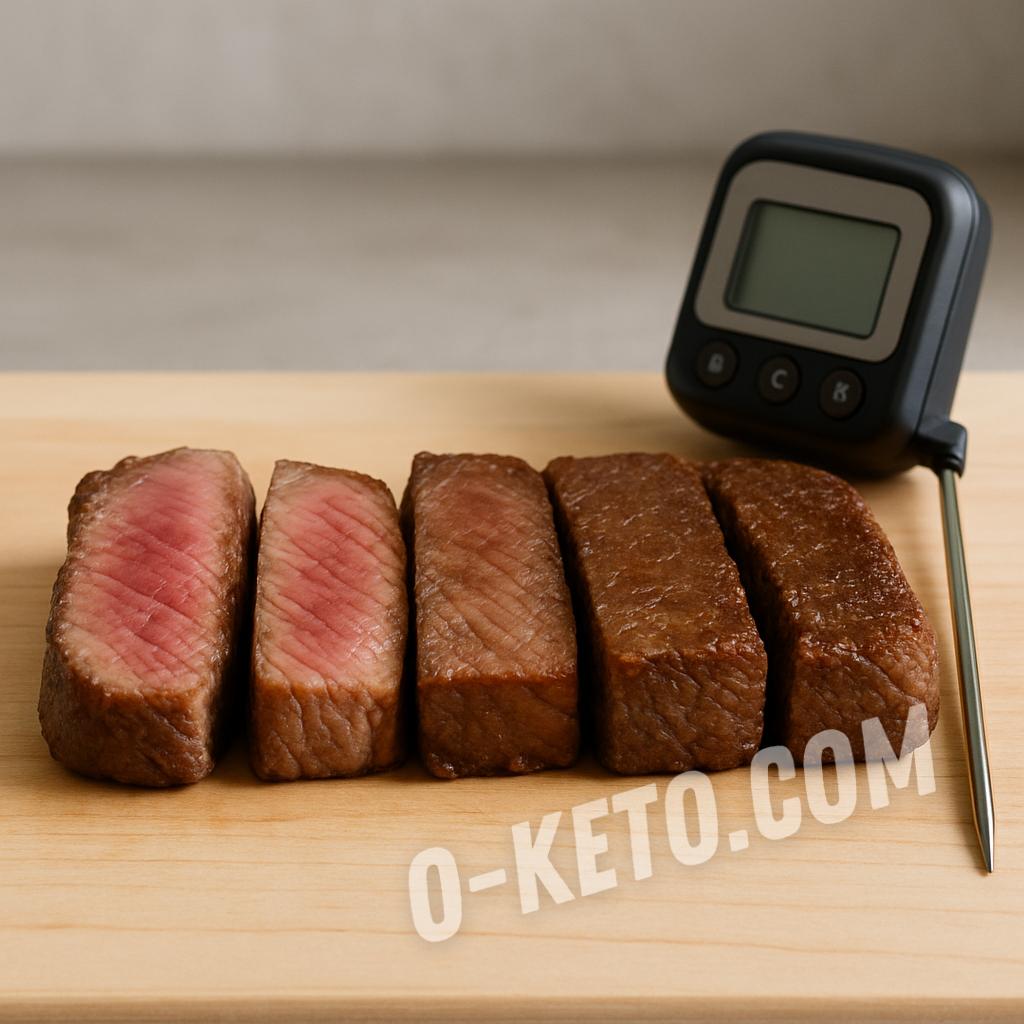
| Blue / extra rare | 46-49 °C | Very red and almost cool center. |
| Rare | 50-54 °C | Warm red center and very soft texture. |
| Medium rare | 55-58 °C | Warm red-pink center and juicy texture. |
| Medium | 59-63 °C | Pink center with a firmer bite. |
| Medium well | 64-68 °C | Slightly pink center and noticeably firmer meat. |
| Well done | 69 °C and above | Nearly or fully gray-brown center. |
The temperature keeps rising after meat leaves the heat. A thin steak may rise only a little, while a large roast can rise more. That is why meat is often removed 2-5 degrees before the desired final temperature.
Which meats fit which doneness
Beef, lamb, and young lamb from a reliable source usually allow a broad range of doneness for whole cuts. Veal is often cooked at least to medium rare or medium because its texture and serving expectations are different.
Pork needs more caution: modern pork does not have to be dry and gray, but it should not be served raw. Whole cuts can be cooked to a juicy moderate doneness, while minced pork, stuffed rolls, and fillings need stricter heating.
Chicken and turkey are not foods where “pink doneness” should be treated like steak. Safety matters, especially for breast, thigh, minced poultry, and meat near the bone. Duck is different: duck breast is often cooked pink, but that does not mean chicken should be treated the same way.
How to use a thermometer
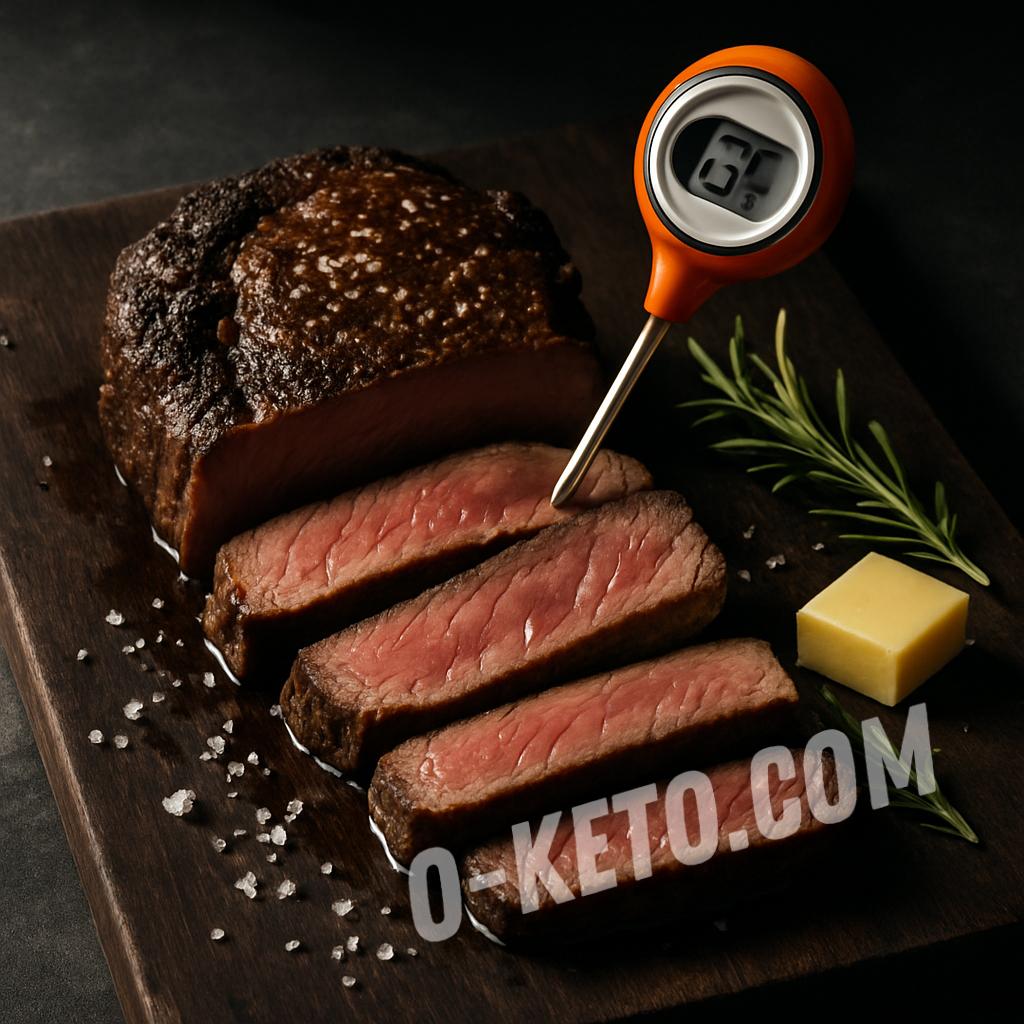
The most reliable tool is a probe thermometer. Insert the probe into the center of the thickest part of the meat and avoid bone, fat pockets, or the pan. If the cut is uneven, check several points.
An instant-read thermometer is convenient for steaks. For large roasts, a heatproof probe can stay in the meat during cooking. Sous vide makes the target easier because the water temperature sets the doneness, but thickness and heating time still matter.
Why “bloody meat” is not blood
The red juice in steak is not blood. Blood is removed during slaughter; the color mainly comes from myoglobin, a muscle protein that contains iron and helps muscles work with oxygen.
The lower the doneness, the brighter the juice and center. That does not automatically make a fresh whole cut of beef or lamb unsafe, but it also does not remove the stricter rules for poultry, minced meat, and foods of uncertain quality.
Why meat needs to rest
After searing or roasting, meat needs a few minutes of rest. During this time the internal temperature evens out, the fibers relax, and some juices redistribute. If you slice a steak straight from the pan, more juice ends up on the plate.
A thin steak may need 3-5 minutes. A large roast may need 10-20 minutes or more. You can cover the meat loosely with foil, but do not seal it tightly or the crust will soften.
Common mistakes
Most mistakes come from trying to guess doneness by appearance. The crust tells you about the surface, not the center.
- Slicing meat immediately and losing juice.
- Following minutes only, without considering thickness.
- Touching bone or fat with the thermometer probe.
- Cooking chicken or minced meat by steak rules.
- Forgetting that temperature rises after the meat leaves the heat.
Practical takeaway
Juicy meat does not require mystical intuition. It requires temperature control. Steak, roast beef, pork, duck, and chicken need different final temperatures, but the principle is the same: measure the center, stop in time, rest the meat, and slice afterward.
If you cook meat often, a good thermometer pays for itself quickly. It does not replace seasoning, fat, fire, or experience, but it removes the main uncertainty: what is really happening inside the cut.