


Meat is often discussed in extremes. One side calls it indispensable, while the other treats it as a direct cause of inflammation, atherosclerosis, and cancer. The real picture is more specific: meat can be whole or processed, lean or fatty, fresh or poorly stored, gently cooked or heavily charred. The same food can also behave differently in a diet built around sugar and refined starches, a low-carbohydrate pattern, or a carnivore approach.
The useful question is therefore more precise: which benefits of meat are well supported, which risks have actually been studied, and which frightening claims do not survive a fact check? Population studies of average diets also cannot automatically answer what happens to a person who eats meat without sweet drinks, pastries, and ultra-processed carbohydrate foods.
What meat genuinely provides
Whole meat is a convenient source of complete protein with all essential amino acids. This matters when a diet needs to be nutrient-dense, during weight loss, recovery, resistance training, or a period when many foods are being restricted. Meat also supplies vitamin B12, heme iron, zinc, selenium, phosphorus, and several B vitamins. The amount depends on the animal, the cut, and the cooking method.
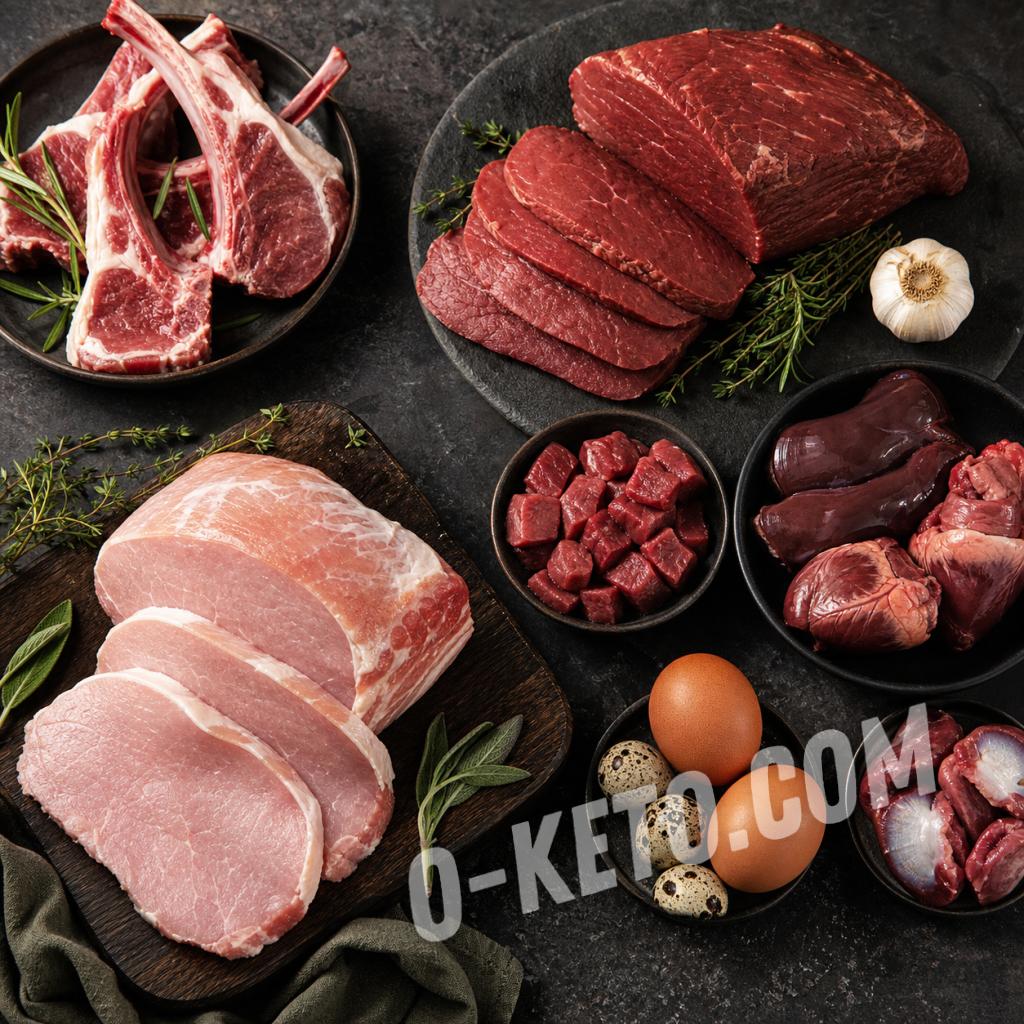
Beef is commonly rich in protein, zinc, B12, and heme iron. Pork can provide substantial thiamine, selenium, and other B vitamins. Lamb supplies protein, iron, zinc, and B12, while its calorie content changes considerably with the fat content of the cut. Liver and other organs contain very high amounts of some micronutrients, so they should not automatically be treated as interchangeable with muscle meat or eaten in large portions every day.
Meat also contains creatine, carnitine, and taurine. This does not make it a medicine, but it helps explain why meat can be practical for maintaining muscle, performance, and satiety in a low-carbohydrate diet. The benefit comes from the whole dietary pattern and what the meat replaces, not from one isolated compound.
Whole meat is not the same as processed meat
The most important distinction is not simply “allowed” versus “forbidden,” but whole meat versus processed meat. A steak, braised beef, pork shoulder, lamb, fresh minced meat, and liver are not equivalent to sausage, bacon, ham, hot dogs, and heavily processed canned products containing large amounts of salt, nitrites, and other additives.
The International Agency for Research on Cancer classifies processed meat as carcinogenic to humans, mainly because of its association with colorectal cancer. Red meat is classified as probably carcinogenic. This is a hazard classification, not a statement that one serving automatically causes cancer. Risk depends on amount, frequency, overall diet, and cooking conditions. It is also a mistake to treat a whole cut of meat and a processed sausage as biologically identical.
For people following keto or carnivore, the practical distinction is straightforward: build meals around fresh whole foods, while avoiding a pattern in which sausages, bacon, and smoked meats become the only daily sources of protein and fat. This is not a demand to ban them forever. It is a reminder that being low in carbohydrates does not automatically make a product high quality.
What the research says about cardiovascular risk
Observational studies often find associations between higher red or processed meat intake and unfavorable outcomes. But these studies cannot prove that meat was the only cause. People who eat more meat may also consume more fast food, sugar, and refined side dishes, exercise less, smoke, or have other risk factors.
Results are less straightforward in randomized trials of whole beef. A meta-analysis of clinical trials did not show a clear deterioration in cardiovascular risk factors caused specifically by beef consumption. This does not prove that very high meat intake is safe for every person, but it shows why results from population food questionnaires should not be copied directly onto every low-carbohydrate diet without considering context.
Cholesterol in meat should not be described as “entering the blood and blocking arteries.” The body synthesizes cholesterol itself, and individual lipoprotein responses to diet vary. For an individual, lipid profile, ApoB or non-HDL cholesterol, blood pressure, glucose, and the trend over time are more useful than arguing about a food only by its name.
Meat on keto and carnivore
Meat can be central to a low-carbohydrate diet because it supplies protein and contains very little carbohydrate. On carnivore, some people eat 500 grams or more per day and report feeling well. That experience cannot be turned into proof of universal long-term safety, but neither should it automatically be labeled pathological. High-quality long-term research on carnivore diets is still limited.
A more useful approach is to monitor tolerance and objective markers. Pay attention to satiety, energy, digestion, bowel habits, body weight, blood pressure, lipids, uric acid, and kidney function. If markers deteriorate or symptoms such as repeated gout attacks, edema, marked weakness, or persistent digestive problems appear, the diet should be discussed with a clinician rather than defended as an ideology.
Large meat intake also does not mean that one animal or one cut has to be eaten exclusively. Beef, pork, lamb, poultry, fish, eggs, and organs can be varied according to tolerance and goals. Especially on carnivore, whole foods should not be replaced by a constant stream of sausages and cured products.
How to cook meat more safely
Risk depends not only on the meat itself but also on temperature, time, and storage. Raw or undercooked meat can contain harmful bacteria and parasites. USDA guidance lists 62.8 °C with at least a three-minute rest for whole cuts of beef, pork, veal, and lamb; ground meat should reach 71.1 °C, and poultry 73.9 °C. A food thermometer is more reliable than judging safety by color alone.

Frequent charring, smoking, and very high-heat cooking increase the formation of heterocyclic amines and polycyclic aromatic hydrocarbons. This does not mean that grilling must be banned. It means avoiding blackened areas, limiting unnecessary time over intense heat, and using braising, roasting, slow cooking, and moderate grilling more often.
Who should be more careful
The same meat-heavy diet cannot be recommended in exactly the same way to a healthy person, someone with chronic kidney disease, recurrent gout, familial hypercholesterolemia, or established cardiovascular disease. In those cases, medical assessment, medication, laboratory trends, and the whole diet matter more than internet arguments about whether meat is good or bad.
With gallstone disease, a separate risk may come not from meat itself but from rapid weight loss, prolonged fasting, and sudden changes in fat intake. Severe pain after meals, jaundice, or other acute symptoms require medical care.
Conclusion
Meat can be a nutrient-dense foundation of a keto or carnivore diet, especially when it is a fresh whole food, protein intake is appropriate, and the person tolerates it well. The strongest concerns apply mainly to processed meat, repeated charring, and an overall unhealthy dietary context, not automatically to every serving of fresh beef, pork, or lamb. At the same time, the claim that more meat is always better has not been proven. A practical approach is to distinguish products, cook them safely, track objective markers, and adjust the diet to the individual response.
Sources
- Red Meat and Processed Meat — International Agency for Research on Cancer (IARC/WHO).
- Limit red and processed meat — World Cancer Research Fund.
- Food Thermometers and Safe Minimum Internal Temperatures — USDA Food Safety and Inspection Service.
- Effects of Beef Consumption on Cardiovascular Disease Risk Factors: A Systematic Review and Meta-analysis of Randomized Controlled Trials — 2024.
- Behavioral and Cardiometabolic Effects of the Carnivore Diet: A Scoping Review — 2025.