


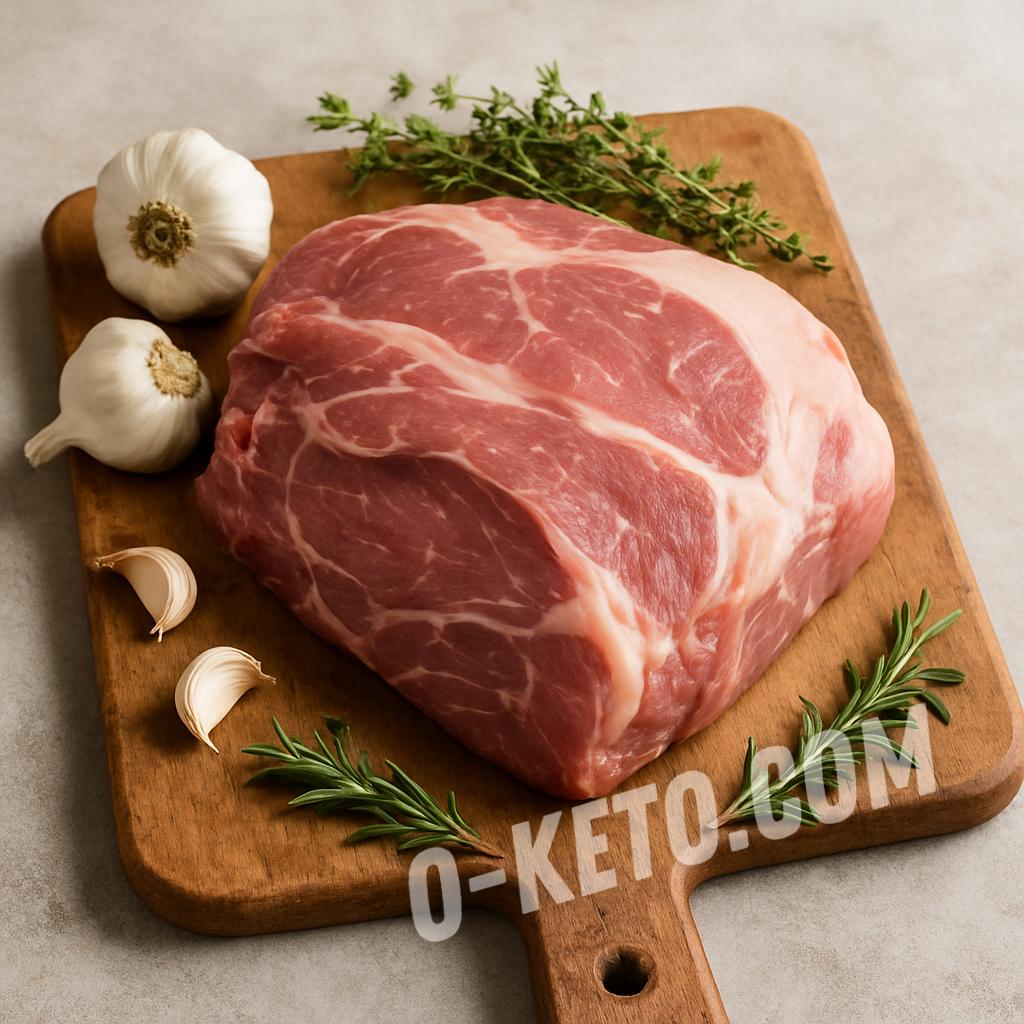

Pork shoulder is a rich, well-marbled cut from the front part of the carcass, valued for juiciness and its ability to handle long cooking. It is one of the most useful cuts for roasting, sugar-free pulled pork, braising, mince, sausage, and slow-cooker recipes.
It is not as tender as pork tenderloin, but it usually wins on flavor and moisture. The fat and connective tissue help protect it from drying during long cooking.
Nutrition
Pork shoulder provides complete animal protein and a substantial amount of fat, with no carbohydrate in the plain cut. That makes it a practical base meat for keto and LCHF, especially roasted or braised.
Carbohydrates and excess glycemic load come from sweet marinades, sugary BBQ sauces, breading, and starchy sides. The cut itself is low-carb and works well without them.
How to Cook
It can be roasted as a large piece, braised, turned into sugar-free pulled pork, minced, or used in homemade meat preparations. It pairs well with garlic, paprika, sugar-free mustard, thyme, sauerkraut, mushrooms, and creamy sauces.
With long cooking, time matters more than aggressive heat. Resting after cooking also helps the juices settle back into the meat.
Choosing and Storage
A good shoulder should smell fresh, show an even color, and have normal marbling without stickiness. Excess watery liquid or sour odor are bad signs.
Store briefly refrigerated or freeze airtight. Large pieces are often worth portioning before storage for different cooking uses.


