


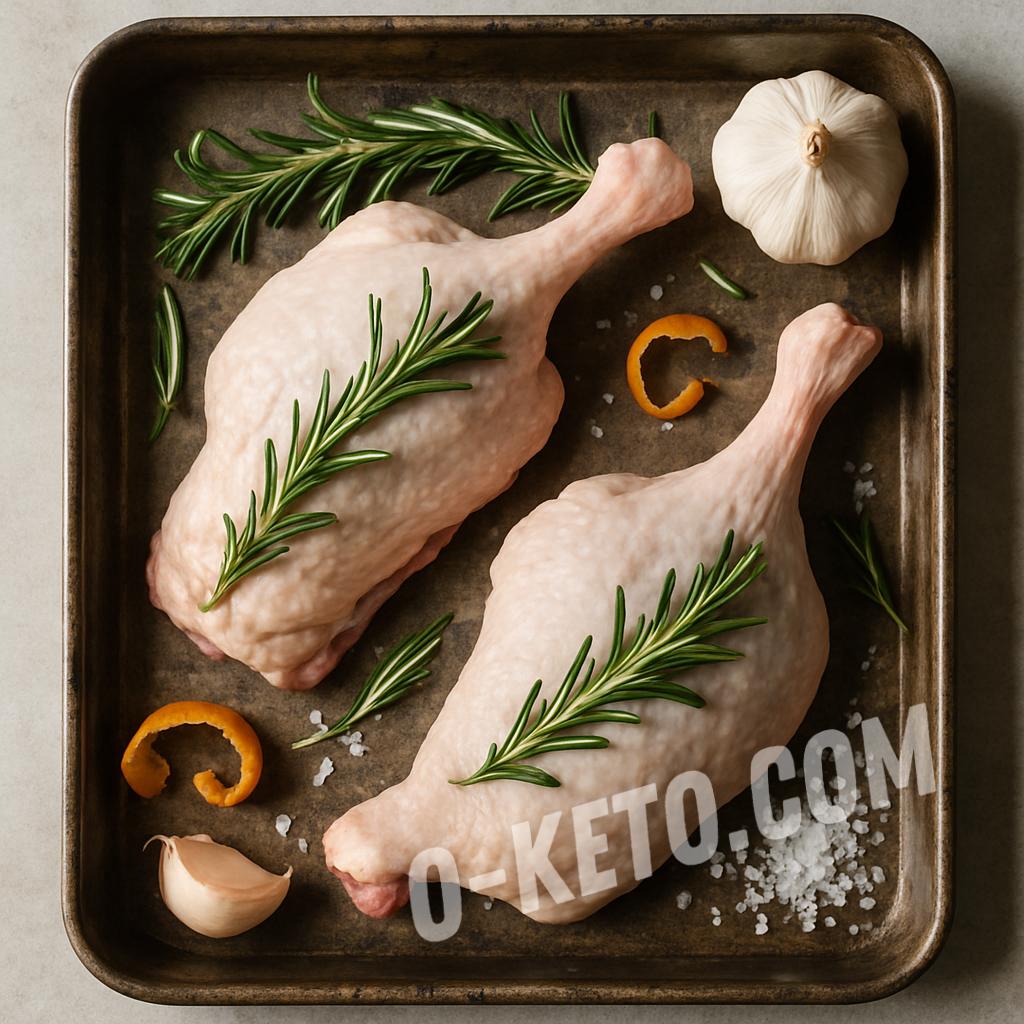

Duck legs are dark-meat poultry cuts with skin, fat, and bone. Unlike lean poultry, they provide both complete protein and a meaningful amount of fat, making them suitable for roasting, braising, confit, and rich dishes.
A leg may include thigh and drumstick, and weight depends on breed and cutting style. Recipes should distinguish raw bone-in weight from the edible portion after cooking: some fat renders out and bone is not eaten.
Nutrition
Duck legs provide complete animal protein and no carbohydrate. For keto they are often more convenient than lean breast because their own fat supports satiety and flavor.
The glycemic load of plain duck is zero. Sweet glaze, orange sauce with sugar, flour-thickened gravy, or starchy sides change the dish calculation.
How to Cook
Classic methods include slow roasting, confit, braising, and crisping the skin. Duck pairs with thyme, rosemary, garlic, pepper, unsweetened berries, cabbage, and creamy sauces.
If a leaner dish is needed, some rendered fat can be poured off and counted separately. For LCHF, that fat can season vegetables or sauce.
Choosing and Storage
A good duck leg has intact skin, a natural smell, and no excessive stickiness. Frozen pieces should not have thick ice or signs of repeated thawing.
Store duck legs like other poultry: briefly chilled or airtight frozen. Cook to a safe temperature, especially when the source is not fully known.


