


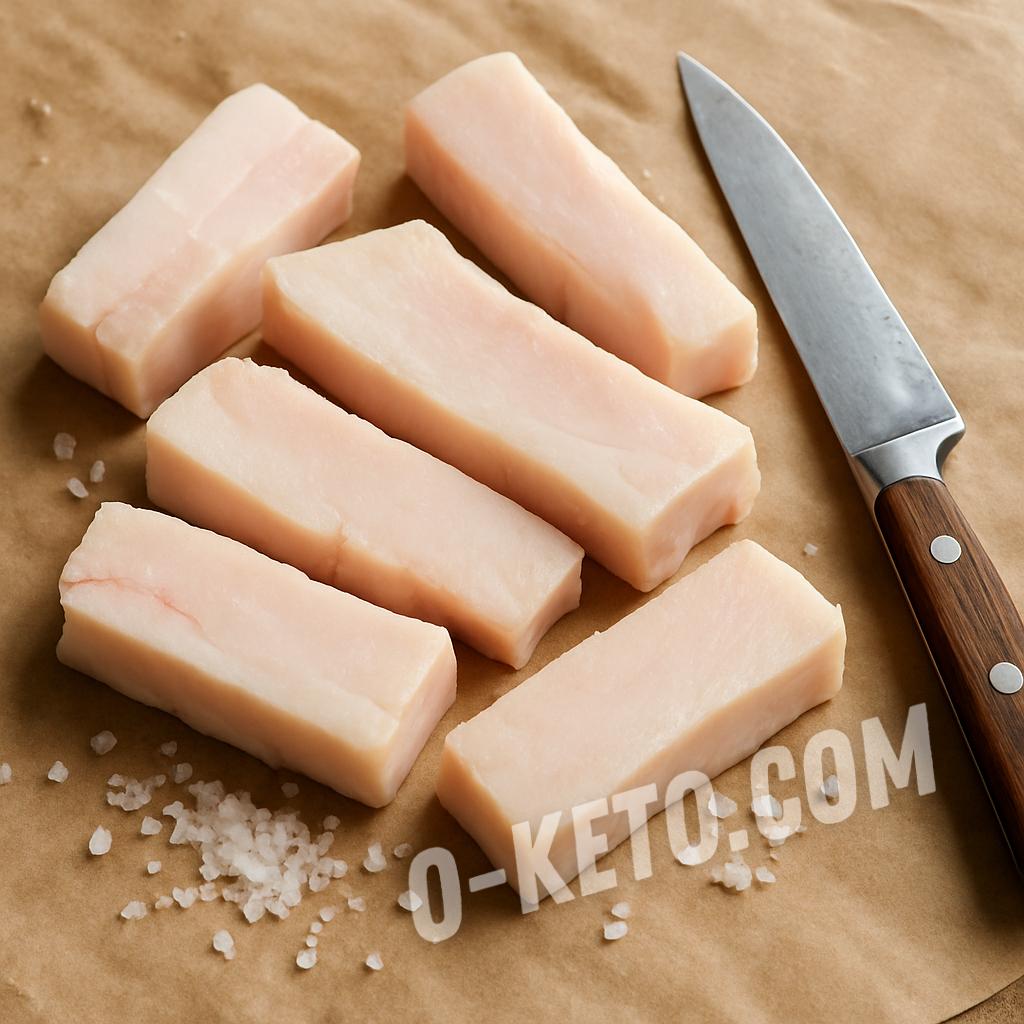

Horse fat is animal fat from horse adipose tissue, used in traditional meat products, sausages, braises, and frying. It differs from pork lard and beef tallow, with its own aroma depending on feed, animal age, and processing.
In cooking it is valued when lean meat needs juiciness, mince needs plasticity, or a regional flavor should be preserved. Home recipes often use it in small proportions with horse meat, beef, or poultry.
Nutrition
Horse fat is almost entirely fat and contains no carbohydrate. It has essentially no protein, so it is an energy and texture ingredient, not a complete protein source.
For keto and LCHF it fits as pure fat, but portions are calorie-dense. Count it separately from meat, especially when added to mince or used for frying.
How to Use
It can be diced into mince, rendered for frying, added to sausage mixes, or used in braising. It pairs with black pepper, garlic, coriander, bay leaf, smoked paprika, and sauerkraut.
Overheating animal fat can create harsh odor and oxidation products, so use moderate heat and never use rancid fat.
Choosing and Storage
Fresh horse fat should smell clean, without rancidity, sour notes, or slimy yellow surface. Color may be white to cream, but grey spots and stickiness are undesirable.
Store briefly chilled or airtight frozen. For sausages and mince, partially freeze it before cutting so cubes keep their shape.


