


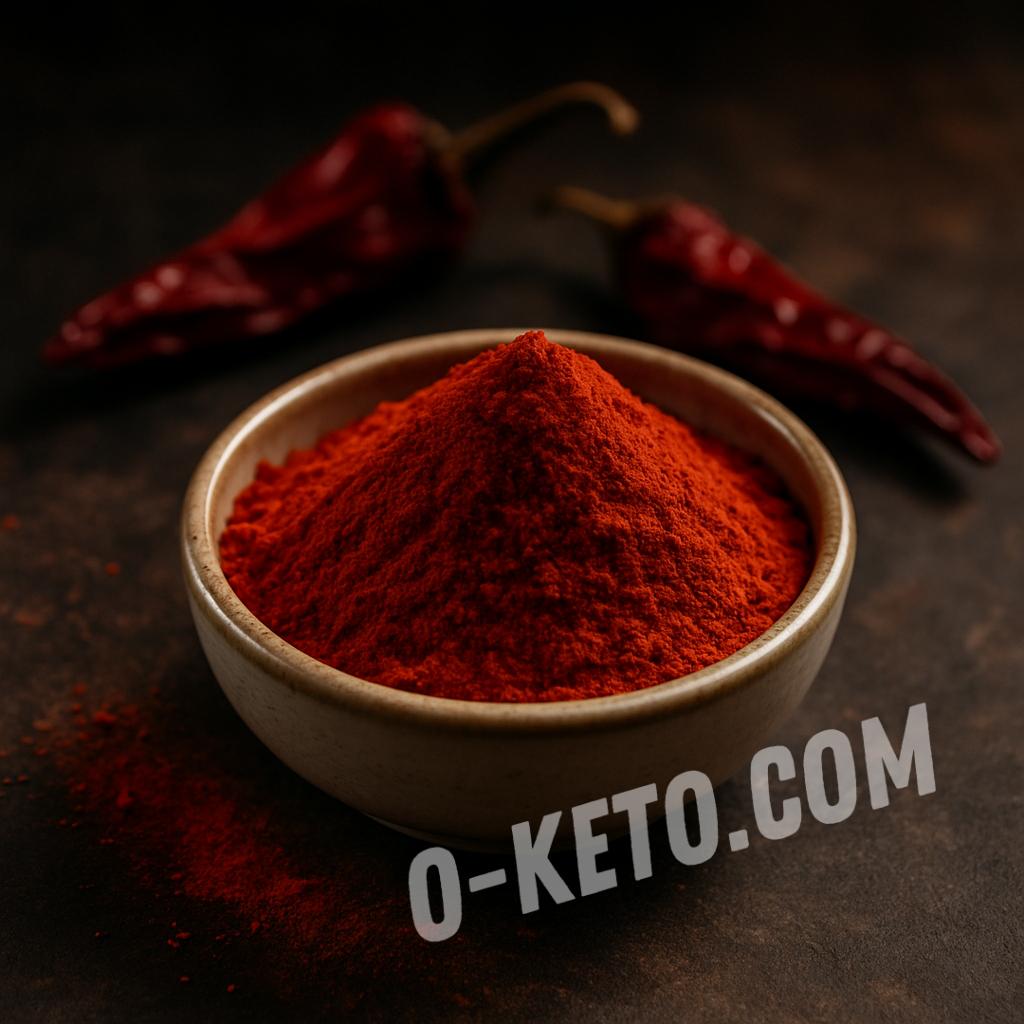

Smoked paprika is ground dried red pepper with a clear smoky aroma. In keto cooking it is useful because it adds roasted, grilled, and smoked notes without relying on sugary sauces, starches, or commercial seasoning blends.
What it is
Smoked paprika is made from ripe red peppers that are smoke-dried and then ground into powder. The best-known version is Spanish pimenton de la Vera, traditionally dried over wood smoke, often oak, which gives it a warm, deep, slightly sweet smoky flavor. Mild, sweet, hot, and blended versions are all common.
Compared with regular paprika, the main difference is aroma rather than nutrition. Smoked paprika can replace part of the flavor you might otherwise get from bacon, smoked sausage, or a browned crust in vegetables, fish, sauces, marinades, and egg dishes. It should not be confused with ready-made blends: pure smoked paprika should contain pepper only, without sugar, flour, maltodextrin, flavor enhancers, or starchy anti-caking carriers.
Nutrition and keto context
Smoked paprika has a nutrient profile close to regular ground paprika: per 100 g it contains substantial carbohydrate and fiber, but the real serving is usually 1/2-1 teaspoon. In that amount, net carbohydrate is small, so the spice is usually compatible with keto and LCHF unless it is used by the tablespoon in sweet glazes or thick sauces.
Paprika provides carotenoids, iron, potassium, vitamin A, vitamin E, and vitamin B6. Still, it is a seasoning rather than a main nutrient source. Its practical value is that it helps make meat, fish, eggs, and vegetables taste fuller without sugar-heavy store sauces.
How to choose
Good smoked paprika smells of clean smoke and dried red pepper, not burnt wood, mold, or damp storage. The color can range from brick red to deep red; a dull brown tone often means the spice is old or poorly stored. Look for “smoked paprika”, “pimenton”, or “pimenton de la Vera” on the label.
The ingredient list should be short. For keto, avoid blends that include sugar, dextrose, starch, flour, breadcrumbs, smoke flavor on carbohydrate carriers, or a lot of salt. If you want heat, choose hot smoked paprika or add cayenne separately.
How to use it
Smoked paprika blooms well in fat and gentle heat, but it can burn easily. Add it to oil, sauce, or marinade, and keep the heat moderate when frying. It works especially well in these foods:
- marinades for chicken, pork, fish, and shrimp;
- keto mayonnaise, aioli, ranch, and sour-cream sauces;
- scrambled eggs, omelets, and sugar-free shakshuka;
- roasted cauliflower, zucchini, eggplant, and mushrooms;
- homemade sausages, pates, and meat loaf.
Start with 1/4-1/2 teaspoon per serving of a dish: the aroma is pronounced, and too much can taste like campfire smoke rather than balanced smokiness.
Storage and limits
Store smoked paprika tightly closed, away from light, steam, and the hot stove. Once opened, the aroma gradually fades, so large jars make sense only if you use it often. If the powder smells dusty, damp, or rancid, replace it.
Paprika is a nightshade. People following strict AIP, reacting to peppers, dealing with reflux, or sensitive to hot spices may avoid it. Smoked paprika also should not be used to cover the smell of stale meat or fish: it adds aroma but does not make unsafe food safe.


